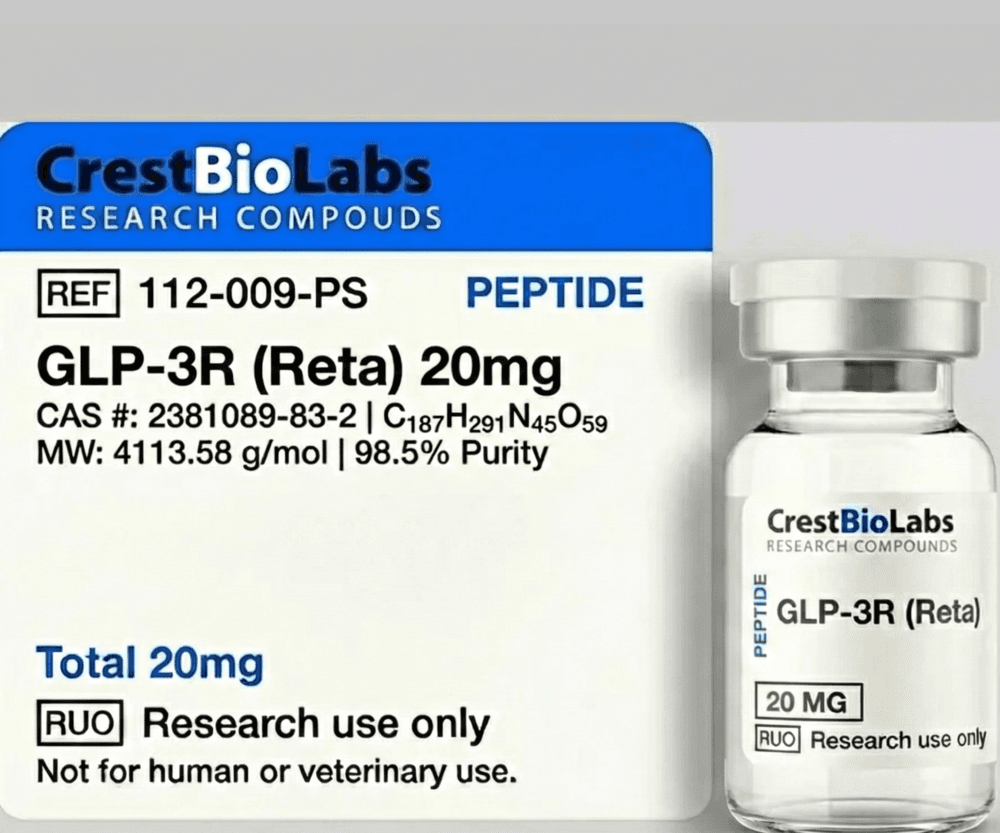
What Are CAS Registry Numbers?
The Chemical Abstracts Service (CAS), a division of the American Chemical Society, maintains the world's most comprehensive database of chemical substance information. Since its founding in 1907, CAS has cataloged and indexed chemical substances from the global scientific and patent literature, creating a registry that now contains over 210 million unique organic and inorganic substances. Each substance in this registry is assigned a CAS Registry Number — a unique, unambiguous numerical identifier that serves as the international standard for chemical substance identification.
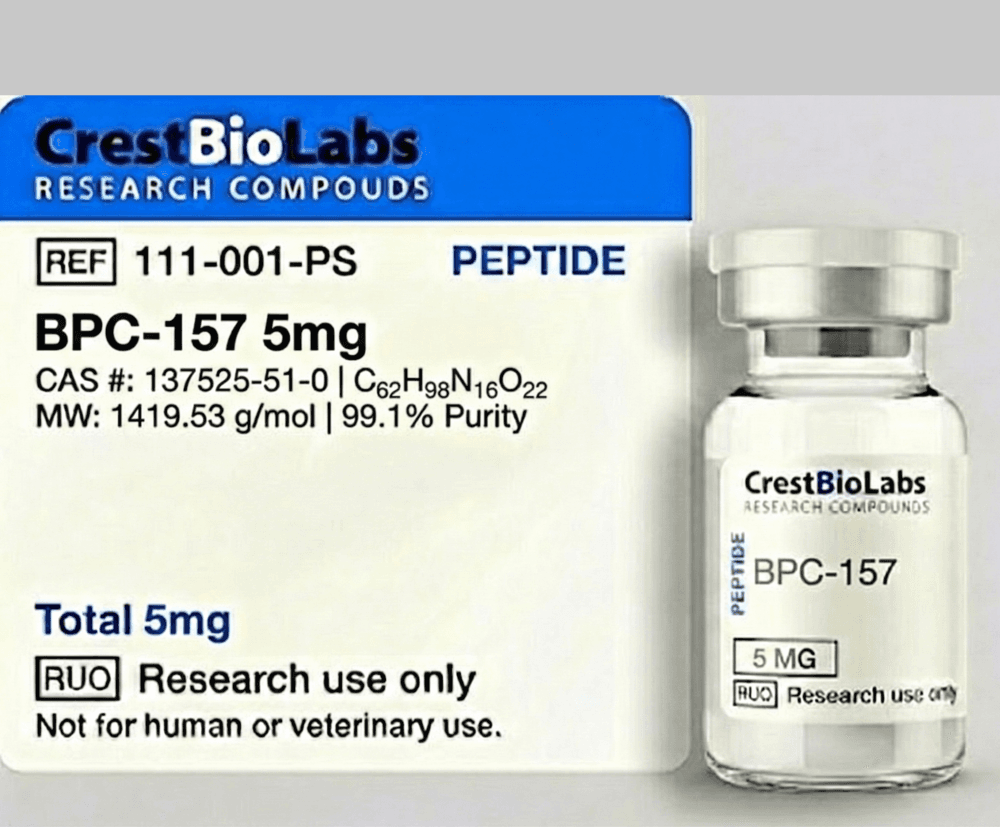
A CAS Registry Number (CAS RN) is a sequence of up to 10 digits, formatted into three groups separated by hyphens: a group of 2 to 7 digits, followed by a group of 2 digits, followed by a single check digit. For example, BPC-157 has the CAS RN 137525-51-0. The check digit (the final digit after the second hyphen) is computed from all preceding digits using a weighted sum algorithm: each digit is multiplied by its position (counting from right to left, starting from 2 for the digit immediately before the check digit), the products are summed, and the check digit is the remainder when the sum is divided by 10. This checksum provides a built-in error-detection mechanism that catches transcription errors.
It is important to understand that CAS numbers are purely sequential identifiers — they encode no structural, chemical, or biological information. The number 137525-51-0 tells you nothing about BPC-157's molecular formula, structure, or function; it simply maps to a unique record in the CAS database that contains all of that information. This abstraction is a feature, not a limitation: it means CAS numbers are language-independent, nomenclature-independent, and immune to the ambiguities that plague common chemical names.
How CAS Numbers Are Assigned by the Chemical Abstracts Service
When a new chemical substance first appears in the peer-reviewed literature, a patent filing, or a regulatory submission, CAS scientists evaluate the substance to determine whether it is truly novel — that is, whether it is chemically distinct from all substances already in the registry. This evaluation considers the molecular structure, stereochemistry, isotopic composition, and, for polymers, the monomer composition and connectivity. If the substance is confirmed as new, the next sequential CAS RN is assigned.
For peptides, the CAS registry considers the complete primary sequence (including N-terminal and C-terminal modifications), the stereochemistry of each amino acid (L vs. D), any post-translational modifications or non-natural amino acid substitutions, and the counterion or salt form. A peptide with an acetyl-capped N-terminus and an amidated C-terminus is a different substance from the same sequence with free termini, and each receives a distinct CAS number. Similarly, a peptide supplied as its acetate salt may have a different CAS number from the same peptide as its trifluoroacetate salt, although in practice many peptide CAS numbers refer to the free base form regardless of the actual salt supplied.
Researchers should be aware that some peptides — particularly very new or proprietary sequences — may not yet have assigned CAS numbers. In these cases, alternative identifiers such as UNII codes (Unique Ingredient Identifiers assigned by the FDA), PubChem CIDs, or internal supplier catalog numbers serve as interim identifiers. However, for any peptide with an established presence in the scientific literature, a CAS number will almost certainly be available and should be used as the primary identifier in laboratory records, publications, and procurement documents.
Why CAS Numbers Matter for Research Compound Identification
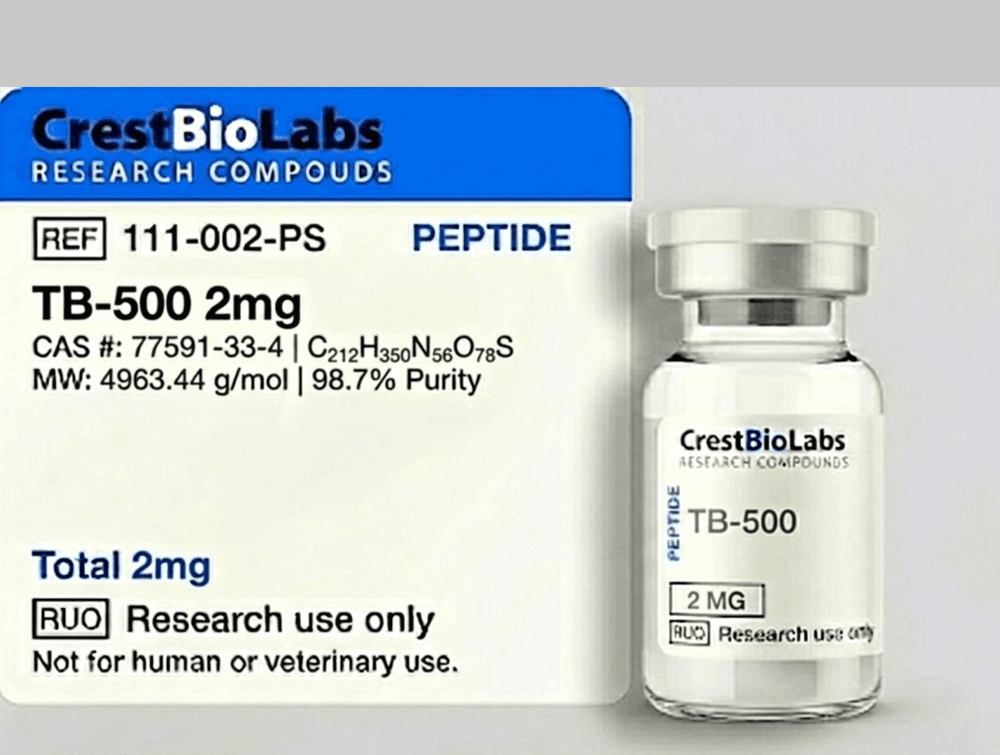
The practical importance of CAS numbers in research stems from the fundamental problem of chemical nomenclature: a single compound may have dozens of different names. Consider the peptide commonly known as TB-500. This compound is also referred to as Thymosin Beta-4, Thymosin Beta 4, Timbetasin, TB4, and by various other abbreviations and trade names in different countries and commercial contexts. If a researcher orders "TB-500" from one supplier and "Thymosin Beta-4" from another, are they receiving the same compound? Only by comparing CAS numbers (in this case, 77591-33-4 for both) can they be certain.
In the publication context, citing CAS numbers eliminates ambiguity for readers attempting to reproduce experiments. A materials and methods section that lists "BPC-157 (CAS 137525-51-0, 99.1% purity by HPLC, Crest Bio Labs, lot CBL-2024-001)" provides unambiguous compound identification that can be verified against any chemical database in the world. Without the CAS number, a reader must rely on the common name and hope that it maps to the same chemical entity the original researcher used.
CAS numbers are also essential in regulatory and compliance contexts. Institutional chemical inventory systems, environmental health and safety databases, import/export documentation, and regulatory filings all rely on CAS numbers as the primary substance identifier. For laboratories that must maintain inventories of research compounds for compliance with institutional biosafety committees, DEA regulations (for controlled substances), or export control laws, CAS numbers provide the standardized identification framework on which these systems depend.
How to Look Up Compounds by CAS Number
Several authoritative databases allow researchers to look up chemical substances by CAS number or to find the CAS number for a compound identified by name or structure. The CAS SciFinder and CAS SciFinderN platforms provide the most comprehensive access to the CAS Registry and its associated bibliographic, reaction, and supplier databases. These are subscription-based services available through most university and institutional library systems.
Free alternatives include PubChem (pubchem.ncbi.nlm.nih.gov), operated by the National Center for Biotechnology Information, which contains records for over 110 million chemical substances and cross-references CAS numbers with other identifiers, bioassay data, and literature references. The NIST Chemistry WebBook (webbook.nist.gov) provides CAS-number-indexed access to thermochemical, spectroscopic, and physical property data. ChemSpider (chemspider.com), operated by the Royal Society of Chemistry, aggregates data from hundreds of sources and provides CAS number lookup alongside structural information, predicted properties, and supplier links.
For research peptides specifically, the most convenient sources of CAS numbers are the product certificate of analysis (COA), the product data sheet, and the Safety Data Sheet (SDS) — all of which are typically provided by the supplier at the time of purchase or available for download from the supplier website. When publishing research, always verify CAS numbers against an authoritative database rather than relying solely on supplier documentation, as occasional errors in product literature do occur.