
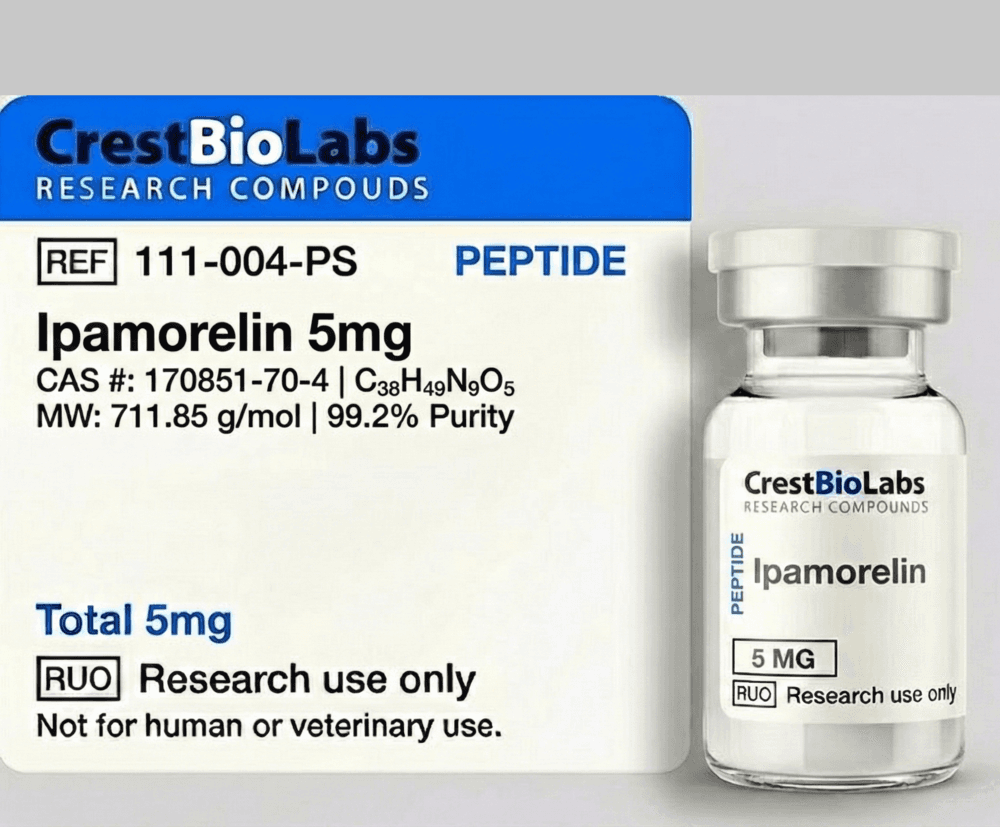
Ipamorelin 5mg
Ipamorelin is a selective growth hormone secretagogue and ghrelin receptor agonist. It is a pentapeptide with a unique selectivity profile.
Quick Reference
This product is temporarily unavailable. Join our notification list to be the first to know when it's back in stock.
About Ipamorelin 5mg
Ipamorelin is a third-generation growth hormone-releasing peptide (GHRP) composed of five amino acids. It is distinguished from other GHRPs by its high selectivity for the growth hormone secretagogue receptor. Research has shown it to have a clean growth hormone release profile without significant effects on cortisol or prolactin levels.
Mechanism of Action
Selective agonist of the growth hormone secretagogue receptor (GHS-R1a) on pituitary somatotrophs, stimulating GH release without significantly affecting cortisol, prolactin, or ACTH levels.
Research Applications
Ipamorelin, the first selective growth hormone secretagogue
European Journal of Endocrinology (1998)
Growth hormone-releasing peptides: clinical and basic aspect...
Journal of Pediatric Endocrinology & Metabolism (2001)
Ipamorelin, a new growth-hormone-releasing peptide, induces ...
Growth Hormone & IGF Research (2000)
Product Quick Facts
HPLC Verified
99.2% purity confirmed
COA Available
Full chromatograms & MS data
Same-Day Shipping
Orders before 2 PM EST
Cold Chain
Temperature-controlled packaging
Handling Protocol
- •Store at -20°C, desiccated
- •Reconstitute with bacteriostatic water
- •Avoid repeated freeze-thaw cycles
- •Handle under sterile conditions
Related Research
What Are Peptides?
Introduction to peptide structure, classification, and research significance.
Solid-Phase Peptide Synthesis (SPPS)
How SPPS works, Fmoc vs Boc chemistry, and modern synthesis advances.
HPLC Purity Testing Explained
How HPLC validates peptide purity and why it matters for research.
Metabolic Research Compounds Hub
Research compounds investigated in preclinical models of metabolic function.
Frequently Asked Questions About Ipamorelin 5mg
Ipamorelin is the most selective of the three GHRPs, activating GHS-R1a with minimal off-target engagement of cortisol, prolactin, or ACTH release pathways, whereas GHRP-6 strongly stimulates appetite via hypothalamic orexigenic circuits and elevates cortisol, and GHRP-2 shows intermediate selectivity with moderate cortisol and prolactin elevations at higher concentrations. In direct comparison studies using rat pituitary cell cultures, Ipamorelin produced dose-dependent GH release with an EC50 similar to GHRP-6 but showed no measurable ACTH or cortisol increase even at supraphysiological concentrations up to 200-fold above its GH-releasing EC50. GHRP-6 also triggers significant gastric acid secretion and ghrelin-like hunger signaling that can confound metabolic studies, while Ipamorelin does not produce these effects.
Selectivity in this context means Ipamorelin binds and activates the growth hormone secretagogue receptor type 1a (GHS-R1a) on pituitary somatotrophs to trigger GH release without cross-activating the downstream pathways that lead to ACTH secretion from corticotrophs or prolactin release from lactotrophs. At the molecular level, this likely reflects a biased agonism mechanism where Ipamorelin stabilizes a GHS-R1a conformation that preferentially couples to Gq/11-mediated calcium signaling in somatotrophs while poorly engaging the receptor conformations responsible for broader hypothalamic-pituitary-adrenal axis activation. This is distinct from the native ligand ghrelin, which activates GHS-R1a promiscuously across multiple pituitary cell types and hypothalamic nuclei.
Cortisol is a potent catabolic hormone and immunomodulator that alters gene expression in virtually every tissue, so any GH secretagogue that co-elevates cortisol introduces a major confounding variable that requires additional control groups and complicates data interpretation in anabolic or metabolic studies. Prolactin elevation similarly confounds reproductive, immune, and metabolic research endpoints, as prolactin receptors are expressed across a wide tissue distribution including liver, adipose, and immune cells. Ipamorelin's clean selectivity profile eliminates these variables, reducing the number of animals or experimental replicates needed to achieve statistical power on GH-specific endpoints.
Add 2-2.5 mL of bacteriostatic water to the 5mg lyophilized vial, directing the stream down the inner glass wall to gently hydrate the peptide cake without foaming. Ipamorelin is also soluble in DMSO and DMF for cell culture applications where aqueous vehicles are incompatible with the assay system, though DMSO stock concentrations should be prepared at 10-50 mM and diluted so final DMSO concentration in culture media does not exceed 0.1%. The reconstituted aqueous solution should be clear and colorless; store at 2-8°C for up to 28 days, as Ipamorelin's pentapeptide structure with non-natural amino acids (Aib, D-2-Nal, D-Phe) confers good solution stability relative to longer-chain peptides.
Ipamorelin activates GHS-R1a (a Gq-coupled GPCR) which triggers IP3-mediated calcium release from intracellular stores in somatotrophs, while CJC-1295 No DAC activates the GHRH receptor (a Gs-coupled GPCR) which elevates cAMP through adenylate cyclase — these two distinct second messenger cascades converge to produce a GH release event far larger than either signal alone. The cAMP elevation from GHRH-R primes the somatotroph by activating protein kinase A, which phosphorylates voltage-gated calcium channels to increase their open probability, meaning the subsequent calcium surge from GHS-R1a activation encounters a cell already poised for maximal exocytosis. Published animal data demonstrates that this combination produces GH amplitudes 3-10 times greater than either peptide in isolation, with the effect being truly synergistic (supra-additive) rather than simply additive.
First-generation GHRPs such as GHRP-6 were identified through systematic screening of met-enkephalin analogs and demonstrated potent GH release but with significant off-target effects including appetite stimulation, cortisol elevation, and aldosterone release. Second-generation compounds like GHRP-2 and hexarelin improved potency and partially reduced some off-target effects but still elevated cortisol and prolactin at effective GH-releasing concentrations. Ipamorelin, developed by Novo Nordisk in the late 1990s, represents the third generation by incorporating non-natural amino acids (alpha-aminoisobutyric acid and D-2-naphthylalanine) into a minimized pentapeptide scaffold that was specifically optimized for GHS-R1a selectivity using structure-activity relationship studies.
GHS-R1a is the full-length, seven-transmembrane domain receptor that functions as the canonical signaling receptor for ghrelin and synthetic GHRPs including Ipamorelin, coupling to Gq/11 to mobilize intracellular calcium and stimulate GH release from somatotrophs. GHS-R1b is a truncated splice variant containing only five transmembrane domains that does not signal in response to ghrelin or GHRPs, but it does heterodimerize with GHS-R1a and attenuate its signaling efficiency in a dominant-negative manner. In tissues where GHS-R1b is highly expressed relative to GHS-R1a, the GH-releasing efficacy of Ipamorelin may be reduced due to this heterodimerization-mediated dampening effect.
The Svensson et al. (2000) study in adult female rats demonstrated that Ipamorelin administration increased bone mineral content and periosteal bone formation markers without the concurrent cortisol and prolactin elevations observed with other GHRPs, providing early evidence that Ipamorelin's selective GH elevation could drive anabolic skeletal effects through a cleaner endocrine profile. Specifically, the study measured increases in body weight gain, longitudinal and cross-sectional bone growth, and alkaline phosphatase activity as a marker of osteoblast function. This paper remains a landmark reference because it established that selective GHS-R1a agonism could achieve tissue-level anabolic outcomes comparable to less selective secretagogues while maintaining a more favorable endocrine side-effect profile in research models.
You May Also Need
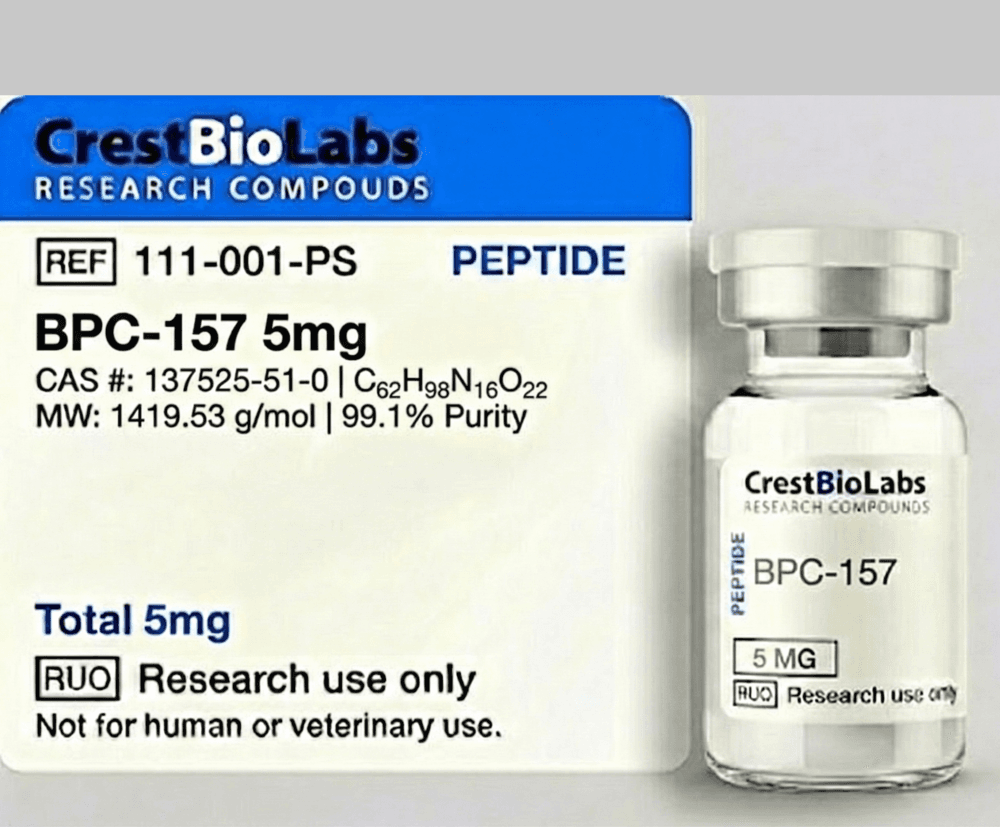
BPC-157 5mg
C62H98N16O22
Body Protection Compound-157 (BPC-157) is a pentadecapeptide composed of 15 amino acids. It is a partial sequence of body protection compound derived from human gastric juice.
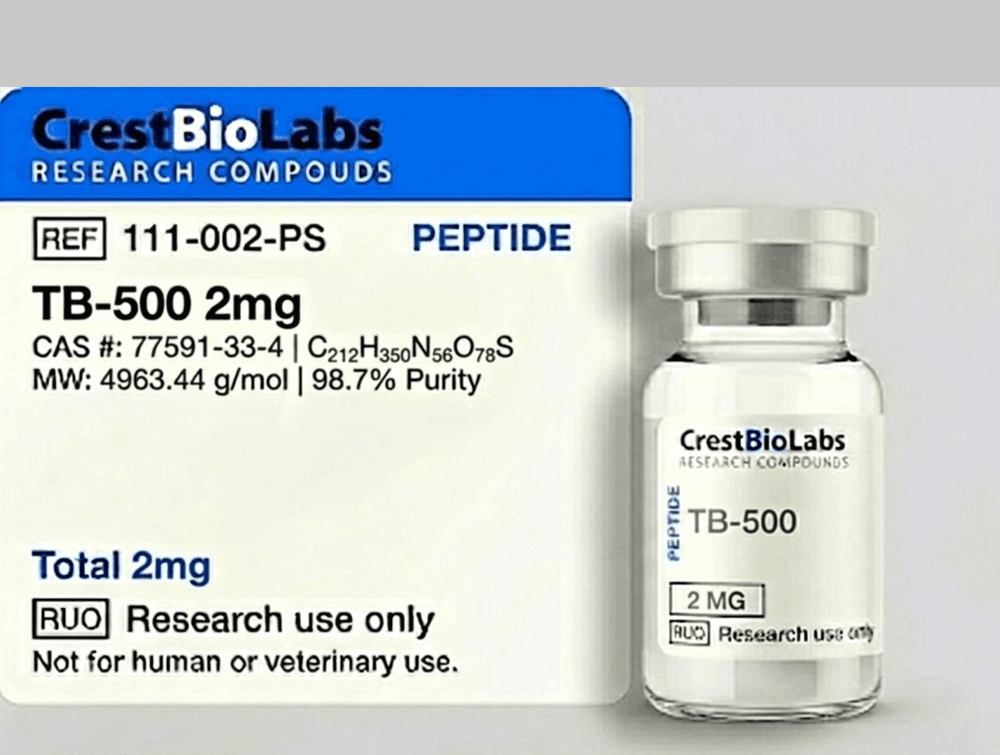
TB-500 2mg
C212H350N56O78S
Thymosin Beta-4 (TB-500) is a naturally occurring peptide present in virtually all human and animal cells. It plays a critical role in tissue repair and regeneration.
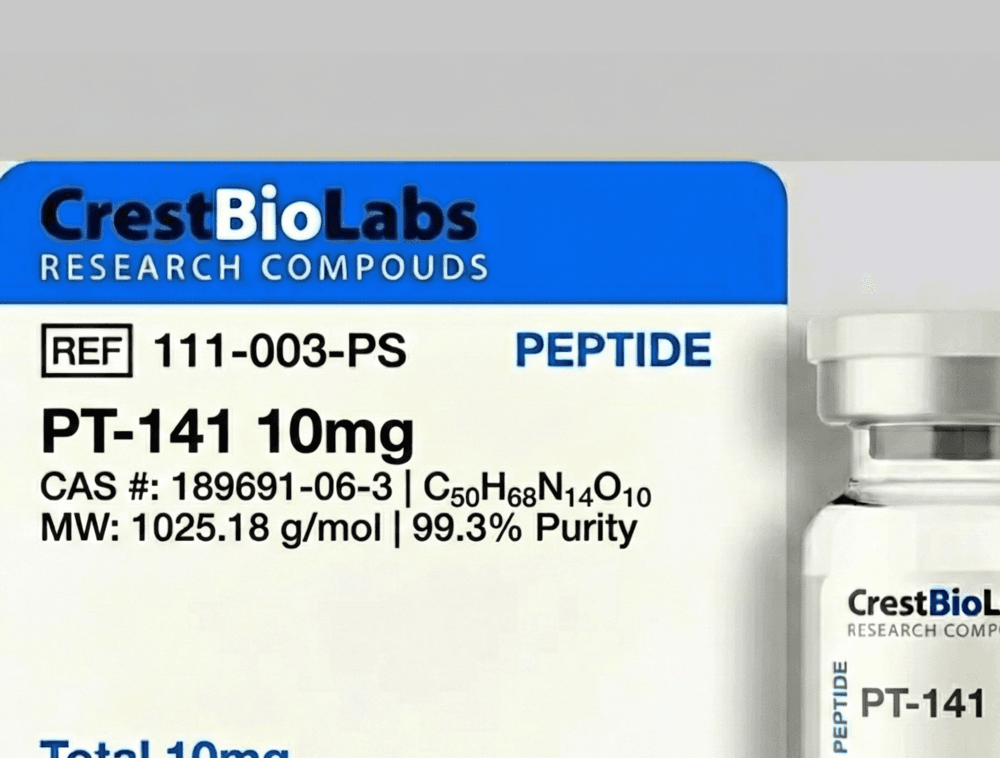
PT-141 10mg
C50H68N14O10
PT-141 (Bremelanotide) is a synthetic peptide analog of alpha-melanocyte stimulating hormone. It was developed from Melanotan II research.
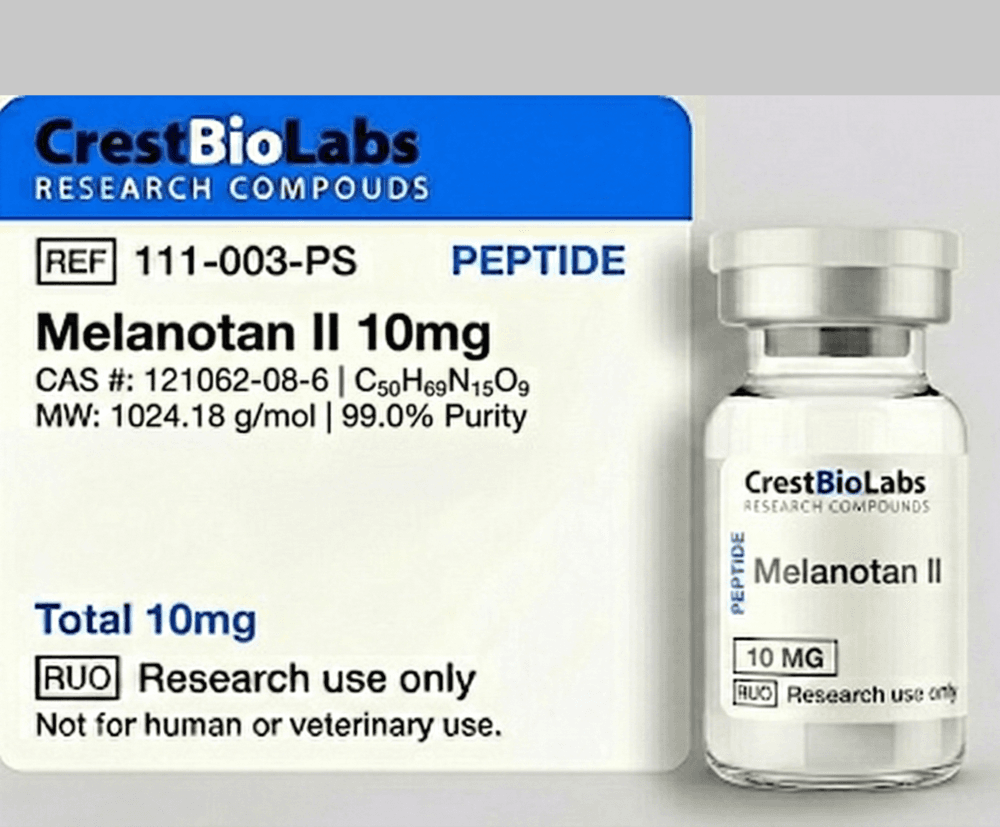
Melanotan II 10mg
C50H69N15O9
Melanotan II is a synthetic analog of the naturally occurring melanocortin peptide hormone alpha-melanocyte-stimulating hormone (α-MSH).