Overview
Ipamorelin is a synthetic pentapeptide growth hormone secretagogue (GHS) that selectively activates the growth hormone secretagogue receptor (GHSR, also known as the ghrelin receptor). Developed by Novo Nordisk in the mid-1990s, ipamorelin was identified through systematic structure-activity relationship studies aimed at creating potent, selective GHS peptides with minimal off-target effects. The compound emerged from a program that screened thousands of pentapeptide derivatives for GHSR agonist activity, and it was selected for its combination of potency, selectivity, and favorable pharmacological profile.
The research history of ipamorelin is closely linked to the discovery and characterization of the growth hormone secretagogue receptor pathway. The GHS receptor was identified in the late 1990s by Howard and colleagues as the receptor for the endogenous peptide ghrelin, a 28-amino acid acylated peptide produced primarily in the stomach. However, the existence of a GHS pathway distinct from the GHRH pathway had been recognized since the early 1980s through the work of Bowers, Momany, and others who demonstrated that small synthetic peptides and peptidomimetics could stimulate GH release through a GHRH-independent mechanism.
Ipamorelin is distinguished from earlier GHS peptides (such as GHRP-6 and GHRP-2) and non-peptide GHS agonists by its high selectivity for the somatotropic axis. Published comparative studies have demonstrated that ipamorelin stimulates GH release with minimal effects on cortisol, prolactin, and ACTH levels in experimental models. This selectivity profile has made ipamorelin a preferred research tool for studying GHS receptor-mediated effects on the somatotropic axis in isolation from confounding neuroendocrine effects.
Structurally, ipamorelin is a pentapeptide containing two non-natural amino acid residues (alpha-aminoisobutyric acid at position 1 and D-2-naphthylalanine at position 3), which contribute to its receptor selectivity and metabolic stability. The incorporation of non-natural residues is a common strategy in peptide medicinal chemistry for enhancing pharmacological properties while maintaining the compact size necessary for receptor binding.
In the published research literature, ipamorelin has been extensively used as a tool compound for investigating GHSR signaling, somatotroph biology, and the interactions between the GHS and GHRH pathways. The compound has been employed in cell-based receptor binding assays, calcium mobilization studies, cAMP measurements, and various in-vivo experimental models. Its well-defined pharmacology and commercial availability in research-grade purity have made it a standard reference compound in neuroendocrinology research.
The significance of ipamorelin in the broader context of GHS research is underscored by its role in validating the concept of selective somatotropic GHS receptor agonism. While the endogenous ligand ghrelin has broad effects on appetite, gastrointestinal motility, and energy metabolism in addition to GH release, ipamorelin's selectivity demonstrates that the somatotropic component of GHS receptor signaling can be preferentially activated by appropriately designed ligands. This principle has informed the design of subsequent GHSR-targeted research tools and has contributed to the understanding of biased agonism at the ghrelin receptor.
Chemical Classification
Ipamorelin is classified as a synthetic pentapeptide growth hormone secretagogue (GHS). It belongs to the family of GHSR (ghrelin receptor) agonists, compounds that bind to and activate the growth hormone secretagogue receptor type 1a (GHS-R1a), a G protein-coupled receptor expressed in the anterior pituitary and various other tissues.
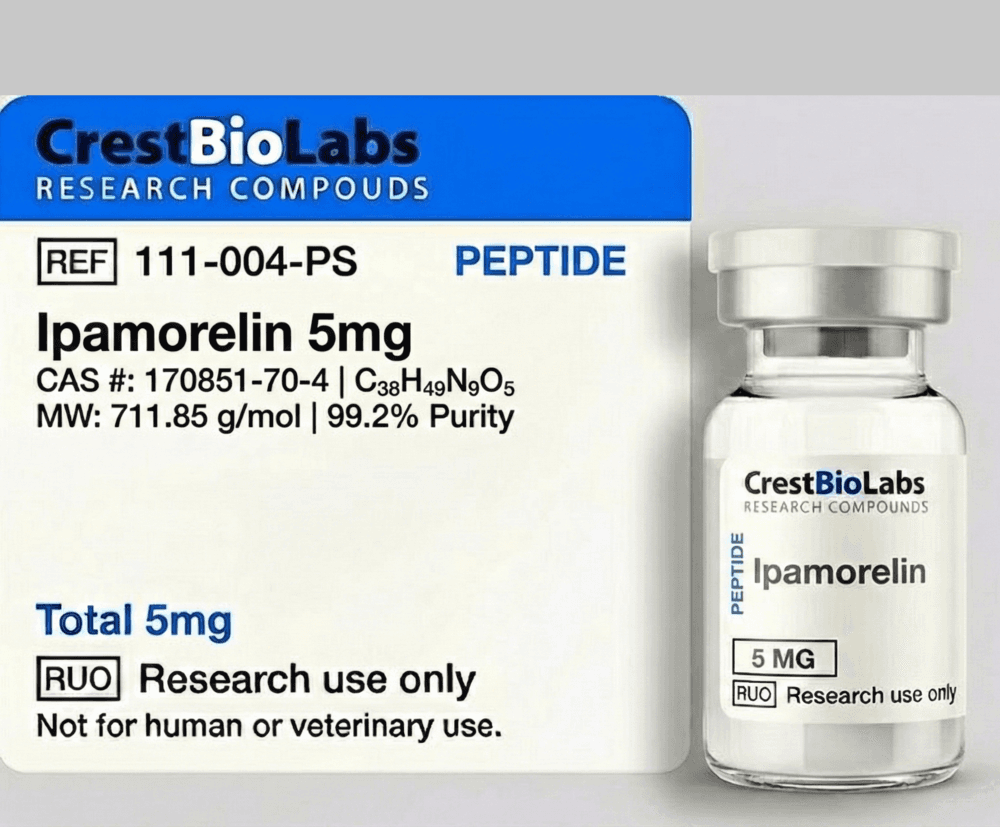
Chemically, ipamorelin is a pentapeptide containing two non-natural amino acid residues: alpha-aminoisobutyric acid (Aib) at position 1 and D-2-naphthylalanine (D-2-Nal) at position 3. The peptide has an amidated C-terminus and a molecular weight of 711.85 Da, making it one of the smaller bioactive peptides used in research settings.
Within the taxonomy of GHS compounds, ipamorelin is classified as a selective somatotropic GHS, based on its preferential stimulation of GH release without significant effects on other pituitary hormones in preclinical studies. This distinguishes it from non-selective GHS peptides such as GHRP-6 and hexarelin, which also stimulate cortisol and prolactin release. Ipamorelin is further classified as a peptide GHS, distinguishing it from non-peptide GHS agonists such as MK-677 (ibutamoren).
Structural Information
Ipamorelin is a pentapeptide with a molecular weight of 711.85 Da, representing one of the most compact bioactive peptides in the GHS class. The peptide sequence is Aib-His-D-2-Nal-D-Phe-Lys-NH2, with an amidated C-terminus and no cyclization or disulfide bonds.
The alpha-aminoisobutyric acid (Aib) residue at position 1 is a key structural feature. Aib is a symmetrically disubstituted amino acid with two methyl groups on the alpha-carbon, which strongly constrains the backbone dihedral angles and promotes helical or turn conformations. The gem-dimethyl substitution also provides resistance to aminopeptidases, which require access to the alpha-carbon hydrogen for substrate recognition.
The D-2-naphthylalanine (D-2-Nal) residue at position 3 features a bicyclic naphthalene ring system that provides an extended aromatic surface for hydrophobic interactions within the GHSR binding pocket. The D-configuration of this residue, combined with the D-configuration of the phenylalanine at position 4, creates a distinctive backbone geometry that presents the aromatic side chains in an optimal orientation for receptor engagement.
The histidine residue at position 2 contributes an imidazole ring that can participate in hydrogen bonding and coordination interactions. The lysine residue at position 5, with its terminal C-terminal amide, provides a positive charge that may form salt bridges with acidic receptor residues.
The overall structure of ipamorelin is characterized by a high proportion of non-natural residues (2 out of 5), which contributes to both its receptor selectivity and its resistance to proteolytic degradation. The compact size of the pentapeptide allows it to occupy a specific sub-pocket within the GHSR binding site, which may explain its selectivity profile compared to larger GHS peptides that contact additional receptor regions.
Conformational analysis suggests that ipamorelin adopts a turn-like conformation in solution, with the two D-amino acids at positions 3 and 4 inducing a type II' beta-turn that presents the flanking residues in a defined spatial arrangement.
Mechanism of Action
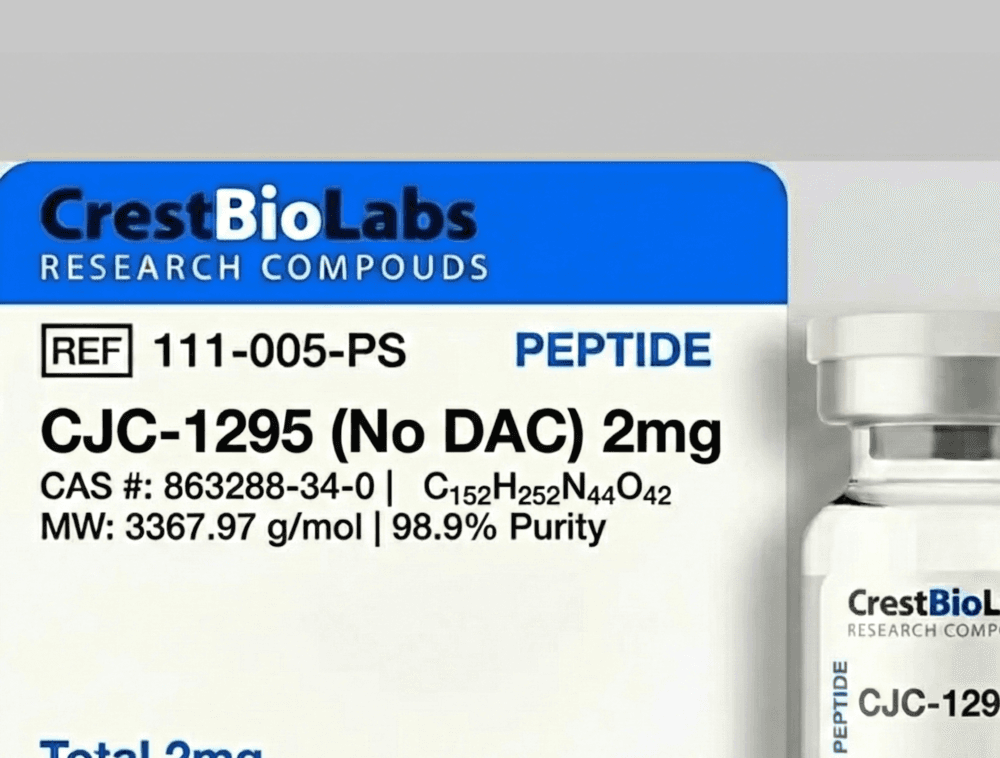
Ipamorelin exerts its effects through selective agonism of the growth hormone secretagogue receptor type 1a (GHS-R1a), a seven-transmembrane G protein-coupled receptor predominantly coupled to Gq/11 signaling. The mechanism of action at the molecular and cellular level involves a distinct signaling cascade from that of GHRH analogs such as CJC-1295 No DAC.
Upon ipamorelin binding, the activated GHS-R1a couples to Gq/11, stimulating phospholipase C (PLC). PLC catalyzes the hydrolysis of phosphatidylinositol 4,5-bisphosphate (PIP2) into inositol 1,4,5-trisphosphate (IP3) and diacylglycerol (DAG). IP3 triggers the release of calcium from intracellular stores (primarily the endoplasmic reticulum) through IP3 receptor channels, while DAG activates protein kinase C (PKC). The resulting elevation in intracellular calcium concentration stimulates the exocytosis of GH-containing secretory granules from somatotroph cells.
A distinctive feature of ipamorelin's mechanism is the involvement of additional ion channel modulation. GHSR activation has been shown to inhibit inwardly rectifying potassium channels (Kir) through a PLC/PKC-dependent mechanism, leading to membrane depolarization. This depolarization opens voltage-gated calcium channels (L-type and T-type), providing a sustained calcium influx that augments the IP3-mediated calcium release from intracellular stores. The dual calcium mobilization (IP3-mediated release plus voltage-gated influx) produces a robust secretory response.
The selectivity of ipamorelin for the somatotropic axis, without significant stimulation of cortisol, prolactin, or ACTH, distinguishes its mechanism from that of non-selective GHS compounds. This selectivity is thought to arise from its specific binding pose within the GHSR that preferentially activates Gq/11-PLC signaling over alternative pathways that may lead to corticotroph or lactotroph stimulation. The concept of biased agonism, where different ligands at the same receptor activate distinct downstream signaling cascades, may explain ipamorelin's selective profile.
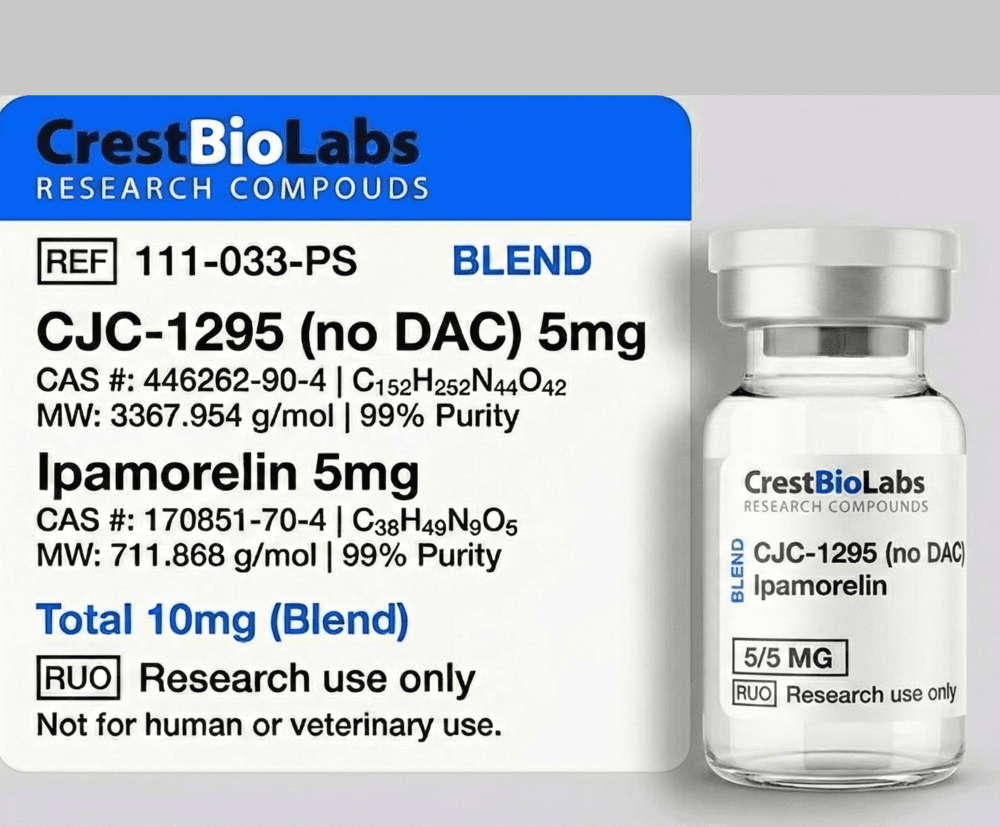
The complementary nature of the GHS and GHRH signaling pathways is central to understanding how ipamorelin and CJC-1295 No DAC interact when studied together. The GHRH pathway (Gs-cAMP-PKA) and the GHS pathway (Gq-PLC-IP3/DAG) converge at the level of intracellular calcium in somatotrophs, producing synergistic effects on GH release. This mechanistic synergy has been documented in preclinical studies and provides the rational basis for combined research protocols.
Stability and Storage
Ipamorelin demonstrates good stability in its lyophilized form, consistent with its compact pentapeptide structure and the presence of non-natural amino acid residues that confer resistance to enzymatic degradation.
Lyophilized ipamorelin should be stored at -20°C or below, desiccated and protected from light. Under these conditions, the peptide remains stable for extended periods. Storage at 2-8°C is acceptable for short-term use.
Reconstituted solutions should be stored at 4°C for short-term use (up to 7-14 days) or aliquoted and frozen at -20°C. Ipamorelin is soluble in water and can be reconstituted in sterile water, bacteriostatic water, or dilute acetic acid. The histidine residue may undergo oxidation under prolonged exposure to oxidizing conditions or UV light, so solutions should be protected from direct light.
The primary degradation pathways for ipamorelin in solution include peptide bond hydrolysis, histidine oxidation, and C-terminal deamidation. The D-amino acid residues and Aib provide substantial resistance to enzymatic degradation, making ipamorelin more stable than most natural-sequence peptides of comparable size. The main stability concern is the chemical (non-enzymatic) degradation pathways, which are minimized by appropriate temperature, pH, and light protection.
Analytical monitoring by reversed-phase HPLC and mass spectrometry is recommended for assessing the integrity of stored ipamorelin solutions. The peptide's small size (711.85 Da) makes it particularly amenable to electrospray ionization mass spectrometry (ESI-MS) for rapid identity confirmation.
For comprehensive storage protocols, see our Peptide Stability & Storage Guide.
Laboratory Handling
Ipamorelin is supplied as a white lyophilized powder. Reconstitution is straightforward: add sterile water or bacteriostatic water to the vial and allow the peptide to dissolve with gentle swirling. Complete dissolution is typically rapid (1-3 minutes) due to the peptide's small size and good aqueous solubility.
Working concentrations for in-vitro GHS receptor binding assays and calcium mobilization studies are typically in the nanomolar range. Stock solutions at 1-10 mM are commonly prepared and diluted as needed. Low-binding tubes are recommended for dilute solutions to minimize surface adsorption.
All handling should be performed under aseptic conditions. Standard laboratory equipment (calibrated micropipettes, sterile filtered tips, laminar flow hood) should be used for reconstitution, aliquoting, and dilution operations.
For detailed reconstitution procedures, consult our Laboratory Handling Protocols.
Safety Considerations
Standard laboratory PPE should be worn when handling ipamorelin, including nitrile gloves, safety glasses, and a laboratory coat. Handle the lyophilized powder in a ventilated area. Ipamorelin is a pharmacologically active GHSR agonist; skin and eye contact should be avoided. The compound is intended exclusively for in-vitro research and laboratory investigation. Follow all institutional safety guidelines.
Published Research & Literature
The following peer-reviewed publications represent key research on Ipamorelin. All citations reference studies available through major scientific databases.
Ipamorelin, the first selective growth hormone secretagogue
Raun K, Hansen BS, Johansen NL, et al.
European Journal of Endocrinology (1998) · DOI: 10.1530/eje.0.1390552
Growth hormone secretagogues: types, pharmacology, and clinical potential
Bowers CY.
Journal of Clinical Endocrinology and Metabolism (1998) · DOI: 10.1210/jcem.83.8.5126
Ipamorelin, a new growth-hormone-releasing peptide, induces longitudinal bone growth in rats
Johansen PB, Nowak J, Skjaerbaek C, et al.
Growth Hormone & IGF Research (1999) · DOI: 10.1054/ghir.1999.9998
The ghrelin receptor: a target for regulation of food intake and body weight
Howard AD, Feighner SD, Cully DF, et al.
Science (1996) · DOI: 10.1126/science.273.5277.974
Growth hormone secretagogue receptor family members and ligands
Smith RG, Van der Ploeg LH, Howard AD, et al.
Endocrine Reviews (1997) · DOI: 10.1210/edrv.18.5.0316
Comparison of the pharmacological profiles of selective GH secretagogues
Hansen BS, Raun K, Nielsen KK, et al.
Journal of Endocrinology (1999) · DOI: 10.1677/joe.0.1590107
Related Research Resources
Research Use Only: All information on this page is provided for educational and research reference purposes.Ipamorelin is sold strictly for in-vitro laboratory and research use only. It is not intended for human or animal consumption. Not a drug, dietary supplement, or food additive. Not evaluated by the FDA.