
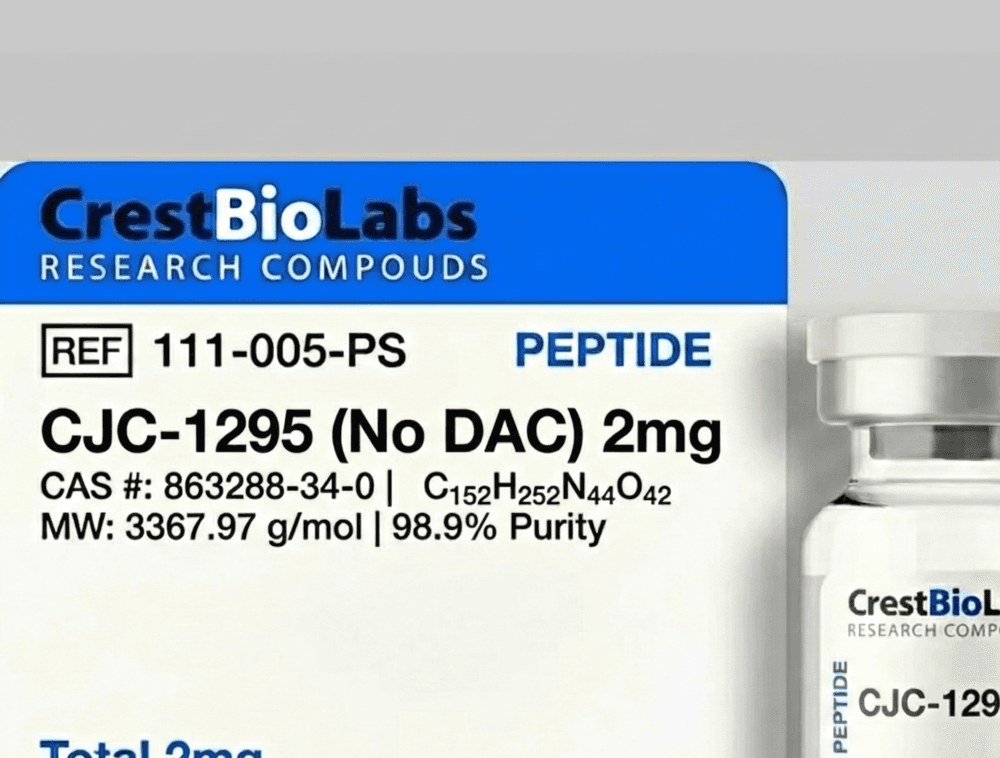
CJC-1295 (No DAC) 2mg
CJC-1295 without DAC (also known as Mod GRF 1-29) is a synthetic analog of growth hormone-releasing hormone with modified amino acids.
Quick Reference
This product is temporarily unavailable. Join our notification list to be the first to know when it's back in stock.
About CJC-1295 (No DAC) 2mg
CJC-1295 without Drug Affinity Complex is a tetrasubstituted 29-amino acid peptide hormone that functions as a growth hormone releasing hormone analog. It has been studied for its ability to increase plasma growth hormone concentrations. This variant does not include the Drug Affinity Complex, resulting in a shorter half-life compared to the DAC version.
Mechanism of Action
Acts as a growth hormone-releasing hormone (GHRH) receptor agonist, binding to GHRH-R on anterior pituitary somatotrophs to stimulate pulsatile growth hormone release via cAMP/PKA signaling.
Research Applications
Prolonged stimulation of growth hormone (GH) and insulin-lik...
Journal of Clinical Endocrinology & Metabolism (2006)
Effects of a growth hormone-releasing hormone analog on endo...
Journal of Clinical Endocrinology & Metabolism (2006)
Product Quick Facts
HPLC Verified
98.9% purity confirmed
COA Available
Full chromatograms & MS data
Same-Day Shipping
Orders before 2 PM EST
Cold Chain
Temperature-controlled packaging
Handling Protocol
- •Store at -20°C, desiccated
- •Reconstitute with bacteriostatic water
- •Avoid repeated freeze-thaw cycles
- •Handle under sterile conditions
Related Research
What Are Peptides?
Introduction to peptide structure, classification, and research significance.
Solid-Phase Peptide Synthesis (SPPS)
How SPPS works, Fmoc vs Boc chemistry, and modern synthesis advances.
Mass Spectrometry for Peptide Analysis
ESI-MS and MALDI-TOF methods for confirming peptide identity.
Metabolic Research Compounds Hub
Research compounds investigated in preclinical models of metabolic function.
Frequently Asked Questions About CJC-1295 (No DAC) 2mg
CJC-1295 without DAC (Mod GRF 1-29) has a plasma half-life of approximately 30 minutes and produces acute, pulsatile GH release that mimics natural secretory dynamics, while the DAC (Drug Affinity Complex) version covalently binds to serum albumin via a maleimidopropionic acid linker, extending its half-life to roughly 8 days and producing sustained, non-pulsatile GH elevation. In research models, the no-DAC variant is preferred when investigators need to study discrete GH pulses and preserve the hypothalamic-pituitary feedback loop, whereas the DAC variant is used to study the effects of chronically elevated GH baselines. The sustained elevation from the DAC version also complicates experimental timing since GH levels remain elevated across multiple days, making dose-response kinetics harder to isolate.
Mod GRF 1-29 stands for 'Modified Growth Hormone Releasing Factor, amino acids 1 through 29,' indicating it is a modified version of the first 29 amino acids of native GHRH (which is the minimum bioactive fragment). The 'modified' designation refers specifically to four amino acid substitutions at positions 2, 8, 15, and 27 that were engineered to confer resistance to enzymatic degradation. The name CJC-1295 was originally a proprietary designation from ConjuChem Biotechnologies, and the 'No DAC' qualifier distinguishes it from their albumin-conjugated version. In research literature, Mod GRF 1-29 and tetrasubstituted GRF(1-29) are the most precise nomenclature, while CJC-1295 No DAC is the more commonly searched commercial term.
The four substitutions are Ala2 to D-Ala2, Asn8 to Gln8, Ala15 to Leu15, and Met27 to Leu27, each targeting a specific enzymatic cleavage site. The D-Ala2 substitution protects against dipeptidyl peptidase IV (DPP-IV), which normally cleaves the Tyr1-Ala2 bond within minutes of exposure to plasma. The Gln8 replacement prevents asparagine deamidation, a non-enzymatic degradation pathway that reduces receptor binding affinity over time in solution. The position 27 leucine substitution eliminates methionine oxidation, which is particularly important for lyophilized storage stability, as oxidized Met27 analogs show significantly reduced cAMP production in pituitary cell assays.
Reconstitute the 2mg lyophilized vial by slowly adding 1-2 mL of bacteriostatic water or sterile 0.9% sodium chloride along the vial wall, allowing the stream to run down the glass rather than directly striking the powder cake. Swirl gently until fully dissolved — do not vortex, as the 3.3 kDa peptide can aggregate at air-liquid interfaces under mechanical stress. The reconstituted solution should be clear and colorless; any persistent turbidity indicates potential aggregation and the vial should be discarded. Store reconstituted aliquots at 2-8°C for up to 21 days, or prepare single-use aliquots at -20°C to avoid repeated freeze-thaw cycles that accelerate deamidation at the Gln8 position.
Both are GHRH receptor agonists, but CJC-1295 No DAC has a half-life approximately 2-3 times longer than Sermorelin (~30 minutes vs ~10-20 minutes) due to its four protective amino acid substitutions that Sermorelin's native sequence lacks. Sermorelin retains the wild-type GHRH(1-29) sequence, making it susceptible to rapid DPP-IV cleavage at the Tyr1-Ala2 bond, which is why Sermorelin-based research protocols require more frequent administration intervals. In comparative pituitary cell assays, both peptides show similar maximal efficacy at the GHRH receptor, but CJC-1295 No DAC achieves a greater area under the curve for cAMP accumulation due to its extended receptor occupancy time. Sermorelin remains preferred in research designs that require the fastest possible clearance, such as GH-reserve diagnostic models that need rapid return to baseline.
CJC-1295 No DAC acts on the GHRH receptor while Ipamorelin acts on the distinct GHS-R1a (ghrelin receptor), and co-administration produces a synergistic rather than merely additive GH response because the two pathways converge on different intracellular signaling cascades within pituitary somatotrophs — cAMP/PKA from GHRH-R and IP3/PKC from GHS-R1a. Published co-stimulation studies in animal models show the combined GH output can be 3-10 times greater than either peptide alone, as GHRH-R activation primes somatotrophs to release larger vesicular GH stores when simultaneously stimulated by a secretagogue. Additionally, GHRH signaling increases GH gene transcription and GH mRNA stabilization, effectively replenishing the releasable GH pool that GHRPs deplete.
CJC-1295 No DAC generates a defined GH pulse that peaks within 15-30 minutes and returns to baseline within approximately 2-3 hours, closely replicating the natural ultradian GH secretory pattern governed by hypothalamic GHRH/somatostatin interplay. This pulsatile profile is critical because GH receptor signaling is pattern-dependent — pulsatile exposure activates different JAK2/STAT5b transcriptional programs than continuous exposure, particularly for sexually dimorphic hepatic gene expression studied in rodent models. Continuous GH elevation, as seen with the DAC variant, downregulates GH receptor surface density through accelerated internalization, which can confound long-term studies.
DPP-IV (dipeptidyl peptidase IV / CD26) is a serine protease abundant in plasma, endothelial surfaces, and kidney brush border membranes that cleaves N-terminal dipeptides from substrates with a penultimate alanine or proline residue — making native GHRH(1-29) an immediate target at the Tyr1-Ala2 bond. The D-Ala2 substitution in CJC-1295 No DAC introduces a stereochemical inversion that prevents DPP-IV from recognizing and hydrolyzing this bond, extending functional half-life from under 5 minutes (native GHRH) to approximately 30 minutes. When collecting plasma samples from research models for CJC-1295 quantification, DPP-IV inhibitors such as diprotin A or sitagliptin are still recommended in collection tubes to protect any co-measured endogenous GHRH or GLP-1 analytes.
You May Also Need
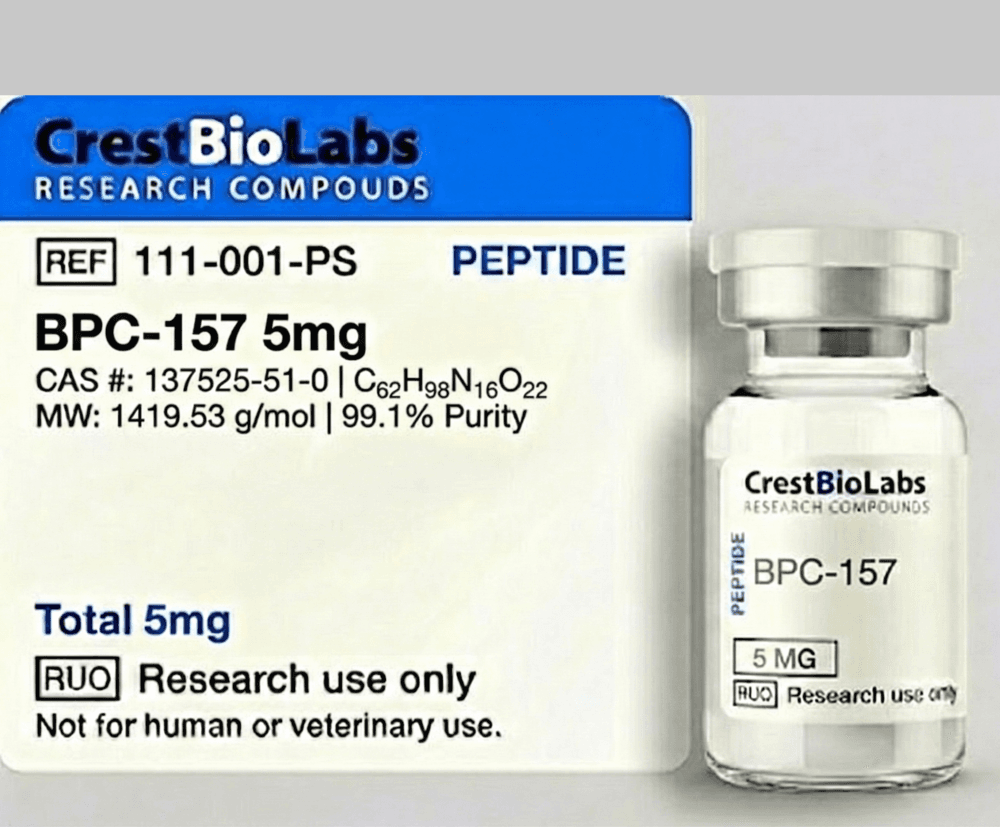
BPC-157 5mg
C62H98N16O22
Body Protection Compound-157 (BPC-157) is a pentadecapeptide composed of 15 amino acids. It is a partial sequence of body protection compound derived from human gastric juice.
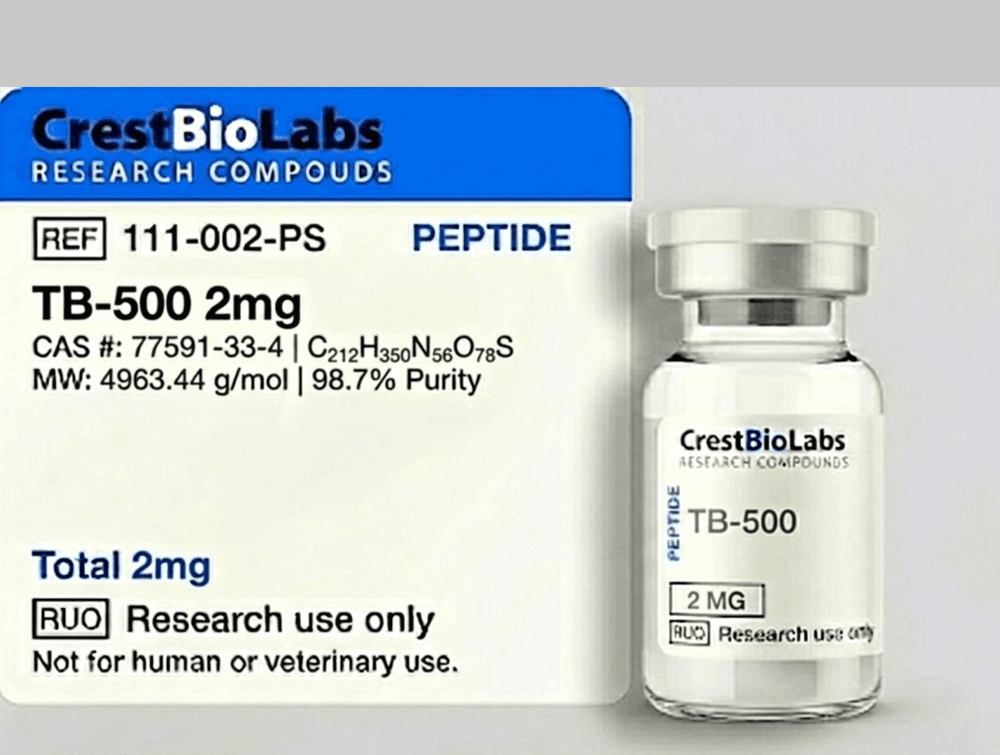
TB-500 2mg
C212H350N56O78S
Thymosin Beta-4 (TB-500) is a naturally occurring peptide present in virtually all human and animal cells. It plays a critical role in tissue repair and regeneration.
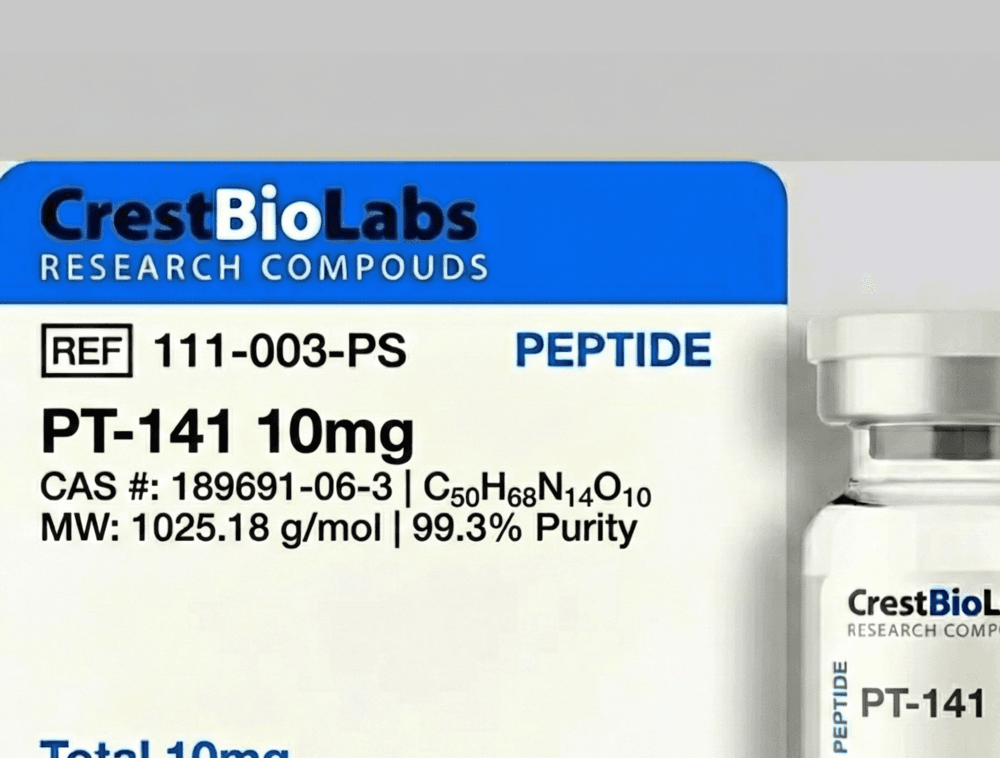
PT-141 10mg
C50H68N14O10
PT-141 (Bremelanotide) is a synthetic peptide analog of alpha-melanocyte stimulating hormone. It was developed from Melanotan II research.
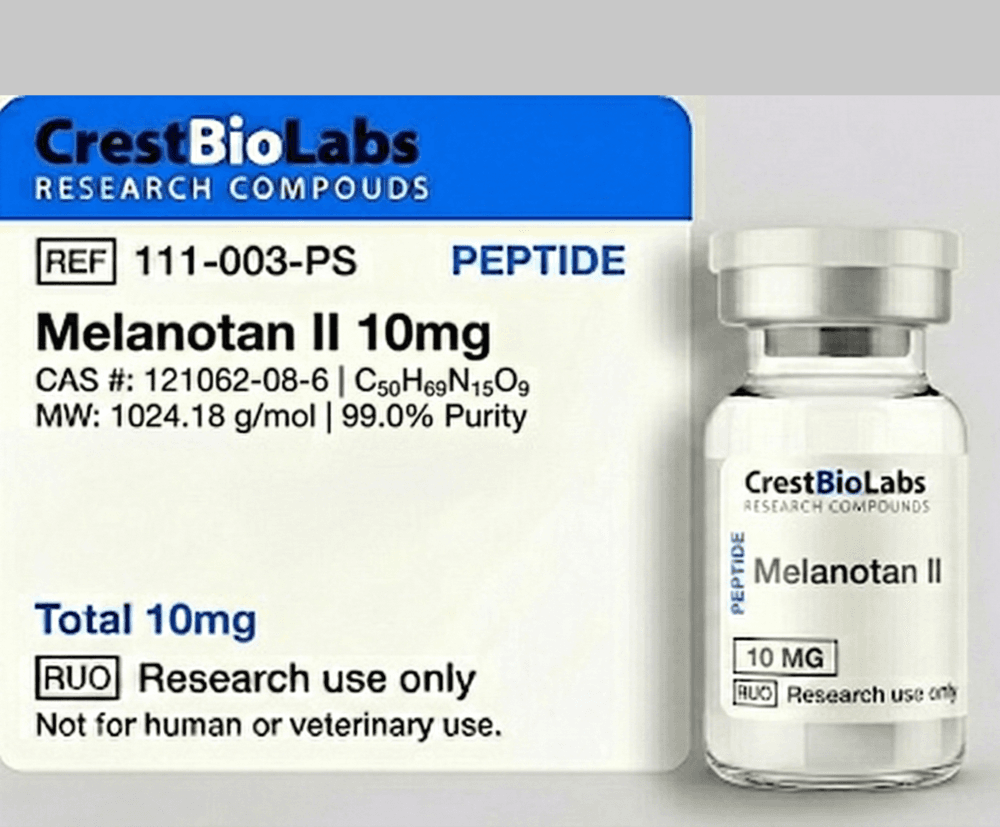
Melanotan II 10mg
C50H69N15O9
Melanotan II is a synthetic analog of the naturally occurring melanocortin peptide hormone alpha-melanocyte-stimulating hormone (α-MSH).