Overview
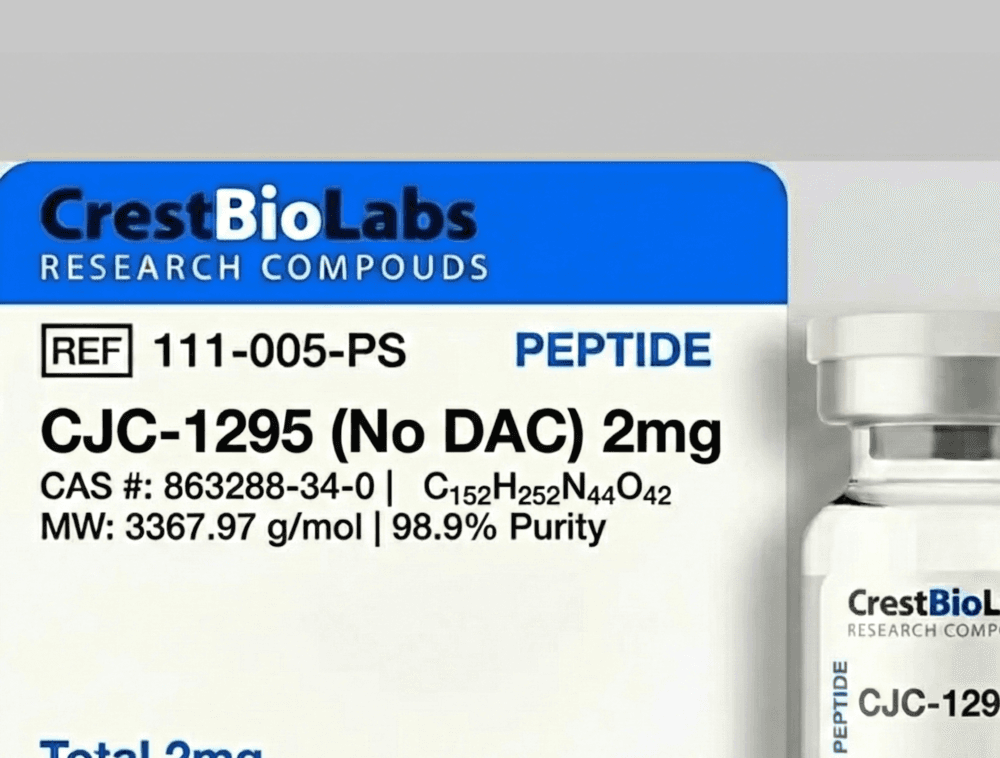
CJC-1295 No DAC, also referred to as Modified GRF(1-29) or Mod GRF 1-29, is a synthetic analog of growth hormone-releasing hormone (GHRH), specifically a modified version of the first 29 amino acids of the 44-amino acid GHRH peptide. The compound incorporates four amino acid substitutions at positions 2, 8, 15, and 27 that enhance metabolic stability while preserving the biological activity of the native GHRH fragment. The "No DAC" designation distinguishes this compound from CJC-1295 with Drug Affinity Complex, a longer-acting variant conjugated to a maleimidopropionic acid linker designed to bind albumin.
The development of CJC-1295 No DAC builds upon decades of research into GHRH and the somatotropic axis. Growth hormone-releasing hormone was first characterized in 1982 by two independent research groups, Roger Guillemin's team and Wylie Vale's laboratory, who isolated and sequenced the peptide from pancreatic tumors. The subsequent determination that the first 29 amino acids of GHRH (GRF 1-29) retained full biological activity at the GHRH receptor prompted the development of truncated analogs with improved pharmacological properties.
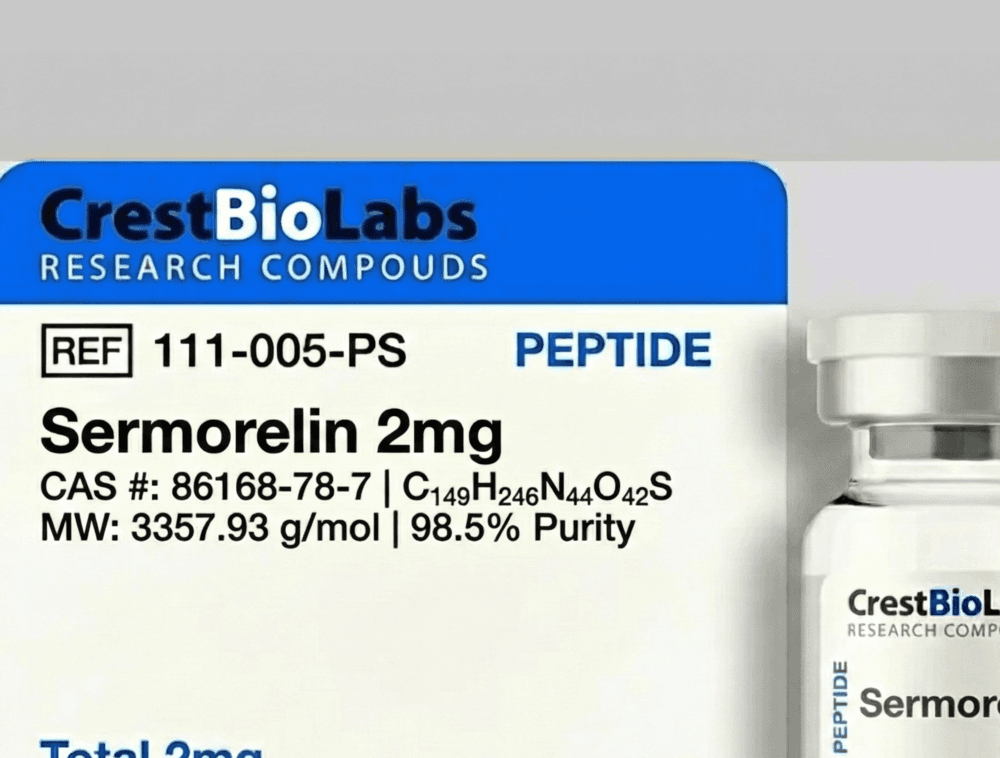
The native GRF(1-29) sequence is susceptible to rapid enzymatic degradation in biological fluids, primarily through dipeptidyl peptidase IV (DPP-IV) cleavage at the position 2-3 peptide bond and other endopeptidase-mediated hydrolyses. CJC-1295 No DAC addresses these vulnerabilities through strategic amino acid substitutions: D-Ala at position 2 (replacing Ala) blocks DPP-IV cleavage, Gln at position 8 (replacing Asn) prevents deamidation, Ala at position 15 (replacing Gly) enhances helical stability, and Leu at position 27 (replacing Met) eliminates oxidation susceptibility. These modifications collectively extend the biological activity of the peptide in experimental systems.
In the published research literature, CJC-1295 No DAC has been utilized as a tool compound for investigating the somatotropic axis, the neuroendocrine pathway linking GHRH neurons in the hypothalamus, GHRH receptors on pituitary somatotrophs, growth hormone release, and downstream signaling through growth hormone receptors and insulin-like growth factor-1 (IGF-1). The compound's predictable receptor pharmacology and improved stability make it a practical research tool for studies requiring sustained GHRH receptor stimulation.
Research into CJC-1295 No DAC has contributed to the broader understanding of GHRH receptor signaling, pulsatile hormone secretion patterns, and the regulatory mechanisms governing somatotroph function. The compound has been employed in both in-vitro pituitary cell culture systems and in preclinical animal models to investigate GHRH receptor desensitization, cross-talk between GHRH and growth hormone secretagogue (GHS) pathways, and the effects of sustained versus pulsatile GHRH receptor activation.
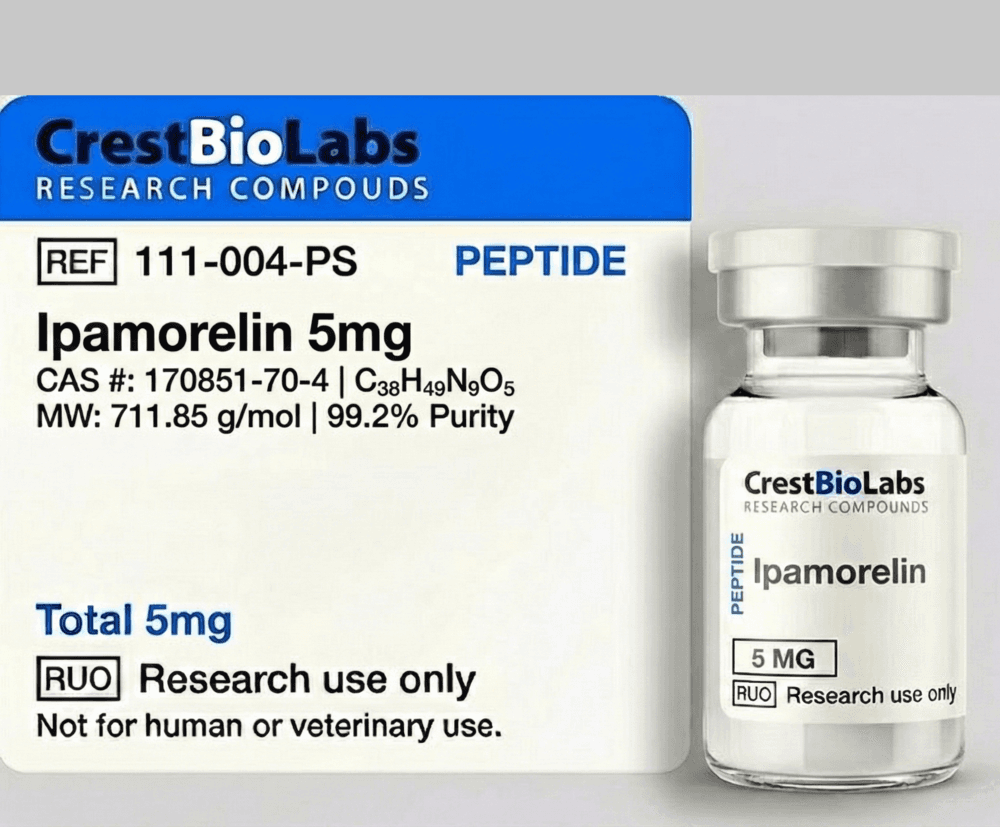
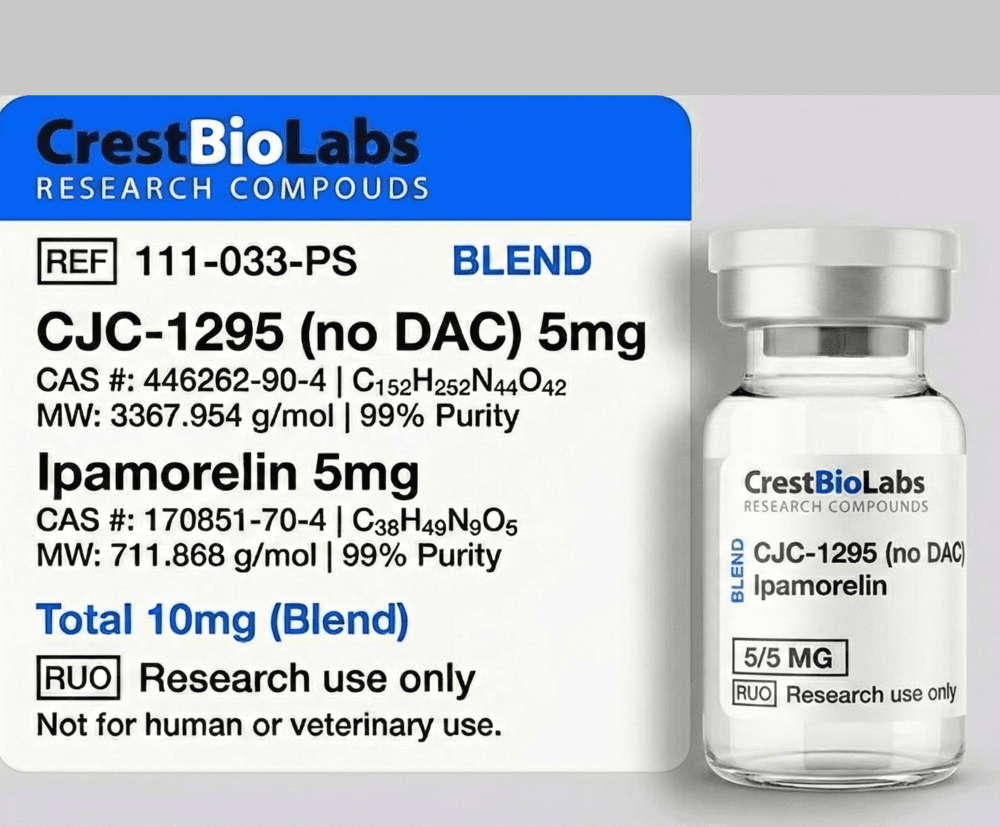
As a research compound, CJC-1295 No DAC occupies an important position in the toolkit of neuroendocrinology researchers. Its well-defined mechanism of action through the GHRH receptor, combined with its enhanced stability profile, makes it a preferred GHRH analog for in-vitro studies of somatotroph biology. The compound is frequently studied in combination with growth hormone secretagogues such as ipamorelin, as the GHRH and GHS receptor pathways converge on somatotrophs through complementary intracellular signaling mechanisms.
Chemical Classification
CJC-1295 No DAC is classified as a synthetic growth hormone-releasing hormone (GHRH) analog peptide. It belongs to the family of GRF(1-29) analogs, truncated versions of the 44-amino acid native GHRH that retain full receptor-binding activity within the first 29 residues.
Chemically, CJC-1295 No DAC is a 29-amino acid linear peptide with an amidated C-terminus. It contains one D-amino acid substitution (D-Ala2) and three L-amino acid substitutions relative to the native GRF(1-29) sequence. The peptide has a molecular weight of 3367.97 Da and is highly positively charged at physiological pH due to multiple arginine and lysine residues.
Within the taxonomy of neuroendocrine peptides, CJC-1295 No DAC is classified as a GHRH receptor (GHRHR) agonist. The GHRHR is a class B G protein-coupled receptor expressed primarily on anterior pituitary somatotrophs. CJC-1295 No DAC belongs to the category of stabilized peptide analogs, compounds in which specific amino acid substitutions have been made to improve metabolic stability while preserving pharmacological activity.
Structural Information
CJC-1295 No DAC is a 29-amino acid linear peptide with a molecular weight of 3367.97 Da. The peptide features an amidated C-terminus and four strategic amino acid substitutions relative to the native GRF(1-29) sequence. The overall topology is linear with no cyclization, disulfide bonds, or post-translational modifications.
Structural studies on GHRH and its analogs have established that the N-terminal region (residues 1-12) is critical for receptor binding and activation, while the C-terminal region (residues 13-29) contributes to receptor affinity through supplementary contacts. The peptide adopts an amphipathic alpha-helical conformation in membrane-like environments, with hydrophobic residues clustered on one face and hydrophilic residues on the opposite face.
The D-Ala substitution at position 2 is structurally significant because it alters the local backbone dihedral angles, introducing a conformational kink that prevents recognition by DPP-IV. DPP-IV requires an L-amino acid at the P1 position (second residue) for substrate binding, and the D-configuration completely blocks this interaction without significantly affecting GHRH receptor binding.
The Gln8 substitution eliminates the asparagine side chain's susceptibility to deamidation, a non-enzymatic degradation pathway in which the asparagine side chain amide hydrolyzes to form aspartic acid or isoaspartic acid. The Ala15 substitution replaces glycine, which has the highest backbone flexibility of any amino acid, with alanine, which has a stronger helix-forming propensity, thereby stabilizing the alpha-helical structure in the mid-chain region. The Leu27 substitution replaces methionine, eliminating the sulfur-containing thioether side chain that is vulnerable to oxidation to methionine sulfoxide.
The net result of these four substitutions is a peptide that retains the native GHRH receptor binding pharmacophore while exhibiting markedly improved resistance to enzymatic and chemical degradation pathways. Circular dichroism studies confirm that the modified peptide maintains the alpha-helical secondary structure characteristic of GHRH analogs.
Mechanism of Action
CJC-1295 No DAC exerts its biological effects through selective agonism of the growth hormone-releasing hormone receptor (GHRHR), a class B (secretin family) G protein-coupled receptor expressed primarily on anterior pituitary somatotrophs. The mechanism of action recapitulates the signaling cascade initiated by endogenous GHRH, with enhanced duration due to the peptide's improved metabolic stability.
Upon binding to the GHRHR, CJC-1295 No DAC induces a conformational change in the receptor that facilitates coupling to the stimulatory G protein (Gs). The activated Gsα subunit stimulates adenylyl cyclase, catalyzing the conversion of ATP to cyclic AMP (cAMP). Elevated intracellular cAMP activates protein kinase A (PKA), which phosphorylates multiple downstream targets including CREB (cAMP response element-binding protein), ion channels, and components of the secretory machinery.
In somatotroph cells, PKA-mediated phosphorylation opens L-type voltage-gated calcium channels, increasing intracellular calcium concentration. This calcium influx triggers the exocytosis of pre-formed growth hormone-containing secretory granules, constituting the acute secretory response. Simultaneously, PKA-mediated CREB phosphorylation activates transcription of the growth hormone gene (GH1), supporting sustained growth hormone synthesis and the replenishment of secretory granule stores.
Beyond the Gs-cAMP-PKA pathway, GHRHR activation has been shown to engage additional signaling cascades in somatotroph models. These include the phospholipase C (PLC)-inositol trisphosphate (IP3) pathway, which mobilizes calcium from intracellular stores, and the mitogen-activated protein kinase (MAPK) pathway, which contributes to cell proliferation and gene expression changes. The relative contribution of these pathways may vary depending on the model system and experimental conditions.
An important aspect of CJC-1295 No DAC's mechanism is its interaction with the pulsatile nature of GH secretion. In physiological conditions, GH is secreted in a pulsatile pattern regulated by the alternating actions of GHRH (stimulatory) and somatostatin (inhibitory). CJC-1295 No DAC activates the same signaling pathway as endogenous GHRH but with enhanced metabolic stability, allowing researchers to study the effects of sustained versus pulsatile GHRHR stimulation on somatotroph function.
The complementary relationship between GHRH and growth hormone secretagogue (GHS) receptor signaling is well documented. While CJC-1295 No DAC acts through the GHRHR-Gs-cAMP-PKA pathway, GHS receptor agonists such as ipamorelin signal through Gq-PLC-IP3-calcium release. These pathways converge at the level of intracellular calcium to produce synergistic effects on GH secretion, providing the rationale for their combined use in research protocols.
Stability and Storage
CJC-1295 No DAC demonstrates improved stability compared to native GRF(1-29) due to its four stabilizing amino acid substitutions, but appropriate storage conditions are still essential for maintaining chemical integrity.
Lyophilized CJC-1295 No DAC should be stored at -20°C or below in a sealed, desiccated container protected from light and moisture. Under these conditions, the peptide is stable for extended periods. Storage at 2-8°C is acceptable for short-term periods (up to several weeks).
Reconstituted solutions should be stored at 4°C for short-term use (up to 5-7 days) or aliquoted and frozen at -20°C for longer periods. The peptide is soluble in water and can be reconstituted in sterile water, bacteriostatic water, or dilute acetic acid. The amidated C-terminus is subject to slow deamidation in solution, particularly at alkaline pH, so maintaining solutions at pH 5-7 is recommended.
The primary degradation pathways for CJC-1295 No DAC in solution include backbone hydrolysis (particularly at Asp-Pro and Asp-Ser junctions), N-terminal degradation (Edman-type), and aggregation at high concentrations. The elimination of the Met27 oxidation vulnerability (replaced by Leu27) and the Asn8 deamidation susceptibility (replaced by Gln8) represent significant stability improvements over the native sequence.
Quality control monitoring should employ reversed-phase HPLC for purity assessment and mass spectrometry for molecular weight confirmation. The peptide's relatively large size (29 residues, 3367.97 Da) means that even minor degradation products can be detected as distinct peaks on HPLC.
For comprehensive storage protocols, see our Peptide Stability & Storage Guide.
Laboratory Handling
CJC-1295 No DAC is supplied as a white lyophilized powder. Reconstitution is performed by adding sterile water or bacteriostatic water along the inner wall of the vial, allowing the peptide to dissolve with gentle swirling. The peptide typically dissolves within 2-5 minutes, producing a clear, colorless solution.
Working concentrations for in-vitro pituitary cell culture studies and receptor binding assays are typically in the nanomolar range, with stock solutions commonly prepared at 0.1-1 mM. The peptide may adsorb to plastic surfaces at low concentrations, so low-binding tubes and the inclusion of carrier protein (e.g., 0.1% BSA) in dilute working solutions may be necessary.
All handling should be performed under aseptic conditions. Sterile technique is essential for solutions intended for cell culture applications. The peptide is compatible with standard cell culture media and physiological buffer systems.
For detailed reconstitution procedures, consult our Laboratory Handling Protocols.
Safety Considerations
Standard laboratory PPE, including nitrile gloves, safety glasses, and a laboratory coat, should be worn when handling CJC-1295 No DAC. The lyophilized powder should be handled in a ventilated area to prevent inhalation of fine particulates.
CJC-1295 No DAC is a pharmacologically active GHRH receptor agonist and should be handled with awareness of its biological activity. The compound is intended exclusively for in-vitro research and laboratory investigation. All institutional safety guidelines for handling bioactive peptides should be followed.
Published Research & Literature
The following peer-reviewed publications represent key research on CJC-1295 No DAC (Mod GRF 1-29). All citations reference studies available through major scientific databases.
Prolonged stimulation of growth hormone (GH) and insulin-like growth factor I secretion by CJC-1295, a long-acting analog of GH-releasing hormone, in healthy adults
Teichman SL, Neale A, Lawrence B, et al.
Journal of Clinical Endocrinology and Metabolism (2006) · DOI: 10.1210/jc.2005-1702
Structure-activity relationships of GHRH(1-29)NH2 analogues
Izdebski J, Pinski J, Horvath JE, et al.
Journal of Medicinal Chemistry (1995) · DOI: 10.1021/jm00002a009
Growth hormone-releasing hormone: from structure to clinical application
Frohman LA, Kineman RD.
Endocrine Reviews (2002) · DOI: 10.1210/er.2001-0028
Rational design of potent antagonists of growth hormone-releasing hormone
Zarandi M, Horvath JE, Halmos G, et al.
Proceedings of the National Academy of Sciences (1994) · DOI: 10.1073/pnas.91.25.12298
Growth hormone secretagogues: history, mechanism of action, and clinical development
Arvat E, Maccario M, Di Vito L, et al.
Annals of Medicine (2001) · DOI: 10.3109/07853890108995949
The GHRH receptor: isolation of the gene, tissue expression, and chromosomal localization
Mayo KE.
Growth Hormone & IGF Research (1992) · DOI: 10.1016/S1096-6374(09)80005-6
Related Research Resources
Research Use Only: All information on this page is provided for educational and research reference purposes.CJC-1295 No DAC (Mod GRF 1-29) is sold strictly for in-vitro laboratory and research use only. It is not intended for human or animal consumption. Not a drug, dietary supplement, or food additive. Not evaluated by the FDA.