
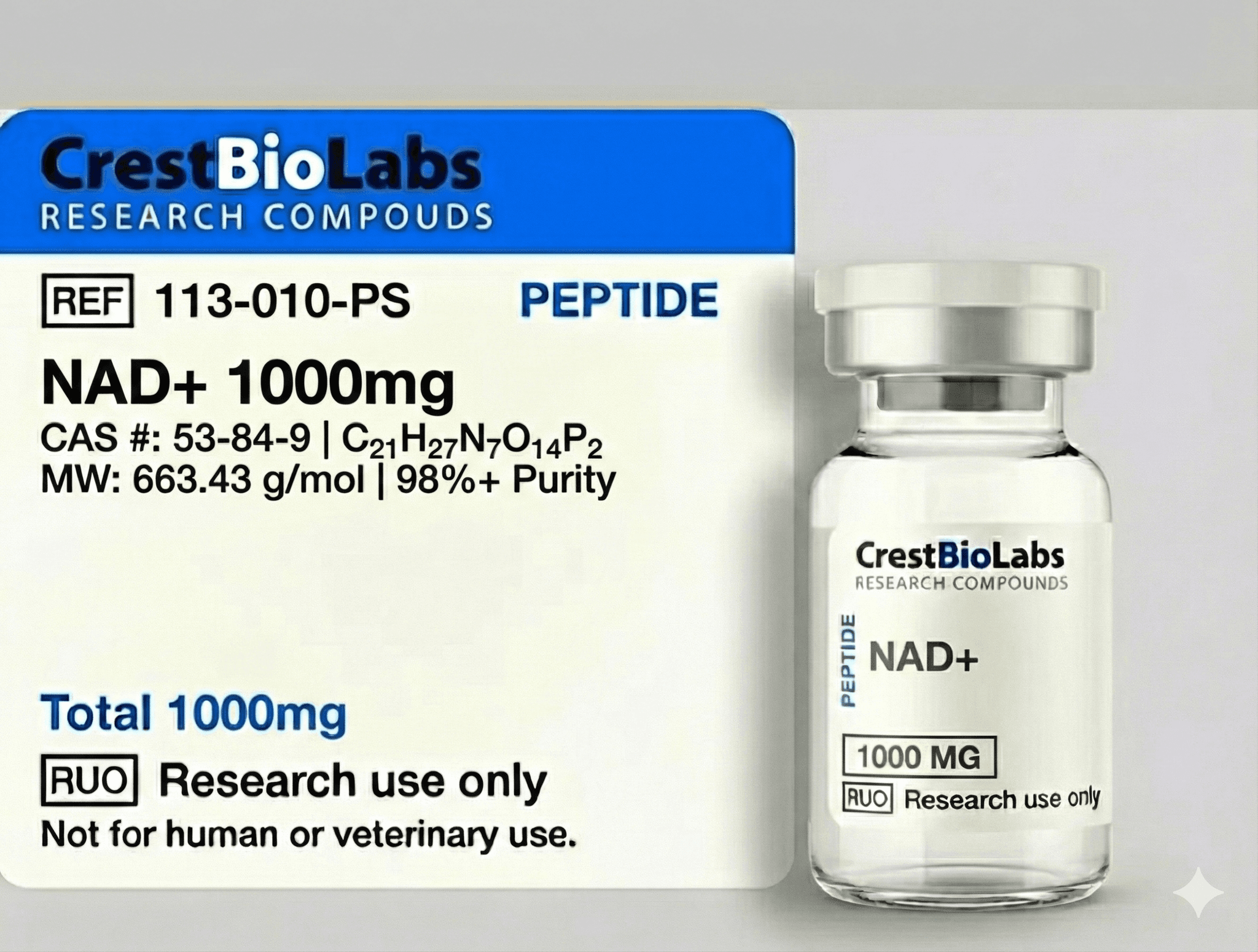
NAD+ 1000mg
Nicotinamide Adenine Dinucleotide (NAD+) is a critical coenzyme present in all living cells that participates in over 500 enzymatic reactions. It serves as a primary electron carrier in redox metabolism and a substrate for NAD+-consuming enzymes including sirtuins and PARPs.
Quick Reference
About NAD+ 1000mg
NAD+ (Nicotinamide Adenine Dinucleotide) is a dinucleotide coenzyme essential to cellular metabolism, redox signaling, and genomic stability. It functions as a key electron carrier in mitochondrial oxidative phosphorylation and serves as the obligate co-substrate for sirtuin deacetylases (SIRT1–7), poly(ADP-ribose) polymerases (PARPs), and cyclic ADP-ribose hydrolases (CD38/CD157). Published research has demonstrated that NAD+ levels decline with age across multiple model organisms including rodents and humans, and that restoring NAD+ pools can ameliorate age-associated metabolic and neurodegenerative phenotypes in preclinical models. This high-purity NAD+ preparation is supplied as a lyophilized powder for reconstitution and is intended exclusively for in-vitro research purposes.
Mechanism of Action
Functions as a primary electron carrier in glycolysis, the TCA cycle, and oxidative phosphorylation via NAD+/NADH redox cycling. Also serves as the obligate co-substrate for NAD+-consuming enzymes: sirtuins (SIRT1–7) catalyze NAD+-dependent protein deacylation regulating metabolism, stress response, and chromatin remodeling; PARPs consume NAD+ during poly(ADP-ribosyl)ation for DNA damage repair; CD38/CD157 hydrolyze NAD+ to generate calcium-mobilizing second messengers.
Research Applications
NAD+ and sirtuins in aging and disease
Trends in Cell Biology (2014)
NAD+ metabolism and its roles in cellular processes during a...
Nature Reviews Molecular Cell Biology (2021)
Sirtuins and NAD+ in the Development and Treatment of Metabo...
Circulation Research (2018)
Product Quick Facts
HPLC Verified
98%+ purity confirmed
COA Available
Full chromatograms & MS data
Same-Day Shipping
Orders before 2 PM EST
Cold Chain
Temperature-controlled packaging
Handling Protocol
- •Store at -20°C, desiccated, protected from light and moisture
- •Reconstitute with bacteriostatic water
- •Avoid repeated freeze-thaw cycles
- •Handle under sterile conditions
Related Research
What Are Peptides?
Introduction to peptide structure, classification, and research significance.
HPLC Purity Testing Explained
How HPLC validates peptide purity and why it matters for research.
Peptide Stability & Storage Guide
Best practices for peptide storage, reconstitution, and handling.
Laboratory Handling Protocols
Standard operating procedures for peptide reconstitution and handling.
Frequently Asked Questions About NAD+ 1000mg
NAD+ (Nicotinamide Adenine Dinucleotide) is a dinucleotide coenzyme that participates in over 500 enzymatic reactions across all living cells. It functions both as a primary electron carrier in mitochondrial energy metabolism (NAD+/NADH redox cycling) and as the obligate co-substrate for three major families of NAD+-consuming enzymes: sirtuins, PARPs, and CD38/CD157. Because NAD+ sits at the intersection of energy metabolism, DNA repair, epigenetic regulation, and calcium signaling, it is one of the most extensively studied molecules in aging and metabolic research.
NAD+ accepts electrons during catabolic reactions in glycolysis and the TCA cycle, becoming reduced to NADH, which then donates electrons to Complex I of the mitochondrial electron transport chain to drive ATP synthesis via oxidative phosphorylation. The NAD+/NADH ratio reflects cellular redox state and regulates metabolic flux — a high ratio favors oxidative metabolism and sirtuin activity, while a low ratio signals reductive stress and can impair mitochondrial function. Researchers measure this ratio using enzymatic cycling assays or fluorescence-based NAD+/NADH sensors to assess metabolic status in various experimental conditions.
Mammals express seven sirtuin isoforms (SIRT1–7), each localized to different subcellular compartments: SIRT1, SIRT6, and SIRT7 are nuclear; SIRT3, SIRT4, and SIRT5 are mitochondrial; SIRT2 is primarily cytoplasmic. All require NAD+ as a co-substrate to catalyze protein deacylation (removing acetyl or other acyl groups from lysine residues), coupling the reaction to nicotinamide and O-acetyl-ADP-ribose generation. Because sirtuins are obligate NAD+ consumers, their activity is directly regulated by intracellular NAD+ availability, linking cellular metabolic status to epigenetic regulation, stress response, and mitochondrial biogenesis.
Dissolve NAD+ in ultrapure sterile water or appropriate aqueous buffer (such as PBS or Tris-HCl, pH 7.0–8.0) to the desired concentration. NAD+ is freely water-soluble. Prepare stock solutions at concentrations of 10–100 mM depending on the assay requirements. Aliquot reconstituted solutions into single-use volumes to minimize freeze-thaw degradation, and store aliquots at -20°C or -80°C protected from light. NAD+ is hygroscopic and susceptible to hydrolysis at extreme pH values; solutions should be prepared fresh when possible or used within one month of reconstitution for enzymatic assays requiring precise NAD+ quantification.
PARPs (poly(ADP-ribose) polymerases), particularly PARP-1 and PARP-2, are activated by DNA strand breaks and consume NAD+ to synthesize branched poly(ADP-ribose) chains on target proteins at damage sites, recruiting DNA repair machinery and chromatin remodelers. In research, exogenous NAD+ is a required substrate for in-vitro PARP activity assays, where radiolabeled or biotinylated NAD+ is used to quantify PARP catalytic output. The competition between PARPs and sirtuins for the cellular NAD+ pool is a major area of investigation in aging research, as hyperactivation of PARP-1 by accumulated DNA damage can deplete NAD+ below the threshold required for sirtuin-mediated metabolic regulation.
Published research in rodent and human tissue samples has documented age-dependent NAD+ decline across multiple organs including liver, skeletal muscle, brain, and adipose tissue. The proposed mechanisms include: increased NAD+ consumption by CD38 (whose expression rises with inflammation and aging), chronic PARP activation from accumulated DNA damage, decreased expression of NAMPT (the rate-limiting enzyme in the NAD+ salvage pathway), and altered flux through de novo biosynthesis from tryptophan. In preclinical studies, supplementation with NAD+ precursors (NMN and NR) restored tissue NAD+ levels and reversed age-associated metabolic dysfunction, supporting the hypothesis that NAD+ decline is a causal contributor to aging phenotypes rather than merely a correlate.
You May Also Need
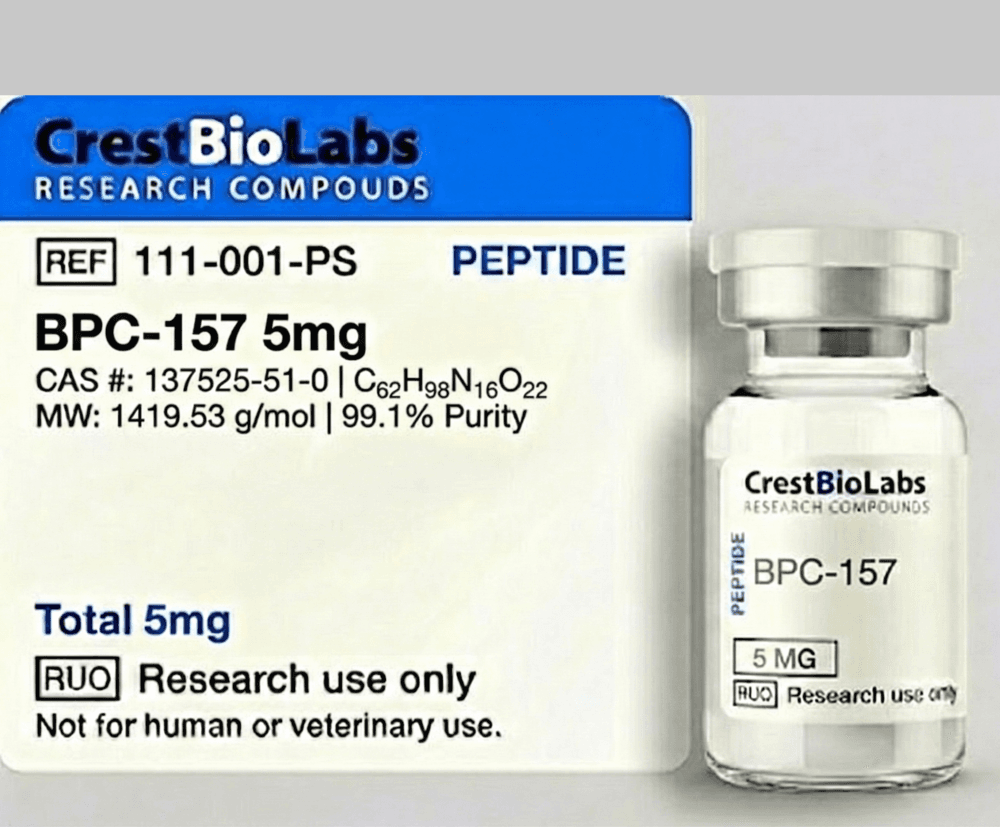
BPC-157 5mg
C62H98N16O22
Body Protection Compound-157 (BPC-157) is a pentadecapeptide composed of 15 amino acids. It is a partial sequence of body protection compound derived from human gastric juice.
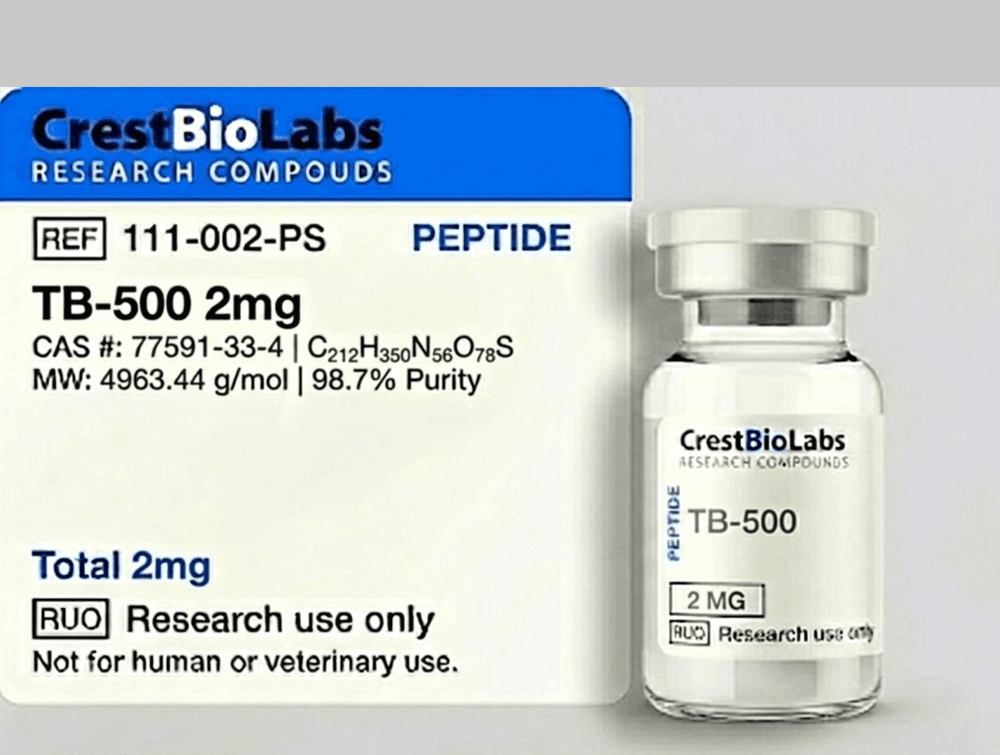
TB-500 2mg
C212H350N56O78S
Thymosin Beta-4 (TB-500) is a naturally occurring peptide present in virtually all human and animal cells. It plays a critical role in tissue repair and regeneration.
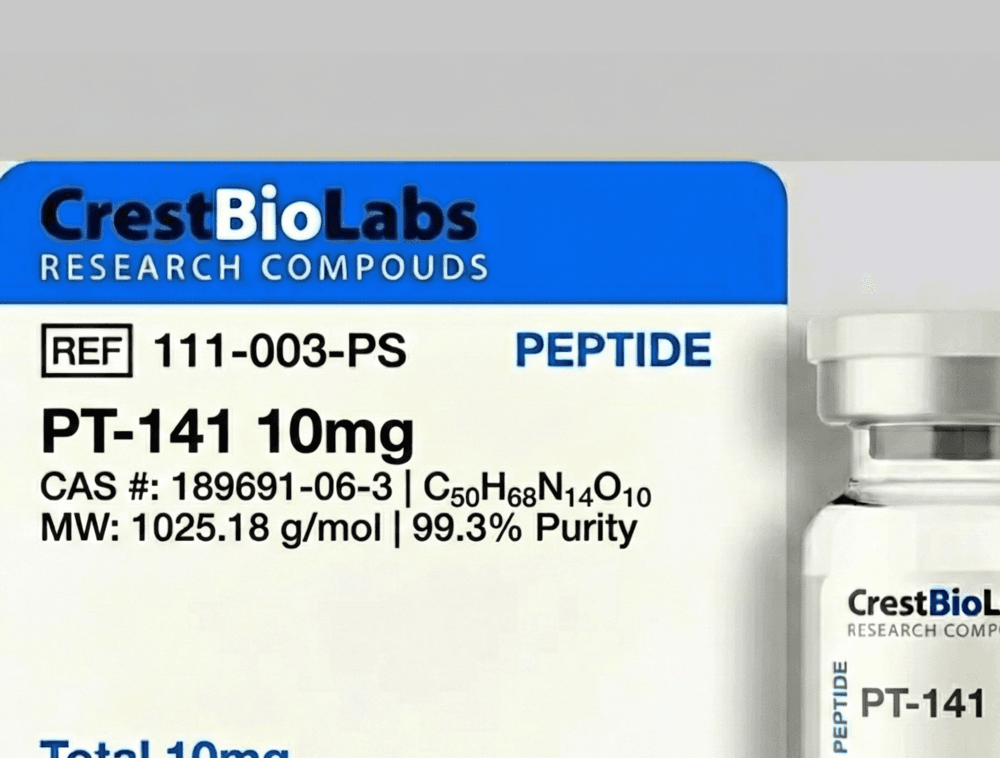
PT-141 10mg
C50H68N14O10
PT-141 (Bremelanotide) is a synthetic peptide analog of alpha-melanocyte stimulating hormone. It was developed from Melanotan II research.
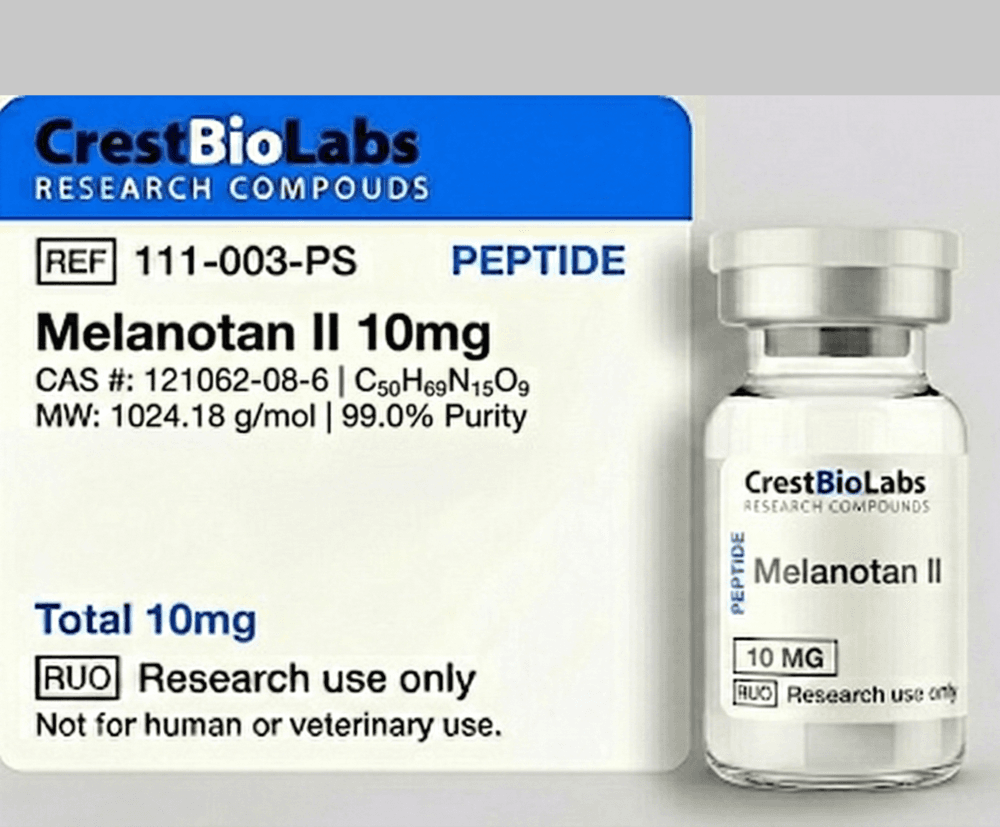
Melanotan II 10mg
C50H69N15O9
Melanotan II is a synthetic analog of the naturally occurring melanocortin peptide hormone alpha-melanocyte-stimulating hormone (α-MSH).