Overview
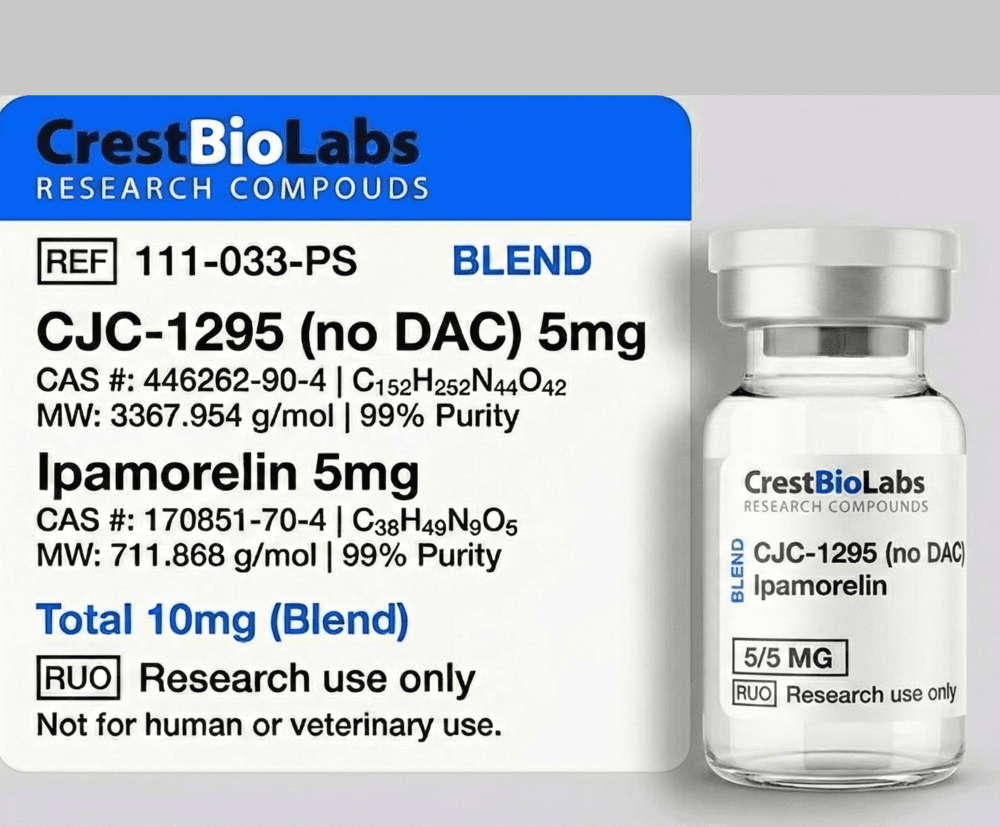
The CJC-1295/Ipamorelin Blend is a research-grade combination of two well-characterized peptides that act through complementary signaling pathways on anterior pituitary somatotrophs: CJC-1295 No DAC (Modified GRF 1-29), a growth hormone-releasing hormone (GHRH) receptor agonist, and ipamorelin, a selective growth hormone secretagogue (GHS) receptor agonist. This blend is formulated for researchers investigating the synergistic interactions between the GHRH and GHS receptor signaling cascades.
The scientific rationale for combining these two peptides is firmly grounded in decades of neuroendocrinology research. The discovery that the GHRH and GHS pathways represent two distinct receptor systems that converge on somatotroph cells was a major advance in understanding the regulation of the somatotropic axis. Work by Bowers, Ghigo, Arvat, and others in the 1990s demonstrated that simultaneous activation of both GHRH and GHS receptors produces a synergistic response that exceeds the sum of individual pathway activations, a phenomenon that has been consistently replicated across multiple experimental paradigms.
The mechanistic basis for this synergy lies in the convergence of distinct intracellular signaling cascades. CJC-1295 No DAC activates the GHRH receptor, coupling through Gs to elevate cAMP and activate PKA. Ipamorelin activates the GHS receptor (GHS-R1a), coupling through Gq/11 to stimulate PLC, generate IP3, and mobilize intracellular calcium. These two pathways converge at the level of intracellular calcium concentration in somatotrophs: PKA-mediated opening of L-type calcium channels (from the GHRH pathway) combines with IP3-mediated calcium release from the endoplasmic reticulum (from the GHS pathway) to produce a larger calcium transient than either pathway alone.
Researchers studying this blend benefit from the complementary pharmacological profiles of its components. CJC-1295 No DAC provides sustained GHRH receptor stimulation due to its four stabilizing amino acid substitutions, while ipamorelin contributes selective GHS receptor activation with minimal effects on cortisol, prolactin, and ACTH. The combination allows researchers to study the full spectrum of dual-pathway somatotroph stimulation using well-characterized, selective agonists.
The published literature on GHRH/GHS combinations provides a strong foundation for research using this blend. Studies in various experimental systems have documented the synergistic effects of combined pathway activation on somatotroph secretory responses, gene expression changes, and signaling cascade interactions. The blend format provides the convenience of a pre-formulated combination while maintaining the defined composition necessary for rigorous experimental design.
The CJC-1295/Ipamorelin Blend represents an important research tool for investigators studying somatotroph physiology, neuroendocrine signaling integration, and the regulatory mechanisms governing the somatotropic axis. Its rational design, based on well-established receptor pharmacology and pathway synergy, makes it a scientifically well-justified formulation for studies requiring concurrent GHRH and GHS receptor activation.
Chemical Classification
The CJC-1295/Ipamorelin Blend is classified as a binary peptide research formulation combining a GHRH receptor agonist with a GHS receptor agonist. It belongs to the category of rational peptide combinations designed to activate complementary signaling pathways.
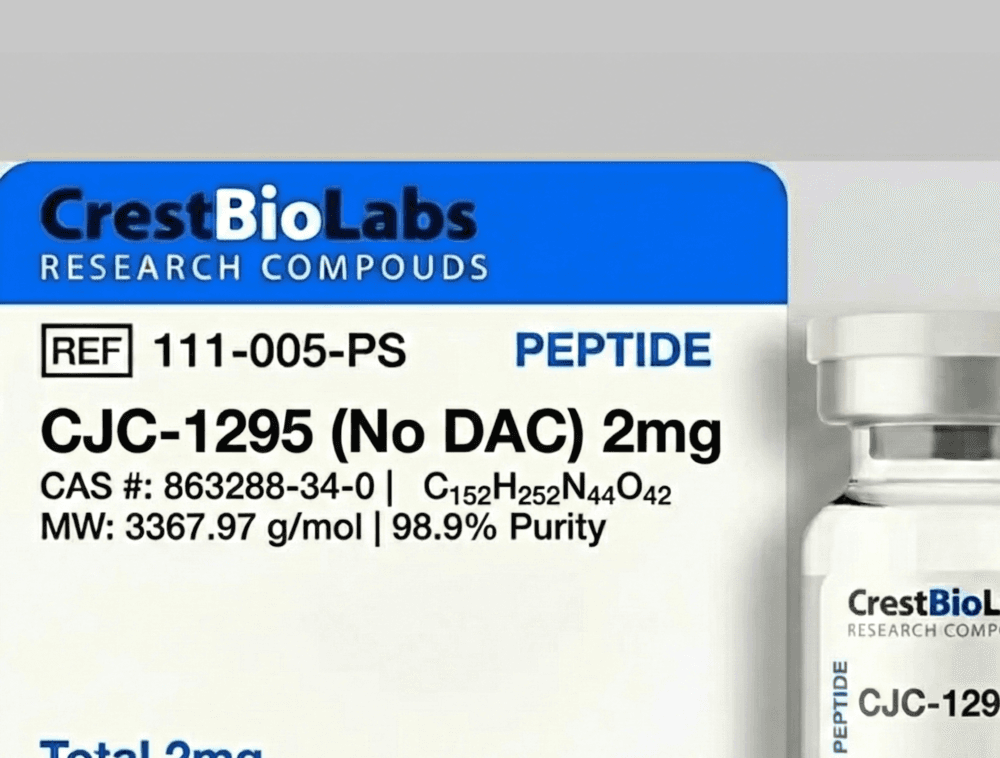
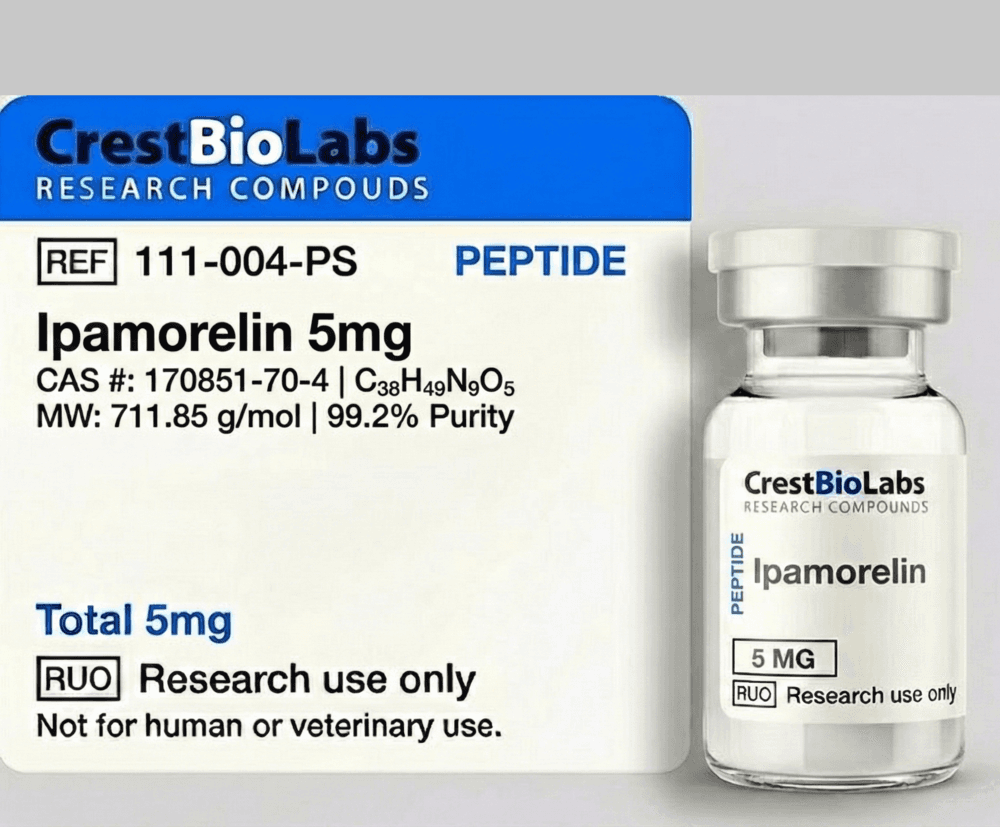
The blend contains two distinct chemical entities: CJC-1295 No DAC (a 29-amino acid modified GHRH analog, MW 3367.97) and ipamorelin (a pentapeptide GHS, MW 711.85). These components differ substantially in size, structure, and receptor targets but share the common property of acting on anterior pituitary somatotrophs through distinct receptor-mediated mechanisms.
The formulation is categorized as a research blend rather than a chemical compound, as the two components maintain their individual chemical identities and do not form a covalent conjugate. Each peptide retains its independent receptor pharmacology within the blend.
Structural Information
The CJC-1295/Ipamorelin Blend contains two structurally distinct peptides that do not interact chemically with each other in the formulation.
CJC-1295 No DAC is a 29-amino acid linear peptide with an amidated C-terminus and an amphipathic alpha-helical secondary structure. Its four stabilizing substitutions (D-Ala2, Gln8, Ala15, Leu27) enhance metabolic stability while maintaining the GHRH receptor binding conformation. The peptide's helical structure presents hydrophobic residues on one face and hydrophilic residues on the opposite face, a characteristic required for interaction with the GHRH receptor extracellular domain.
Ipamorelin is a pentapeptide with an amidated C-terminus containing two non-natural amino acid residues (Aib1 and D-2-Nal3). The peptide adopts a compact turn-like conformation that presents the aromatic side chains of D-2-Nal and D-Phe in an optimal arrangement for GHS-R1a binding. Its small size (711.85 Da) contrasts with the larger CJC-1295 No DAC (3367.97 Da), reflecting the different structural requirements of their respective receptors.
The two peptides in the blend are physicochemically compatible: both are soluble in water, stable in the same pH range (5-7), and do not undergo cross-reactivity or chemical interaction. Their distinct molecular weights (approximately 4.7-fold difference) allow independent analytical verification of each component by HPLC and mass spectrometry.
Mechanism of Action
The CJC-1295/Ipamorelin Blend operates through the concurrent activation of two complementary signaling pathways that converge on anterior pituitary somatotroph cells. The mechanism of synergistic interaction between these pathways is the central feature of the blend's research utility.
CJC-1295 No DAC binds to the GHRH receptor (GHRHR), a class B GPCR coupled to Gs. This activates adenylyl cyclase, elevates intracellular cAMP, and activates PKA. PKA phosphorylates L-type voltage-gated calcium channels, promoting extracellular calcium influx. PKA also phosphorylates CREB, driving transcription of the growth hormone gene (GH1).
Simultaneously, ipamorelin binds to the GHS receptor (GHS-R1a), a class A GPCR coupled to Gq/11. This activates PLC, generating IP3 and DAG from PIP2. IP3 triggers calcium release from endoplasmic reticulum stores through IP3 receptor channels. DAG activates PKC, which contributes to membrane depolarization through Kir channel inhibition.
The synergistic interaction occurs because the two calcium mobilization mechanisms are additive: L-type channel-mediated calcium influx (CJC-1295 pathway) combines with IP3-mediated ER calcium release (ipamorelin pathway) to produce a larger peak calcium concentration and a more sustained calcium elevation than either mechanism alone. Since calcium-dependent exocytosis of GH granules is a cooperative process (requiring the simultaneous engagement of multiple calcium sensors), the combined calcium signal produces a disproportionately greater secretory response.
Additional levels of synergy have been documented in the literature. cAMP and PKC can cross-activate each other's downstream targets: cAMP potentiates IP3 receptor calcium release through PKA-mediated phosphorylation of IP3 receptors, while PKC can sensitize L-type calcium channels to voltage-dependent opening. These cross-talk mechanisms amplify the synergistic interaction beyond simple additive calcium effects.
At the transcriptional level, concurrent activation of CREB (by PKA from the GHRH pathway) and AP-1 (by PKC/MAPK from the GHS pathway) may produce cooperative effects on GH gene transcription, as these transcription factors regulate overlapping but distinct promoter elements.
Stability and Storage
The stability considerations for the CJC-1295/Ipamorelin Blend reflect the properties of both component peptides. As the two peptides are physicochemically compatible, they do not accelerate each other's degradation when combined.
Lyophilized blend should be stored at -20°C or below, desiccated and protected from light. Both components are stable in the lyophilized state under these conditions.
Upon reconstitution, the blend should be dissolved in sterile water or bacteriostatic water and stored at 4°C for short-term use (up to 5-7 days) or frozen in aliquots at -20°C. The limiting stability factor is typically the CJC-1295 component, which may undergo gradual degradation through backbone hydrolysis and C-terminal deamidation. The ipamorelin component is generally more stable due to its compact size and non-natural amino acid content.
Solution pH of 5-7 provides optimal stability for both components. The histidine residue in ipamorelin and the multiple charged residues in CJC-1295 are both best preserved in this pH range. Single-use aliquots are recommended to avoid freeze-thaw degradation.
Quality control should verify both components independently by HPLC (the two peptides resolve clearly due to their different molecular sizes and retention characteristics) and mass spectrometry.
For comprehensive storage protocols, see our Peptide Stability & Storage Guide.
Laboratory Handling
The CJC-1295/Ipamorelin Blend is supplied as a lyophilized powder. Reconstitute by adding sterile water or bacteriostatic water along the vial wall, allowing dissolution with gentle swirling. Both components dissolve readily in aqueous solvents.
Working concentrations for in-vitro somatotroph studies should be adjusted to provide effective concentrations of both components at their respective receptors (typically nanomolar range for each). Researchers should verify the blend ratio against analytical certificates and adjust experimental concentrations accordingly.
Handle under aseptic conditions using standard peptide laboratory equipment. Low-binding tubes and sterile filtered tips are recommended. Both components are compatible with standard cell culture media and physiological buffer systems.
For detailed reconstitution procedures, consult our Laboratory Handling Protocols.
Safety Considerations
Standard laboratory PPE (nitrile gloves, safety glasses, laboratory coat) should be worn. Both components are pharmacologically active peptides; avoid skin and eye contact. Handle in a ventilated area. The blend is intended exclusively for in-vitro research and laboratory use. Follow institutional safety guidelines for bioactive peptide handling.
Published Research & Literature
The following peer-reviewed publications represent key research on CJC-1295/Ipamorelin Blend. All citations reference studies available through major scientific databases.
Synergistic effect of GHRH and GHRP on GH release in man: modulation by sex steroids
Arvat E, Ceda GP, Di Vito L, et al.
Journal of Endocrinological Investigation (1997) · DOI: 10.1007/BF03348019
Growth hormone releasing peptides act on the hypothalamus to increase growth hormone secretion
Bowers CY, Momany FA, Reynolds GA, Hong A.
Journal of Clinical Endocrinology and Metabolism (1984) · DOI: 10.1210/jcem-59-4-764
Interactions between GHRH and GHS on GH secretion in the pituitary
Ghigo E, Arvat E, Muccioli G, Camanni F.
European Journal of Endocrinology (1997) · DOI: 10.1530/eje.0.1360001
Ipamorelin, the first selective growth hormone secretagogue
Raun K, Hansen BS, Johansen NL, et al.
European Journal of Endocrinology (1998) · DOI: 10.1530/eje.0.1390552
Prolonged stimulation of growth hormone and insulin-like growth factor I secretion by CJC-1295
Teichman SL, Neale A, Lawrence B, et al.
Journal of Clinical Endocrinology and Metabolism (2006) · DOI: 10.1210/jc.2005-1702
Related Research Resources
Research Use Only: All information on this page is provided for educational and research reference purposes.CJC-1295/Ipamorelin Blend is sold strictly for in-vitro laboratory and research use only. It is not intended for human or animal consumption. Not a drug, dietary supplement, or food additive. Not evaluated by the FDA.