Overview
TB-500 is a synthetic analog of Thymosin Beta-4 (Tβ4), a naturally occurring 43-amino acid peptide that was originally isolated from the thymus gland in the 1960s by Allan Goldstein and colleagues at the Albert Einstein College of Medicine. Thymosin Beta-4 is one of the most abundant intracellular peptides in mammalian cells and plays a fundamental role in actin cytoskeleton dynamics. TB-500 represents a key fragment or full-length synthetic version of this endogenous peptide, designed for use in research settings.
The research history of Thymosin Beta-4 extends over five decades, making it one of the most well-characterized peptides in cell biology. Early investigations focused on its role in thymic function and immune modulation, consistent with its tissue of origin. However, the discovery of its actin-sequestering activity by Safe and colleagues in the early 1990s fundamentally shifted the understanding of this peptide's biological significance. It became clear that Thymosin Beta-4 functions primarily as a major actin-sequestering protein, maintaining a reservoir of monomeric actin (G-actin) available for rapid polymerization into filamentous actin (F-actin) when cells require cytoskeletal reorganization.
The significance of TB-500 in the research literature stems from the central role of actin dynamics in virtually all aspects of cell biology. Cell migration, division, adhesion, morphological changes, and intracellular transport all depend on the precise regulation of actin polymerization and depolymerization. By maintaining the G-actin pool, Thymosin Beta-4 influences all of these processes, making it a molecule of broad research interest.
Beyond its intracellular actin-sequestering function, Thymosin Beta-4 has been identified as an extracellular signaling molecule. Published studies have documented its presence in serum, wound fluids, and other extracellular compartments, where it appears to function as a paracrine and autocrine signaling factor. This dual intracellular/extracellular activity profile has generated substantial research interest.
Preclinical studies have examined TB-500 in a wide range of experimental models, including wound closure assays, cardiac tissue models, corneal repair studies, neurological models, and inflammatory systems. The peptide has been reported to promote endothelial cell migration, enhance angiogenesis, reduce inflammatory markers, and modulate extracellular matrix remodeling in various in-vitro and animal model systems.
TB-500 is commercially available as a research-grade lyophilized peptide and is one of the most widely used peptides in cell biology and tissue repair research. Its well-characterized mechanism, extensive literature base, and availability in high-purity synthetic form make it a standard tool in laboratories studying actin dynamics, cell migration, and tissue remodeling processes.
The peptide's research significance is further enhanced by its interactions with other signaling systems. Published studies have reported that Thymosin Beta-4 can activate the Akt/PI3K survival pathway, modulate NF-κB signaling, and influence matrix metalloproteinase (MMP) expression. These diverse signaling interactions, combined with its fundamental role in actin biology, position TB-500 as a peptide of considerable importance in modern cell biology research.
Chemical Classification
TB-500 is classified as a synthetic polypeptide belonging to the beta-thymosin family, a group of highly conserved actin-sequestering peptides found across vertebrate species. The beta-thymosins are defined by their ability to form 1:1 complexes with monomeric G-actin, preventing its spontaneous polymerization into F-actin filaments. Thymosin Beta-4 is the most abundant and best-characterized member of this family.
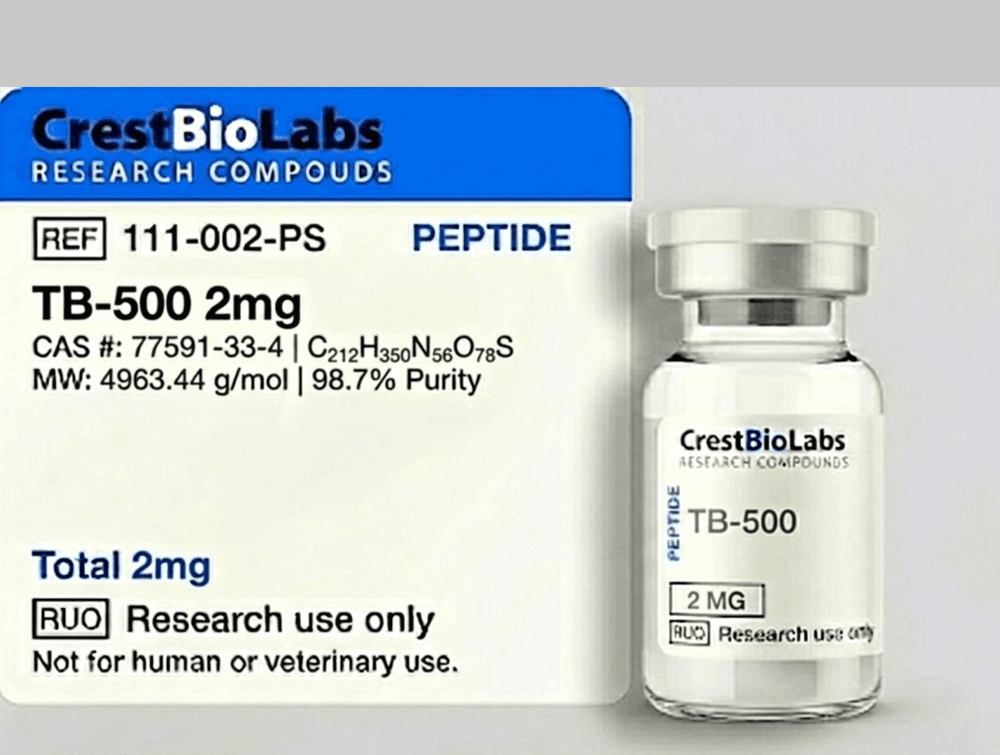
Chemically, TB-500 is a 43-amino acid peptide with an acetylated N-terminus and no disulfide bonds in its standard form. The peptide is highly hydrophilic, with a net negative charge at physiological pH due to the predominance of acidic residues (aspartate and glutamate) over basic residues. The molecular weight of approximately 4963.44 Da places it at the boundary between small peptides and small proteins.
Within the broader classification of bioactive peptides, TB-500 is categorized as a cytoskeletal regulatory peptide based on its primary function. It is also classified within thymic peptides based on its tissue of origin, though it is now known to be expressed ubiquitously across virtually all cell types in mammalian systems. The peptide belongs to the class of intrinsically disordered proteins (IDPs), meaning it does not adopt a single stable three-dimensional fold in solution.
Structural Information
TB-500 (Thymosin Beta-4) is a 43-amino acid polypeptide with a molecular weight of 4963.44 Da. The peptide features an acetylated N-terminal serine residue (Ac-Ser) and a free C-terminal serine, with no cyclization or disulfide bonds. The presence of a single methionine residue (position 6) and the absence of cysteine residues are notable structural features.
Thymosin Beta-4 is a member of the intrinsically disordered protein (IDP) family, meaning it does not adopt a stable tertiary structure in free solution. NMR studies have demonstrated that the free peptide exists as a dynamic ensemble of conformations with transient helical elements. However, upon binding to G-actin, Thymosin Beta-4 undergoes a disorder-to-order transition, adopting a defined conformation that wraps around the actin monomer.
The actin-binding mechanism involves two distinct contact regions. The N-terminal segment (approximately residues 1-16) contains the primary actin-binding motif, including the conserved LKKTET sequence (residues 17-22) that is critical for actin interaction. This region engages the barbed end of the actin monomer, preventing its addition to growing filament ends. The C-terminal segment (approximately residues 27-43) provides additional contacts with the pointed end of actin, completing the sequestration of the monomer.
The SDKP tetrapeptide (residues 1-4) at the N-terminus is released by prolyl oligopeptidase cleavage and has been identified as a biologically active fragment with independent signaling properties. This N-terminal fragment has been studied separately for its effects on endothelial cells and fibroblasts.
The single sulfur atom in the molecular formula (C212H350N56O78S) corresponds to the methionine residue at position 6, which is susceptible to oxidation to methionine sulfoxide under oxidative conditions. This represents the primary site of oxidative degradation in TB-500, and researchers should be aware of this vulnerability when designing experiments and storage protocols.
Mechanism of Action
The mechanism of action of TB-500 (Thymosin Beta-4) operates through multiple interrelated pathways, reflecting its dual role as an intracellular actin-sequestering protein and an extracellular signaling molecule.
The primary intracellular function of Thymosin Beta-4 is the sequestration of monomeric G-actin. In resting cells, a substantial fraction of the total actin pool exists in the monomeric form, bound in a 1:1 complex with Thymosin Beta-4. This complex effectively prevents spontaneous actin polymerization while maintaining a readily available pool of actin monomers. When cellular signaling events trigger actin polymerization (such as during cell migration or division), the equilibrium shifts, releasing G-actin from the Thymosin Beta-4 complex to fuel filament assembly. This mechanism positions Thymosin Beta-4 as a central regulator of cytoskeletal dynamics.
In the extracellular context, TB-500 has been demonstrated to activate several signaling cascades. The Akt/PI3K pathway is a well-documented downstream target, with published studies showing that extracellular Thymosin Beta-4 promotes Akt phosphorylation in endothelial cells and other cell types. This pathway activation is associated with cell survival, proliferation, and migration, all of which have been observed in TB-500-treated cell culture systems.
TB-500 has also been shown to modulate the activity of matrix metalloproteinases (MMPs), particularly MMP-2 and MMP-9, in experimental systems. MMPs are zinc-dependent endopeptidases responsible for the degradation and remodeling of extracellular matrix components. The regulation of MMP activity by TB-500 is hypothesized to contribute to its observed effects on tissue remodeling in preclinical models.
The anti-inflammatory properties attributed to TB-500 in the literature appear to involve modulation of the NF-κB signaling pathway. Studies have reported that Thymosin Beta-4 can suppress the nuclear translocation of NF-κB, thereby reducing the transcription of pro-inflammatory cytokines and chemokines. This activity has been observed in multiple cell types and experimental inflammatory models.
The N-terminal tetrapeptide Ac-SDKP, which is enzymatically released from Thymosin Beta-4 by prolyl oligopeptidase, represents an additional mechanism of action. Ac-SDKP has been independently shown to inhibit the proliferation of hematopoietic stem cells and to exert anti-fibrotic effects in experimental models. This fragment-mediated activity adds another layer to the overall biological profile of Thymosin Beta-4.
The promotion of angiogenesis by TB-500 has been documented in multiple in-vitro and in-vivo model systems. This activity involves the stimulation of endothelial cell migration and tube formation, processes that are dependent on actin cytoskeletal reorganization and are thus consistent with the peptide's fundamental actin-regulatory function.
Stability and Storage
TB-500 in its lyophilized form exhibits good stability when stored under recommended conditions. The primary consideration for TB-500 stability is the methionine residue at position 6, which is susceptible to oxidation to methionine sulfoxide when exposed to oxidizing conditions. This oxidation can be minimized through proper storage practices.
Lyophilized TB-500 should be stored at -20°C or below in a sealed, desiccated container protected from light. Under these conditions, the peptide maintains chemical integrity for extended periods. Storage at 2-8°C is acceptable for short-term periods (up to several weeks), but long-term storage at ambient temperature is not recommended.
Upon reconstitution, TB-500 solutions are more susceptible to degradation than the lyophilized form. Reconstituted solutions should be stored at 4°C for immediate use (within 7 days) or aliquoted and frozen at -20°C for longer-term storage. The inclusion of a reducing agent such as dithiothreitol (DTT) at low concentrations (1-5 mM) can help prevent methionine oxidation in reconstituted solutions, though the compatibility of DTT with the specific experimental system should be verified.
The primary degradation pathways for TB-500 in solution include methionine oxidation, deamidation of asparagine and glutamine residues, and hydrolysis of peptide bonds (particularly at aspartate-proline junctions). Elevated temperatures, alkaline pH, and the presence of metal ions or reactive oxygen species accelerate these degradation processes.
Repeated freeze-thaw cycles should be minimized by preparing single-use aliquots at the time of reconstitution. The use of low-binding polypropylene tubes is recommended to minimize surface adsorption, which can be significant for peptides at low concentrations. Quality control of stored TB-500 can be performed using reversed-phase HPLC and mass spectrometry to assess purity and confirm molecular identity.
For comprehensive storage protocols, see our Peptide Stability & Storage Guide.
Laboratory Handling
TB-500 is supplied as a white lyophilized powder and should be reconstituted using sterile water for injection, bacteriostatic water, or sterile saline. The solvent should be added slowly along the inner wall of the vial, and the peptide should be allowed to dissolve by gentle swirling without vigorous agitation or vortexing.
Working concentrations for in-vitro research typically range from nanomolar to low micromolar, depending on the experimental model. For cell culture studies examining actin dynamics or migration, concentrations in the range of 0.1-10 μg/mL are commonly reported in the literature. Stock solutions should be prepared at higher concentrations and diluted to working concentrations immediately before use.
All handling should be performed under aseptic conditions to prevent microbial contamination. Laminar flow hoods or biosafety cabinets should be used for reconstitution and aliquoting. Sterile, low-binding tubes and filtered pipette tips should be employed for all transfer operations. Researchers should be particularly aware of the methionine oxidation sensitivity and avoid exposing solutions to strong light or oxidizing agents during preparation and use.
For detailed reconstitution procedures, consult our Laboratory Handling Protocols.
Safety Considerations
Standard laboratory PPE, including nitrile gloves, safety glasses, and a laboratory coat, should be worn when handling TB-500. The peptide has not been classified as hazardous under GHS criteria, but standard precautions for research peptides should be observed.
Lyophilized powder should be handled in a ventilated area to minimize particulate inhalation. Skin and eye contact with reconstituted solutions should be avoided. In case of contact, wash the affected area thoroughly with water. TB-500 is intended exclusively for in-vitro research and laboratory investigation. All institutional safety guidelines and chemical hygiene plans should be followed.
Published Research & Literature
The following peer-reviewed publications represent key research on TB-500 (Thymosin Beta-4). All citations reference studies available through major scientific databases.
Thymosin β4 activates integrin-linked kinase and promotes cardiac cell migration, survival and cardiac repair
Bock-Marquette I, Saxena A, White MD, et al.
Nature (2004) · DOI: 10.1038/nature02943
Thymosin beta 4 is a potent regulator of post-natal coronary vessel development
Smart N, Risebro CA, Melville AA, et al.
Nature (2007) · DOI: 10.1038/nature05418
Thymosin beta4: actin sequestering protein moonlights to repair injured tissues
Goldstein AL, Hannappel E, Kleinman HK.
Trends in Molecular Medicine (2005) · DOI: 10.1016/j.molmed.2005.08.004
Thymosin beta 4 promotes dermal wound repair via its actions on cell migration and angiogenesis
Philp D, Badamchian M, Scheremeta B, et al.
Annals of the New York Academy of Sciences (2003) · DOI: 10.1196/annals.1242.008
The role of thymosin β4 in tissue repair and regeneration
Crockford D.
Annals of the New York Academy of Sciences (2007) · DOI: 10.1196/annals.1389.018
Structural basis of thymosin-β4/profilin exchange leading to actin filament polymerization
Xue B, Leyrat C, Grimes JM, Robinson RC.
Proceedings of the National Academy of Sciences (2014) · DOI: 10.1073/pnas.1406933111
Related Research Resources
Research Use Only: All information on this page is provided for educational and research reference purposes.TB-500 (Thymosin Beta-4) is sold strictly for in-vitro laboratory and research use only. It is not intended for human or animal consumption. Not a drug, dietary supplement, or food additive. Not evaluated by the FDA.