Overview
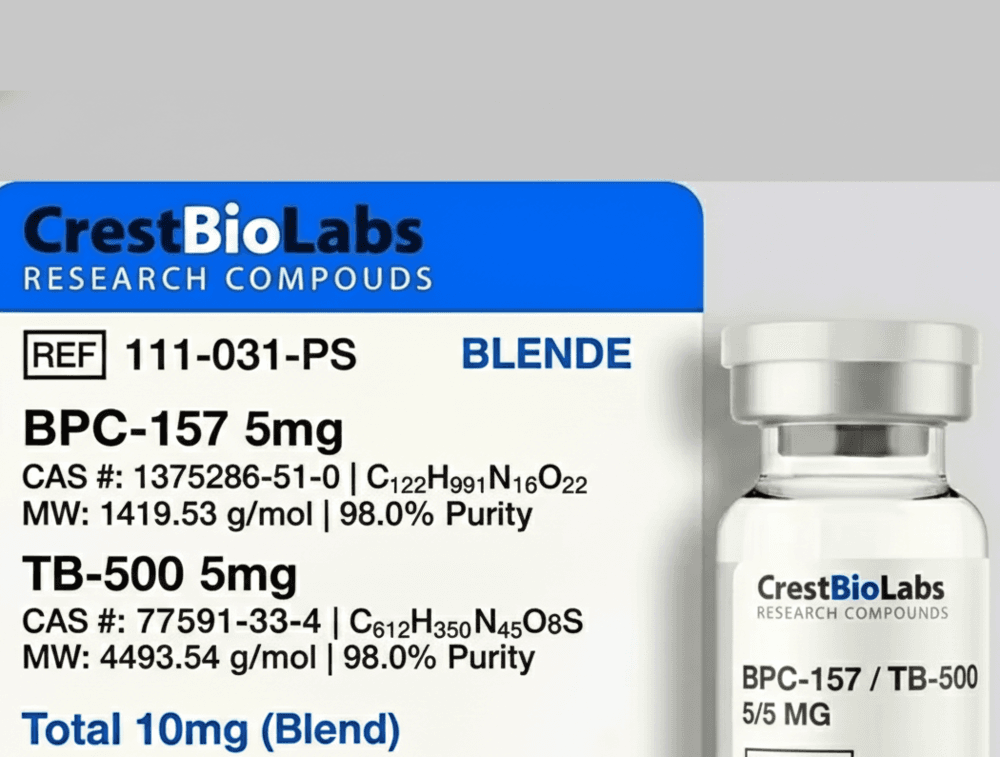
The BPC-157/TB-500 Blend is a research-grade combination of two extensively studied cytoprotective and regenerative peptides: BPC-157 (Body Protection Compound-157), a pentadecapeptide derived from human gastric juice, and TB-500 (Thymosin Beta-4), a 43-amino acid actin-sequestering peptide. This formulation provides researchers with a co-lyophilized preparation for investigating the interactions between these two mechanistically distinct peptides in tissue biology and repair research models.
The scientific rationale for combining BPC-157 and TB-500 stems from their complementary mechanisms of action and the overlapping but distinct tissue systems in which they have been studied. BPC-157 has been primarily characterized for its interactions with the nitric oxide system, growth factor modulation (VEGF, EGF, HGF upregulation), and activation of the FAK-paxillin and JAK-2/STAT-3 signaling pathways. TB-500, in contrast, operates primarily through its fundamental role in actin cytoskeleton dynamics, Akt/PI3K pathway activation, NF-κB modulation, and regulation of matrix metalloproteinase activity. The distinct receptor targets and signaling cascades of these two peptides create the potential for complementary or synergistic interactions at the cellular and tissue level.
Published preclinical studies have individually examined BPC-157 and TB-500 in many of the same experimental model categories, including models of tendon, ligament, muscle, skin, cardiac, and gastrointestinal tissue injury. Both peptides have been reported to promote angiogenesis in experimental models, though through different molecular mechanisms: BPC-157 primarily through VEGF upregulation and NO system modulation, and TB-500 through direct promotion of endothelial cell migration via actin cytoskeleton regulation. This convergence on angiogenic processes through distinct upstream pathways provides a clear mechanistic rationale for their combined study.
The combination of a gastric-derived peptide (BPC-157) with a thymic-derived peptide (TB-500) also represents an intersection of two distinct areas of peptide biology. BPC-157's origin from the gastrointestinal system and TB-500's origin as a ubiquitous intracellular protein highlight the diversity of endogenous peptide systems that participate in tissue homeostasis and repair processes.
Researchers using this blend can investigate several questions that are not addressable with either peptide alone: whether the two peptides produce additive or synergistic effects in specific cell culture assays, whether they activate complementary gene expression programs, and whether concurrent activation of nitric oxide/growth factor pathways (BPC-157) and actin dynamics/MMP regulation pathways (TB-500) produces qualitatively different cellular responses compared to either pathway alone.
The blend format offers practical advantages for multi-peptide research protocols, including consistent component ratios across experiments, reduced handling steps, and simplified preparation procedures. Both peptides are physicochemically compatible in aqueous solution and maintain their independent biological activities when co-formulated.
Chemical Classification
The BPC-157/TB-500 Blend is classified as a binary peptide research formulation combining two cytoprotective peptides with distinct mechanisms of action. It belongs to the category of rational peptide combinations designed for tissue biology and repair research.
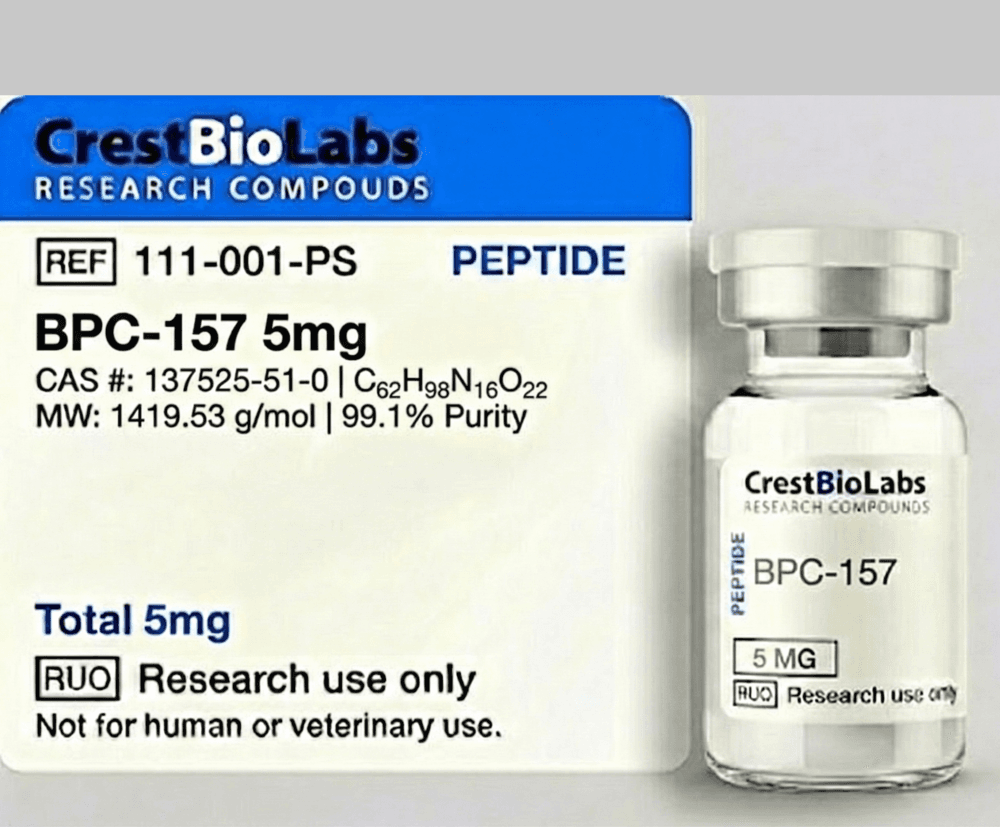
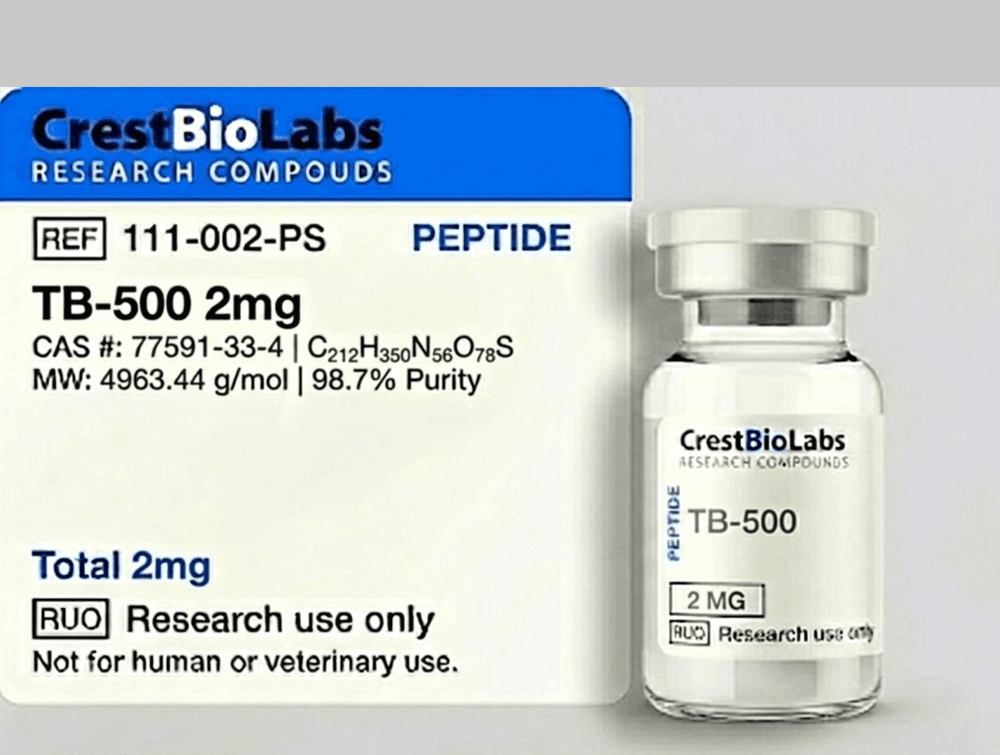
The blend contains two peptides of substantially different sizes: BPC-157 (15 amino acids, MW 1419.53) and TB-500 (43 amino acids, MW 4963.44). The two components represent different peptide families: BPC-157 is a gastric pentadecapeptide with cytoprotective classification, while TB-500 is a beta-thymosin family member classified as a cytoskeletal regulatory peptide.
As with the CJC-1295/Ipamorelin Blend, this is classified as a physical blend rather than a chemical conjugate: the two peptides maintain their individual chemical identities and do not form covalent bonds with each other in the formulation.
Structural Information
The BPC-157/TB-500 Blend contains two structurally distinct peptides with markedly different architectures.
BPC-157 is a 15-amino acid linear peptide (MW 1419.53 Da) characterized by its tri-proline motif (Pro-Pro-Pro at positions 3-5), which confers a rigid polyproline II helical segment. The peptide has no disulfide bonds, no post-translational modifications, and no cysteine or methionine residues. Its compact, proline-rich structure contributes to resistance against enzymatic degradation, particularly under acidic conditions consistent with its gastric origin.
TB-500 is a 43-amino acid polypeptide (MW 4963.44 Da) with an acetylated N-terminus and intrinsically disordered structure in solution. It contains one methionine residue (position 6) susceptible to oxidation and the LKKTET actin-binding motif (positions 17-22). Upon binding to G-actin, TB-500 transitions from a disordered to an ordered conformation.
The two peptides do not interact structurally in the blend. Their dramatically different sizes (approximately 3.5-fold molecular weight difference) and distinct structural features (rigid PPII helix vs. intrinsically disordered) ensure that they maintain independent conformational behavior in solution. This structural independence supports the expectation that each peptide retains its full biological activity within the blend formulation.
Analytically, the size difference between BPC-157 and TB-500 allows clear resolution by reversed-phase HPLC and unambiguous identification by mass spectrometry, enabling independent quality control of both components.
Mechanism of Action
The BPC-157/TB-500 Blend provides concurrent activation of two distinct mechanistic pathways that intersect at several key points in cellular repair and remodeling processes.
BPC-157 acts through modulation of the nitric oxide (NO) system, with context-dependent effects on NOS expression and NO production. It upregulates growth factor expression (VEGF, EGF, HGF) and activates the FAK-paxillin pathway (promoting cell adhesion and migration) and the JAK-2/STAT-3 signaling cascade. These pathways converge on processes of angiogenesis, cell migration, and extracellular matrix organization.
TB-500 acts through a fundamentally different mechanism centered on actin cytoskeleton regulation. By sequestering G-actin monomers, it modulates the dynamics of actin polymerization that underlie cell migration, division, and morphological changes. Extracellularly, TB-500 activates the Akt/PI3K survival pathway, modulates NF-κB-mediated inflammatory signaling, and regulates MMP activity for extracellular matrix remodeling.
The complementary nature of these mechanisms creates several potential points of convergence. Both peptides promote angiogenesis but through different molecular mechanisms: BPC-157 through growth factor upregulation (primarily VEGF) and NO modulation, and TB-500 through direct promotion of endothelial cell migration and tube formation via actin dynamics. Concurrent activation of both pathways may provide more comprehensive angiogenic signaling than either peptide alone.
At the level of cell migration, BPC-157's activation of the FAK-paxillin pathway provides the adhesion-based signaling for directional migration, while TB-500's regulation of actin dynamics provides the cytoskeletal machinery necessary for cell motility. These represent complementary aspects of the cell migration process: adhesion signaling (BPC-157) and cytoskeletal execution (TB-500).
The inflammatory modulation profiles of the two peptides are also complementary. TB-500's NF-κB suppression reduces pro-inflammatory cytokine expression, while BPC-157's interactions with the NO system and prostaglandin pathways provide additional anti-inflammatory mechanisms through different molecular targets.
The Ac-SDKP tetrapeptide released from TB-500 by prolyl oligopeptidase adds another mechanistic layer, contributing anti-fibrotic signaling that complements BPC-157's growth factor-mediated remodeling effects.
Stability and Storage
The stability of the BPC-157/TB-500 Blend is governed by the degradation characteristics of both component peptides. The limiting factor is typically the TB-500 component, which is more susceptible to degradation due to its methionine residue and larger size.
Lyophilized blend should be stored at -20°C or below, desiccated and protected from light. Under these conditions, both components maintain integrity for extended periods.
Upon reconstitution, the primary stability concerns are: methionine oxidation in TB-500 (position 6), deamidation of asparagine residues in TB-500, and aspartimide formation in BPC-157's aspartic acid residues. BPC-157 generally demonstrates superior solution stability compared to TB-500, particularly under acidic conditions.
Reconstituted solutions should be stored at 4°C for short-term use (up to 5-7 days) or frozen in aliquots at -20°C. The optimal pH range for both components is 5-7. Avoiding oxidizing conditions, direct light, and repeated freeze-thaw cycles is essential. Single-use aliquots are recommended.
Quality control should verify both components by HPLC (the molecular weight difference provides clear resolution) and mass spectrometry.
For comprehensive storage protocols, see our Peptide Stability & Storage Guide.
Laboratory Handling
The BPC-157/TB-500 Blend is supplied as a white lyophilized powder. Reconstitute by adding sterile water or bacteriostatic water along the vial wall with gentle swirling. Both components dissolve readily in aqueous solvents. Avoid vigorous vortexing, which may promote TB-500 aggregation.
Working concentrations should be determined based on the specific research application and the published literature for each component. Both peptides are compatible with standard cell culture media at physiological pH.
Handle under aseptic conditions using a laminar flow hood, low-binding tubes, and sterile filtered tips. Given TB-500's sensitivity to methionine oxidation, minimize exposure to strong light or oxidizing agents during preparation.
For detailed reconstitution procedures, consult our Laboratory Handling Protocols.
Safety Considerations
Standard laboratory PPE (nitrile gloves, safety glasses, laboratory coat) should be worn when handling the BPC-157/TB-500 Blend. Both components are biologically active peptides; handle in a ventilated area and avoid skin/eye contact. The blend is intended exclusively for in-vitro research and laboratory use. Follow institutional safety guidelines.
Published Research & Literature
The following peer-reviewed publications represent key research on BPC-157/TB-500 Blend. All citations reference studies available through major scientific databases.
Stable gastric pentadecapeptide BPC 157: novel therapy in gastrointestinal tract
Sikiric P, Seiwerth S, Rucman R, et al.
Current Pharmaceutical Design (2011) · DOI: 10.2174/138161211796197205
Thymosin β4 activates integrin-linked kinase and promotes cardiac cell migration, survival and cardiac repair
Bock-Marquette I, Saxena A, White MD, et al.
Nature (2004) · DOI: 10.1038/nature02943
BPC 157 and standard angiogenic growth factors: gastrointestinal tract healing, lesson from tendon, ligament, muscle and bone healing
Seiwerth S, Brcic L, Vuletic LB, et al.
Current Pharmaceutical Design (2018) · DOI: 10.2174/1381612824666180712110447
Thymosin beta4: actin sequestering protein moonlights to repair injured tissues
Goldstein AL, Hannappel E, Kleinman HK.
Trends in Molecular Medicine (2005) · DOI: 10.1016/j.molmed.2005.08.004
Thymosin beta 4 promotes dermal wound repair via its actions on cell migration and angiogenesis
Philp D, Badamchian M, Scheremeta B, et al.
Annals of the New York Academy of Sciences (2003) · DOI: 10.1196/annals.1242.008
Brain-gut axis and pentadecapeptide BPC 157: theoretical and practical implications
Sikiric P, Rucman R, Turkovic B, et al.
Current Neuropharmacology (2016) · DOI: 10.2174/1570159X13666151013153403
Related Research Resources
Research Use Only: All information on this page is provided for educational and research reference purposes.BPC-157/TB-500 Blend is sold strictly for in-vitro laboratory and research use only. It is not intended for human or animal consumption. Not a drug, dietary supplement, or food additive. Not evaluated by the FDA.