Overview
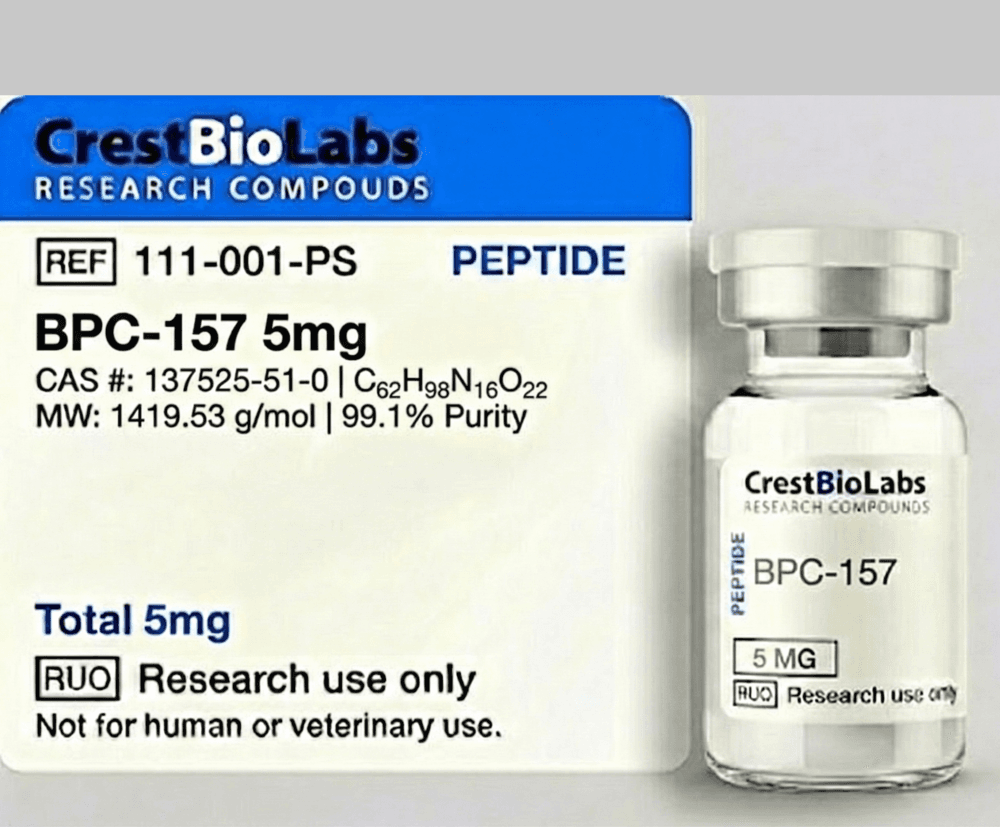
BPC-157 (Body Protection Compound-157) is a synthetic pentadecapeptide consisting of 15 amino acids, originally identified as a partial sequence of a protein isolated from human gastric juice. First characterized in the early 1990s by a research group led by Predrag Sikiric at the University of Zagreb, BPC-157 has since become one of the most extensively studied cytoprotective peptides in the preclinical literature. The peptide's designation as a "body protection compound" reflects the initial observation that fragments of a larger gastric protein demonstrated protective activity in various experimental tissue injury models.
The research history of BPC-157 spans more than three decades of published preclinical investigations. Early studies focused on its effects in gastrointestinal models, where researchers observed that the peptide exhibited protective properties in experimentally induced lesion models across multiple segments of the digestive tract. These foundational findings prompted broader investigation into the peptide's activity in other tissue systems, including musculoskeletal, vascular, and neurological models.
A distinguishing feature of BPC-157 in the research literature is the breadth of experimental contexts in which it has been evaluated. Published studies have examined the peptide in models of tendon and ligament injury, bone fracture, muscle damage, skin wound closure, corneal injury, and various forms of organ damage. This extensive preclinical portfolio has made BPC-157 one of the most referenced peptides in the tissue repair and regenerative research literature.
The peptide's stability profile is notable among bioactive peptides. Unlike many peptides that undergo rapid degradation in the presence of gastric acid and digestive enzymes, BPC-157 has demonstrated relative stability in low-pH environments in laboratory conditions. This characteristic is consistent with its origin as a fragment of a gastric protein and has made it a subject of interest for researchers studying peptide stability and bioavailability.
From a structural perspective, BPC-157 is a relatively small linear peptide with no disulfide bonds or post-translational modifications. Its 15-residue sequence (Gly-Glu-Pro-Pro-Pro-Gly-Lys-Pro-Ala-Asp-Asp-Ala-Gly-Leu-Val) contains a high proportion of proline residues, which contribute to the peptide's conformational rigidity and may factor into its observed resistance to enzymatic degradation. The absence of cysteine residues eliminates the possibility of disulfide-mediated aggregation, contributing to its suitability for standard reconstitution and handling protocols in the laboratory setting.
BPC-157 research has generated significant interest in the scientific community, as evidenced by the growing number of peer-reviewed publications examining its activity. The peptide continues to be a subject of active investigation, with ongoing studies exploring its interactions with various growth factor systems, nitric oxide pathways, and the dopaminergic system. Its well-characterized chemical properties, commercial availability in research-grade purity, and extensive preclinical literature base make it a standard reference compound in peptide research laboratories worldwide.
The significance of BPC-157 in the broader field of peptide research extends beyond its individual properties. As a gastric-derived peptide with documented activity across multiple tissue systems in preclinical models, it represents a class of endogenous peptide fragments that may serve important regulatory functions. Research into BPC-157 has contributed to the understanding of how small peptide fragments derived from larger proteins can retain or acquire distinct biological activities, a concept with broad implications for peptide biology and the development of novel research tools.
Chemical Classification
BPC-157 belongs to the class of synthetic peptides derived from endogenous protein fragments. Specifically, it is classified as a pentadecapeptide (15-mer) with a linear, unbranched topology. The peptide is categorized within the broader family of cytoprotective peptides, a functional classification based on its observed protective activity in preclinical tissue injury models.
Chemically, BPC-157 is a relatively hydrophilic peptide with a net negative charge at physiological pH, owing to the presence of glutamic acid and two aspartic acid residues in its sequence. The three consecutive proline residues (positions 3-5) introduce conformational constraints that distinguish it from fully flexible linear peptides. The peptide does not contain any non-natural amino acids, disulfide bonds, or chemical modifications in its standard research-grade form, making it a straightforward example of a linear natural-sequence peptide.
Within the taxonomy of bioactive peptides, BPC-157 is sometimes grouped with gastrointestinal peptides due to its origin from gastric juice protein. However, its broad activity profile in preclinical models extends well beyond the gastrointestinal system, and it is more accurately classified as a multi-system cytoprotective peptide based on the published literature.
Structural Information
BPC-157 is a linear pentadecapeptide with a molecular weight of 1419.53 Da, placing it in the lower range of biologically active peptides. The peptide chain extends from an N-terminal glycine residue to a C-terminal valine residue, with no cyclization, branching, or post-translational modifications in its standard synthetic form.
The most structurally distinctive feature of BPC-157 is the tri-proline motif at positions 3, 4, and 5 (Pro-Pro-Pro). Proline is unique among the proteinogenic amino acids in that its side chain cyclizes back to the backbone nitrogen, forming a pyrrolidine ring that constrains the phi dihedral angle to approximately -60 degrees. Three consecutive prolines create a rigid segment that adopts a polyproline II (PPII) helix conformation, characterized by an extended, left-handed helical structure with approximately three residues per turn. This PPII segment likely serves as a structural scaffold that presents the flanking residues in a defined spatial arrangement.
The N-terminal dipeptide (Gly-Glu) provides flexibility through the glycine residue and a negative charge through the glutamic acid side chain. The C-terminal segment (Asp-Asp-Ala-Gly-Leu-Val) contains two additional acidic residues and terminates with hydrophobic residues. The overall charge distribution creates an amphipathic character, with negative charges concentrated in the N-terminal and mid-chain regions.
The absence of cysteine residues means BPC-157 cannot form intra- or intermolecular disulfide bonds, eliminating a common source of structural heterogeneity in peptide preparations. Similarly, the lack of methionine residues reduces susceptibility to oxidative degradation. These structural features contribute to the peptide's favorable stability profile relative to many other bioactive peptides of similar size.
Computational modeling suggests that BPC-157 does not adopt a single rigid three-dimensional structure in solution but rather samples a conformational ensemble dominated by the PPII character of the tri-proline segment. The flanking regions likely remain flexible, allowing the peptide to adopt different conformations upon interaction with binding partners.
Mechanism of Action
The mechanism of action of BPC-157 has been investigated across numerous preclinical studies, revealing interactions with multiple signaling systems. While a single unified mechanism has not been definitively established, the published literature identifies several key pathways through which BPC-157 appears to exert its observed effects in experimental models.
One of the most consistently reported activities of BPC-157 involves modulation of the nitric oxide (NO) system. Studies have demonstrated that BPC-157 interacts with both the NO synthase (NOS) pathway and its downstream effectors. In experimental models, the peptide has been observed to modulate NO production in a context-dependent manner, upregulating NO in conditions of deficiency and attenuating excessive NO production in models of overproduction. This bidirectional modulation of the NO system is hypothesized to contribute to the peptide's observed effects on vascular function and tissue protection in preclinical models.
Growth factor modulation represents another well-documented aspect of BPC-157's activity profile. Published studies have reported that BPC-157 upregulates the expression of several growth factors in experimental systems, including epidermal growth factor (EGF), vascular endothelial growth factor (VEGF), and hepatocyte growth factor (HGF). The upregulation of VEGF is of particular interest, as it is associated with the promotion of angiogenesis, the formation of new blood vessels from pre-existing vasculature. Enhanced angiogenic signaling has been observed in multiple tissue models and is hypothesized to contribute to the peptide's effects on tissue repair processes.
BPC-157 has also been investigated for its interactions with the dopaminergic system. Preclinical studies have reported that the peptide modulates dopamine receptor expression and dopamine turnover in specific brain regions. These observations have prompted investigation of BPC-157 in experimental models involving dopaminergic dysfunction.
At the intracellular level, BPC-157 has been reported to activate the FAK-paxillin pathway, which is involved in cell adhesion, migration, and proliferation. Additionally, studies have implicated the JAK-2/STAT-3 signaling cascade in BPC-157's mechanism, particularly in the context of tendon fibroblast models. The activation of these pathways is consistent with the peptide's observed effects on cellular migration and tissue reorganization in preclinical wound models.
The peptide has also been observed to interact with the GABAergic system and to modulate serotonin and prostaglandin pathways in various experimental contexts. The involvement of multiple, overlapping signaling systems suggests that BPC-157 may act through a pleiotropic mechanism rather than a single receptor-ligand interaction, although the specific molecular target or receptor for BPC-157 has not been conclusively identified.
Stability and Storage
BPC-157 exhibits favorable stability characteristics relative to many bioactive peptides of similar size, a property that has contributed to its widespread use in research settings. The peptide's stability profile is influenced by its amino acid composition, particularly the absence of oxidation-prone residues such as methionine and cysteine, and the presence of the structurally rigid tri-proline motif.
In its lyophilized form, BPC-157 demonstrates extended stability when stored under appropriate conditions. The recommended storage temperature for lyophilized BPC-157 is -20°C or below, in a desiccated environment protected from light. Under these conditions, the peptide maintains its chemical integrity for extended periods, with studies reporting stability over months to years. Storage at 4°C is acceptable for short-term periods (days to weeks), though long-term storage at this temperature is not recommended due to the potential for gradual degradation.
Upon reconstitution, BPC-157 stability is dependent on the solvent system, pH, temperature, and storage duration. The peptide is readily soluble in water and can be reconstituted in sterile water, bacteriostatic water, or physiological saline solutions. Reconstituted solutions should be stored at 4°C for short-term use (up to 7-14 days) or at -20°C for longer-term storage. Repeated freeze-thaw cycles should be minimized, as they can promote peptide aggregation and degradation. Aliquoting reconstituted solutions into single-use volumes is recommended to avoid this issue.
The primary degradation pathways for BPC-157 in solution involve hydrolysis of peptide bonds, with the aspartic acid residues being particularly susceptible to aspartimide formation and subsequent chain cleavage under acidic conditions. Deamidation of the glutamic acid residue is another potential degradation pathway, particularly at elevated temperatures or prolonged storage. However, the peptide's notable acid stability, consistent with its gastric origin, means it is more resistant to low-pH degradation than most peptides.
Quality assessment of stored BPC-157 can be performed using reversed-phase HPLC to monitor for degradation products. Mass spectrometry (ESI-MS or MALDI-TOF) provides confirmation of molecular integrity. Researchers should establish acceptance criteria for purity before use in experiments.
For comprehensive storage protocols, see our Peptide Stability & Storage Guide.
Laboratory Handling
BPC-157 is supplied as a white to off-white lyophilized powder and should be handled using standard peptide laboratory protocols. Reconstitution is performed by adding the appropriate volume of sterile solvent directly to the vial containing the lyophilized peptide. Water for injection, sterile water, or bacteriostatic water (0.9% benzyl alcohol) are the most commonly used reconstitution solvents.
For reconstitution, the solvent should be directed along the inner wall of the vial and allowed to dissolve the peptide without vigorous agitation. Gentle swirling is preferred over vortexing, as excessive mechanical stress can promote aggregation. Complete dissolution typically occurs within 2-5 minutes at room temperature. The resulting solution should be clear and colorless; any persistent turbidity or particulate matter may indicate degradation or contamination.
Working concentrations for in-vitro research applications typically range from micromolar to millimolar, depending on the specific experimental system. Serial dilution from a concentrated stock solution is recommended to ensure accuracy. BPC-157 is compatible with standard cell culture media and buffer systems at physiological pH (7.2-7.4).
All handling should be performed under aseptic conditions using a laminar flow hood or biosafety cabinet to prevent microbial contamination of reconstituted solutions. Sterile, low-binding microcentrifuge tubes or glass vials are recommended for storage of aliquoted solutions. Researchers should use calibrated micropipettes and sterile, filtered tips for all transfer operations.
For detailed reconstitution procedures, consult our Laboratory Handling Protocols.
Safety Considerations
Standard laboratory personal protective equipment (PPE) should be worn when handling BPC-157, including nitrile gloves, safety glasses or goggles, and a laboratory coat. While BPC-157 has not been classified as hazardous under standard chemical safety frameworks, prudent laboratory practice dictates that all research peptides be handled with appropriate precautions.
Work with lyophilized peptide powders should be performed in a well-ventilated area or chemical fume hood to minimize inhalation of fine particulates. Reconstituted solutions present a lower inhalation risk but should still be handled with care to avoid skin contact or accidental ingestion. In the event of skin contact, the affected area should be washed thoroughly with soap and water.
BPC-157 is intended exclusively for in-vitro research and laboratory use. All local institutional safety guidelines and regulations for handling research peptides should be followed.
Published Research & Literature
The following peer-reviewed publications represent key research on BPC-157 (Body Protection Compound-157). All citations reference studies available through major scientific databases.
Stable gastric pentadecapeptide BPC 157: novel therapy in gastrointestinal tract
Sikiric P, Seiwerth S, Rucman R, et al.
Current Pharmaceutical Design (2011) · DOI: 10.2174/138161211796197205
Pentadecapeptide BPC 157 (PL 14736) improves ligament healing in the rat
Cerovecki T, Bojanic I, Brcic L, et al.
Journal of Orthopaedic Research (2010) · DOI: 10.1002/jor.21107
BPC 157 and standard angiogenic growth factors: gastrointestinal tract healing, lesson from tendon, ligament, muscle and bone healing
Seiwerth S, Brcic L, Vuletic LB, et al.
Current Pharmaceutical Design (2018) · DOI: 10.2174/1381612824666180712110447
Stable gastric pentadecapeptide BPC 157 in trials for inflammatory bowel disease (PL-10, PLD-116, PL14736, Pliva, Croatia): full and distended stomach, and vascular response
Sikiric P, Seiwerth S, Rucman R, et al.
Inflammopharmacology (2006) · DOI: 10.1007/s10787-006-1531-7
Pentadecapeptide BPC 157 enhances the growth hormone receptor expression in tendon fibroblasts
Chang CH, Tsai WC, Lin MS, et al.
Molecules (2014) · DOI: 10.3390/molecules190711224
Brain-gut axis and pentadecapeptide BPC 157: theoretical and practical implications
Sikiric P, Rucman R, Turkovic B, et al.
Current Neuropharmacology (2016) · DOI: 10.2174/1570159X13666151013153403
The effect of pentadecapeptide BPC 157 on hippocampal ischemia/reperfusion injuries in rats
Vukojević J, Siroglavić M, Kašnik K, et al.
Brain and Behavior (2020) · DOI: 10.1002/brb3.1726
Related Research Resources
Research Use Only: All information on this page is provided for educational and research reference purposes.BPC-157 (Body Protection Compound-157) is sold strictly for in-vitro laboratory and research use only. It is not intended for human or animal consumption. Not a drug, dietary supplement, or food additive. Not evaluated by the FDA.