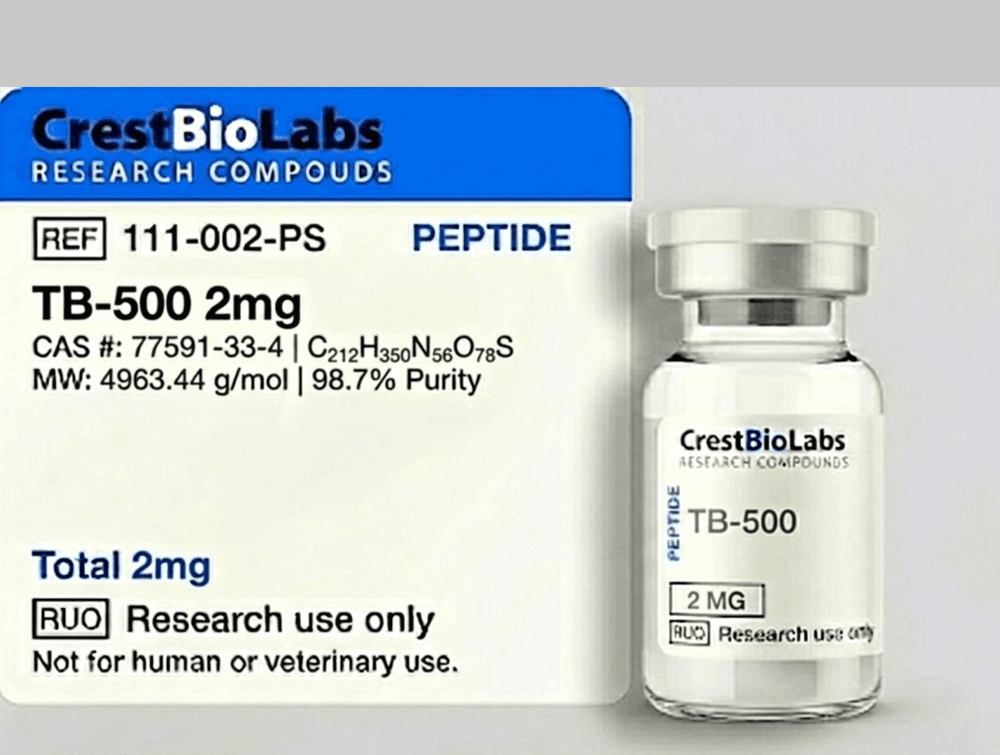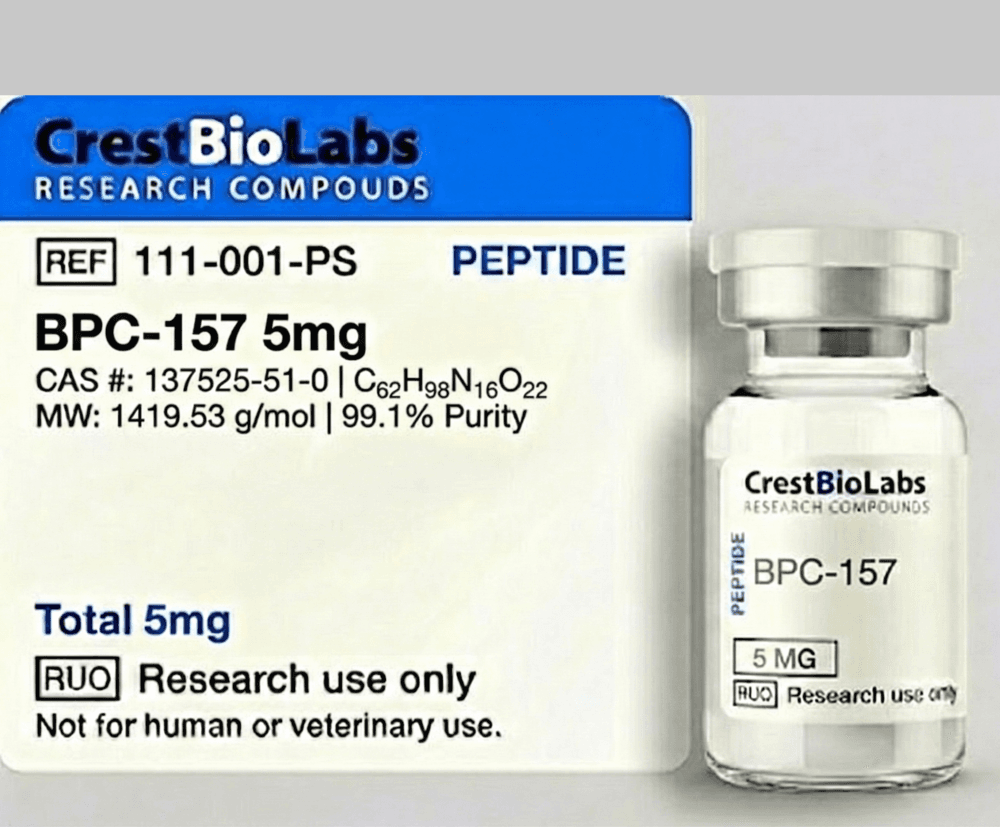
Scientific Overview
TB-500 and BPC-157 are two of the most widely referenced peptides in the preclinical tissue biology literature, yet they operate through fundamentally different biochemical mechanisms. TB-500 is a synthetic form of Thymosin Beta-4 (Tβ4), a 43-amino acid peptide whose primary intracellular function involves sequestration of monomeric G-actin, thereby regulating cytoskeletal dynamics. BPC-157 (Body Protection Compound-157) is a synthetic pentadecapeptide derived from a fragment of human gastric juice protein, with published research linking it to VEGFR2 signaling, nitric oxide modulation, and growth factor pathway engagement.
The comparison of these two peptides is instructive because their distinct mechanisms — actin cytoskeleton regulation for TB-500 versus growth factor and angiogenic signaling for BPC-157 — represent complementary aspects of cellular biology that have been investigated in overlapping preclinical contexts. Both peptides have been evaluated in tissue remodeling models, though through different molecular pathways, making their side-by-side analysis valuable for researchers seeking to understand the relative contributions of cytoskeletal versus angiogenic mechanisms in such models.
For research purposes only. Not for human or veterinary use. All data presented in this comparison are derived from published peer-reviewed preclinical studies and are intended solely to support the scientific community's understanding of these research compounds.
For research purposes only. Not for human or veterinary use. The compounds discussed in this comparison are intended exclusively for in-vitro and preclinical research applications.
Head-to-Head Comparison
| Property | TB-500 | BPC-157 |
|---|---|---|
| Peptide Class | Beta-Thymosin / Actin-Sequestering Peptide | Gastric Pentadecapeptide |
| Receptor Targets | G-actin (primary), Akt/PI3K pathway, NF-κB | VEGFR2, FAK-paxillin pathway, NO system |
| Molecular Weight | ~4,963.44 Da | ~1,419.53 Da |
| CAS Number | 77591-33-4 | 137525-51-0 |
| Mechanism (Research) | TB-500 functions primarily through sequestration of monomeric G-actin in a 1:1 complex, regulating the availability of actin monomers for filament polymerization. In preclinical models, extracellular TB-500 has also been observed to activate the Akt/PI3K survival pathway, modulate NF-κB-mediated inflammatory signaling, and influence matrix metalloproteinase activity. | BPC-157 has been observed in preclinical studies to modulate the VEGFR2 signaling axis and the FAK-paxillin pathway, which are associated with angiogenesis and cellular migration. Published research has also suggested interactions with the nitric oxide system and upregulation of growth factors including VEGF, EGF, and HGF. The precise primary receptor target remains under active investigation. |
| Stability | TB-500 contains a methionine residue at position 6 that is susceptible to oxidation. Lyophilized preparations are stable at -20 degrees C under desiccation. Reconstituted solutions should be aliquoted and stored at -20 degrees C to minimize oxidative degradation. The peptide's intrinsically disordered structure contributes to its susceptibility to proteolytic degradation in biological fluids. | BPC-157 demonstrates notable stability across a wide pH range, including highly acidic conditions (pH 1-2), consistent with its gastric protein origin. The proline-rich sequence (three consecutive prolines) confers resistance to many exo- and endopeptidases. Lyophilized BPC-157 maintains integrity at -20 degrees C under desiccation for extended periods. |
| Research Applications | TB-500 is studied in the context of actin cytoskeleton dynamics, cell migration and proliferation assays, endothelial tube formation models, and inflammatory pathway modulation. It serves as a reference compound for investigating Thymosin Beta-4-mediated signaling in cell biology research. | BPC-157 is investigated in preclinical models related to angiogenesis, VEGFR2 signaling, nitric oxide pathway modulation, and gastrointestinal mucosal biology. It is used as a reference cytoprotective peptide for studying growth factor-mediated signaling. |
| Analytical Methods | Reversed-phase HPLC for purity assessment, LC-MS/MS for molecular weight confirmation, cell migration (scratch/wound closure) assays, Akt phosphorylation immunoblotting, and actin polymerization assays. | Reversed-phase HPLC for purity analysis, LC-MS/MS for sequence confirmation, VEGFR2 phosphorylation assays, endothelial tube formation assays, and nitric oxide quantification. |
Peptide Class
Beta-Thymosin / Actin-Sequestering Peptide
Gastric Pentadecapeptide
Receptor Targets
G-actin (primary), Akt/PI3K pathway, NF-κB
VEGFR2, FAK-paxillin pathway, NO system
Molecular Weight
~4,963.44 Da
~1,419.53 Da
CAS Number
77591-33-4
137525-51-0
Mechanism (Research)
TB-500 functions primarily through sequestration of monomeric G-actin in a 1:1 complex, regulating the availability of actin monomers for filament polymerization. In preclinical models, extracellular TB-500 has also been observed to activate the Akt/PI3K survival pathway, modulate NF-κB-mediated inflammatory signaling, and influence matrix metalloproteinase activity.
BPC-157 has been observed in preclinical studies to modulate the VEGFR2 signaling axis and the FAK-paxillin pathway, which are associated with angiogenesis and cellular migration. Published research has also suggested interactions with the nitric oxide system and upregulation of growth factors including VEGF, EGF, and HGF. The precise primary receptor target remains under active investigation.
Stability
TB-500 contains a methionine residue at position 6 that is susceptible to oxidation. Lyophilized preparations are stable at -20 degrees C under desiccation. Reconstituted solutions should be aliquoted and stored at -20 degrees C to minimize oxidative degradation. The peptide's intrinsically disordered structure contributes to its susceptibility to proteolytic degradation in biological fluids.
BPC-157 demonstrates notable stability across a wide pH range, including highly acidic conditions (pH 1-2), consistent with its gastric protein origin. The proline-rich sequence (three consecutive prolines) confers resistance to many exo- and endopeptidases. Lyophilized BPC-157 maintains integrity at -20 degrees C under desiccation for extended periods.
Research Applications
TB-500 is studied in the context of actin cytoskeleton dynamics, cell migration and proliferation assays, endothelial tube formation models, and inflammatory pathway modulation. It serves as a reference compound for investigating Thymosin Beta-4-mediated signaling in cell biology research.
BPC-157 is investigated in preclinical models related to angiogenesis, VEGFR2 signaling, nitric oxide pathway modulation, and gastrointestinal mucosal biology. It is used as a reference cytoprotective peptide for studying growth factor-mediated signaling.
Analytical Methods
Reversed-phase HPLC for purity assessment, LC-MS/MS for molecular weight confirmation, cell migration (scratch/wound closure) assays, Akt phosphorylation immunoblotting, and actin polymerization assays.
Reversed-phase HPLC for purity analysis, LC-MS/MS for sequence confirmation, VEGFR2 phosphorylation assays, endothelial tube formation assays, and nitric oxide quantification.
Actin Dynamics vs Angiogenic Signaling
The mechanistic foundation of TB-500 is rooted in its role as the primary intracellular G-actin sequestering protein. Thymosin Beta-4 binds monomeric actin with a 1:1 stoichiometry, maintaining a reservoir of unpolymerized actin that can be rapidly mobilized when cells require cytoskeletal reorganization for processes such as migration, division, or morphological change. In cell biology research, this actin-sequestering function positions TB-500 as a regulator of virtually all actin-dependent cellular processes, from lamellipodia extension to cytokinesis.
BPC-157 operates through an entirely distinct biochemical paradigm centered on receptor-mediated signaling rather than direct cytoskeletal regulation. Preclinical studies have identified the VEGFR2 signaling axis as a key pathway influenced by BPC-157 in endothelial cell models. VEGFR2 activation triggers downstream phosphorylation cascades including the FAK-paxillin pathway, which itself connects to actin cytoskeleton remodeling at focal adhesion sites. Thus, while both peptides ultimately influence cellular processes that depend on actin dynamics, they engage the actin machinery at fundamentally different levels of the signaling hierarchy.
The distinction between these mechanisms has important implications for experimental design. TB-500's direct interaction with actin monomers means its effects are immediate and stoichiometric at the cytoskeletal level. BPC-157's receptor-mediated signaling, by contrast, involves amplification through enzymatic cascades and transcriptional regulation, producing effects that are more delayed but potentially more sustained through gene expression changes. Researchers studying these compounds in parallel must account for these different temporal dynamics when interpreting experimental outcomes.
Published preclinical studies have also highlighted the extracellular signaling activities of TB-500 that extend beyond its intracellular actin function. Extracellular Thymosin Beta-4 has been demonstrated to activate the Akt/PI3K pathway in endothelial cells, promoting cell survival and migration. This extracellular activity creates a partial mechanistic overlap with BPC-157's angiogenesis-related effects, though the upstream signaling events remain distinct for each peptide.
Structural and Molecular Contrasts
TB-500 and BPC-157 differ substantially in their structural properties, reflecting their distinct biological origins and functional roles. TB-500, at 43 amino acids and approximately 4,963 Da, is more than three times the size of the 15-amino acid BPC-157 (approximately 1,419 Da). This size difference has direct implications for their biophysical properties, receptor interactions, and analytical characterization.
TB-500 is classified as an intrinsically disordered protein (IDP), meaning it does not adopt a stable tertiary structure in free solution. NMR studies have demonstrated that the free peptide exists as a dynamic ensemble of conformations with transient helical elements. However, upon binding to G-actin, TB-500 undergoes a disorder-to-order transition, wrapping around the actin monomer with defined contact regions at both the N-terminal and C-terminal segments. The LKKTET motif (residues 17-22) serves as the critical actin-binding pharmacophore.
BPC-157's structure is dominated by its tri-proline motif (Pro-Pro-Pro at positions 3-5), which adopts a polyproline II helix conformation that constrains the backbone and presents flanking residues in a defined spatial arrangement. Unlike TB-500, BPC-157's structural rigidity is an intrinsic property of its sequence rather than being induced by a binding partner. The absence of cysteine and methionine residues in BPC-157 eliminates common oxidative degradation pathways, contributing to its notable chemical stability.
From an analytical chemistry perspective, the size difference between these peptides influences the characterization approaches employed. TB-500's larger size requires higher-resolution chromatographic and mass spectrometric methods to resolve degradation products and impurities. BPC-157's smaller size allows more straightforward LC-MS sequencing and fragmentation analysis. Both peptides can be characterized by reversed-phase HPLC and ESI-MS, but the interpretation of quality control data differs based on their distinct structural and degradation characteristics.
Inflammatory Pathway Modulation
Both TB-500 and BPC-157 have been investigated for their effects on inflammatory signaling in preclinical models, though they engage different molecular pathways. TB-500's anti-inflammatory properties have been linked to modulation of the NF-κB signaling pathway. Published studies have reported that Thymosin Beta-4 can suppress the nuclear translocation of NF-κB, thereby reducing the transcription of pro-inflammatory cytokines including TNF-α, IL-1β, and IL-6 in various cell types and experimental inflammatory models.
BPC-157's interactions with inflammatory pathways have been characterized through a different lens, primarily involving the nitric oxide (NO) system. In preclinical models, BPC-157 has been observed to modulate NO production in a context-dependent manner — research suggests it may upregulate NO in conditions of deficiency while attenuating excessive NO production in models of overproduction. This bidirectional modulation of the NO system is hypothesized to contribute to the peptide's observed effects on vascular function and inflammatory responses in preclinical models.
The N-terminal tetrapeptide fragment of TB-500, Ac-SDKP (residues 1-4), represents an additional anti-inflammatory mechanism unique to Thymosin Beta-4. Ac-SDKP is released by prolyl oligopeptidase cleavage and has been independently demonstrated to exert anti-fibrotic effects in experimental models. This fragment-mediated activity adds a layer of complexity to TB-500's inflammatory pathway engagement that has no parallel in BPC-157's mechanism.
For researchers investigating inflammatory signaling, the mechanistic distinction between TB-500 (NF-κB suppression, Ac-SDKP fragment generation) and BPC-157 (NO system modulation, growth factor upregulation) provides complementary pharmacological tools. Studies employing these peptides in parallel with selective pathway inhibitors have been used to dissect the relative contributions of NF-κB-dependent versus NO-dependent mechanisms in various preclinical inflammatory models.
Preclinical Research Profiles and Applications
TB-500 and BPC-157 have been evaluated across partly overlapping but mechanistically distinct preclinical research contexts. TB-500's research portfolio is anchored in its fundamental role in actin biology, extending to cell migration studies, endothelial tube formation assays, cardiac tissue models, and neurological research. The peptide's ability to promote endothelial cell migration, as demonstrated in scratch wound assays, has been consistently linked to its actin-sequestering function and Akt/PI3K pathway activation.
BPC-157's preclinical literature spans gastrointestinal models, tendon and ligament research, vascular biology, and neurological models. The peptide has been particularly well-studied in gastrointestinal contexts consistent with its gastric protein origin, where it has demonstrated protective properties in experimentally induced lesion models across multiple segments of the digestive tract. Its angiogenesis-promoting activity through VEGFR2 signaling has been documented in endothelial cell models and corroborated by in-vivo preclinical observations.
A notable difference in their research profiles concerns the growth factor interactions documented for each peptide. BPC-157 has been reported to upregulate the expression of multiple growth factors including VEGF, EGF, and HGF in preclinical models, suggesting a mechanism that involves transcriptional regulation of growth factor genes. TB-500's growth factor interactions are less direct; rather than upregulating growth factor expression per se, TB-500 facilitates the cellular responses to growth factor signaling by maintaining the actin cytoskeletal dynamics required for growth factor-stimulated cell migration and morphological changes.
From a practical research standpoint, the complementary mechanisms of these peptides make them useful tools for mechanistic dissection studies. In preclinical models where both cytoskeletal dynamics and angiogenic signaling are relevant, the use of TB-500 and BPC-157 as separate experimental conditions allows researchers to evaluate the relative contributions of actin-mediated versus receptor-mediated pathways. This comparative approach has been employed in published studies examining cell migration, tube formation, and tissue remodeling processes in vitro.
Scientific References
[1] Goldstein AL, Hannappel E, Sosne G, Kleinman HK.. “Thymosin β4: a multi-functional regenerative peptide. Basic properties and clinical applications.” Expert Opinion on Biological Therapy (2012). doi:10.1517/14712598.2012.687045
[2] Sikiric P, Seiwerth S, Rucman R, et al.. “Stable gastric pentadecapeptide BPC 157: novel therapy in gastrointestinal tract.” Current Pharmaceutical Design (2011). doi:10.2174/138161211796197205
[3] Sosne G, Qiu P, Goldstein AL, Wheater M.. “Biological activities of thymosin β4 defined by active sites in short peptide sequences.” FASEB Journal (2010). doi:10.1096/fj.09-142307
[4] Seiwerth S, Brcic L, Vuletic LB, et al.. “BPC 157 and blood vessels.” Current Pharmaceutical Design (2014). doi:10.2174/13816128113199990421
[5] Huff T, Muller CS, Otto AM, Netzker R, Hannappel E.. “β-Thymosins, small acidic peptides with multiple functions.” International Journal of Biochemistry & Cell Biology (2001). doi:10.1016/S1357-2725(00)00075-X
[6] Cerovecki T, Bojanic I, Brcic L, et al.. “Pentadecapeptide BPC 157 (PL 14736) improves ligament healing in the rat.” Journal of Orthopaedic Research (2010). doi:10.1002/jor.21107
[7] Smart N, Risebro CA, Melville AAD, et al.. “Thymosin β4 induces adult epicardial progenitor mobilization and neovascularization.” Nature (2007). doi:10.1038/nature05383