Scientific Overview
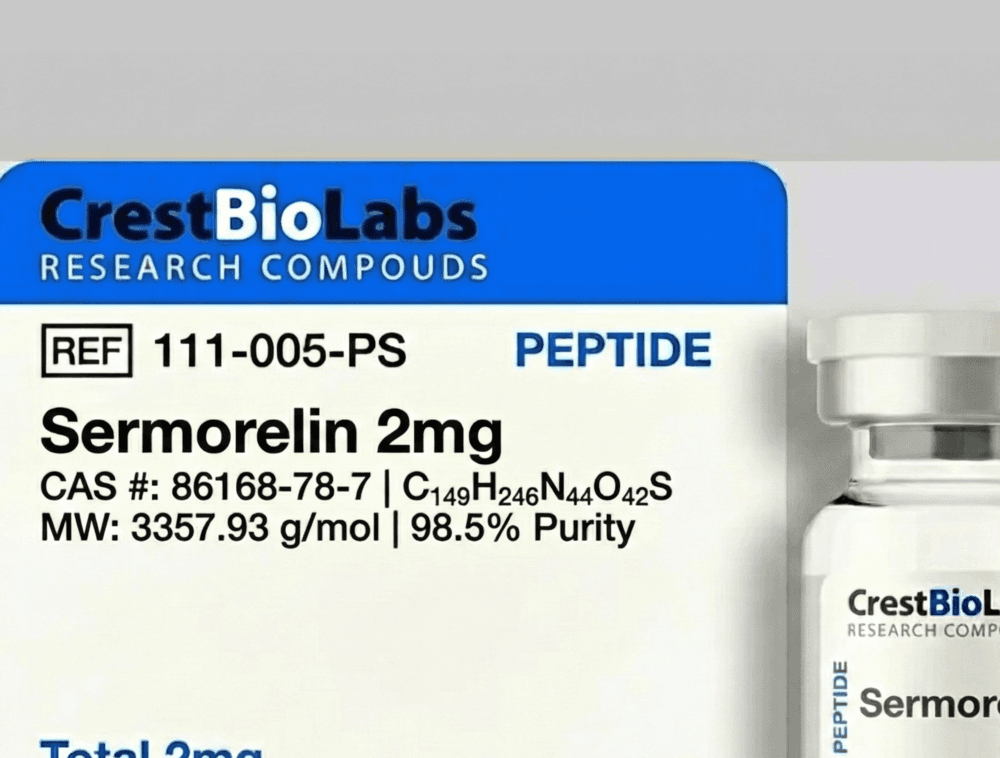
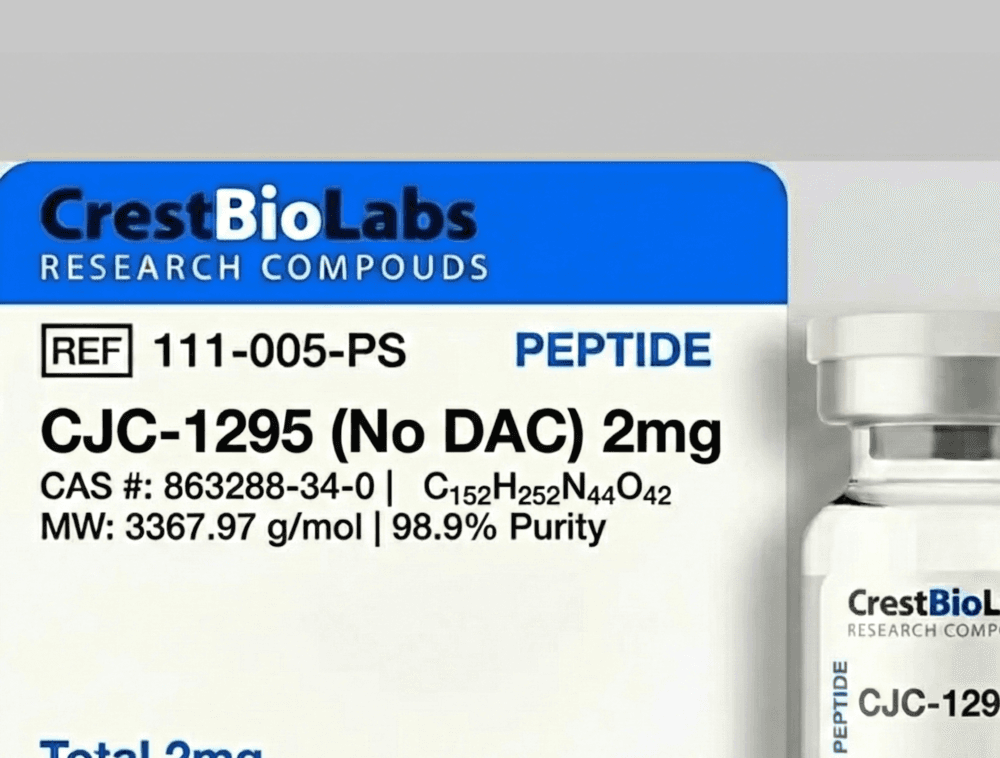
Sermorelin and CJC-1295 No DAC (Modified GRF 1-29) are both synthetic analogs of growth hormone-releasing hormone (GHRH) that act through the same receptor target — the GHRH receptor (GHRHR) — yet they differ in critical ways that make their comparison instructive for researchers studying the somatotropic axis. Sermorelin corresponds to the native GRF(1-29) sequence, retaining the unmodified amino acid sequence of the first 29 residues of endogenous GHRH. CJC-1295 No DAC incorporates four strategic amino acid substitutions at positions 2, 8, 15, and 27 that enhance metabolic stability while preserving full GHRHR binding and activation.
The comparison of these two GHRH analogs illustrates a fundamental principle in peptide medicinal chemistry: the trade-off between native receptor-ligand interactions and metabolic stability. Sermorelin provides the unmodified GHRH pharmacophore, making it valuable for studies requiring native receptor engagement. CJC-1295 No DAC addresses the vulnerabilities in the native sequence — DPP-IV susceptibility, deamidation, and methionine oxidation — through targeted substitutions that extend its functional activity in experimental systems. Understanding these distinctions is essential for selecting the appropriate GHRH analog for specific research applications.
For research purposes only. Not for human or veterinary use. All data presented in this comparison are sourced from peer-reviewed publications and are intended solely to support scientific understanding of these research compounds.
For research purposes only. Not for human or veterinary use. The compounds discussed in this comparison are intended exclusively for in-vitro and preclinical research applications.
Head-to-Head Comparison
| Property | Sermorelin | CJC-1295 No DAC |
|---|---|---|
| Peptide Class | Native-Sequence GHRH Analog | Stabilized GHRH Analog (Modified GRF 1-29) |
| Receptor Targets | GHRHR (Growth Hormone-Releasing Hormone Receptor) | GHRHR (Growth Hormone-Releasing Hormone Receptor) |
| Molecular Weight | ~3,357.93 Da | ~3,367.97 Da |
| CAS Number | 86168-78-7 | 863288-34-0 |
| Mechanism (Research) | Sermorelin activates the GHRHR through the native GRF(1-29) pharmacophore, triggering Gs-mediated adenylyl cyclase activation and intracellular cAMP accumulation. In somatotroph models, this signaling cascade activates PKA, leading to L-type calcium channel phosphorylation, CREB activation, and GH gene transcription. Its rapid degradation by DPP-IV produces transient receptor activation. | CJC-1295 No DAC activates the GHRHR through the same Gs-cAMP-PKA signaling cascade as sermorelin. Its four amino acid substitutions (D-Ala2, Gln8, Ala15, Leu27) block major degradation pathways without altering receptor binding, providing enhanced duration of GHRHR activation in preclinical models compared to the native sequence. |
| Stability | Sermorelin retains the native GHRH sequence vulnerabilities: DPP-IV cleavage at the Ala2-Asp3 bond, asparagine-8 deamidation, and methionine-27 oxidation. These susceptibilities limit its stability in biological fluids. Lyophilized preparations are stable at -20 degrees C. Reconstituted solutions require refrigeration and short-term use. | CJC-1295 No DAC incorporates four stabilizing substitutions: D-Ala2 blocks DPP-IV cleavage, Gln8 prevents deamidation, Ala15 enhances helical stability, and Leu27 eliminates methionine oxidation susceptibility. These modifications collectively extend the peptide's functional half-life in experimental systems. Lyophilized preparations are stable at -20 degrees C. |
| Research Applications | Sermorelin serves as the native-sequence GHRH reference standard for GHRHR pharmacology studies, pituitary somatotroph function assays, receptor binding characterization, and comparative studies with stabilized GHRH analogs. It is also used in studies of pulsatile versus sustained GHRHR stimulation. | CJC-1295 No DAC is used as a stabilized GHRH agonist for sustained GHRHR stimulation studies, somatotropic axis research, comparative pharmacology with native-sequence GHRH, and investigations of synergistic GHRH/GHS receptor signaling when combined with secretagogues such as ipamorelin. |
| Analytical Methods | Reversed-phase HPLC for purity, LC-MS for molecular weight confirmation, GHRHR competitive binding assays, cAMP accumulation assays in pituitary cell lines, and DPP-IV degradation kinetics studies. | Reversed-phase HPLC, LC-MS for molecular weight and substitution confirmation, GHRHR binding assays, cAMP accumulation assays, DPP-IV resistance assays, and circular dichroism for alpha-helical content determination. |
Peptide Class
Native-Sequence GHRH Analog
Stabilized GHRH Analog (Modified GRF 1-29)
Receptor Targets
GHRHR (Growth Hormone-Releasing Hormone Receptor)
GHRHR (Growth Hormone-Releasing Hormone Receptor)
Molecular Weight
~3,357.93 Da
~3,367.97 Da
CAS Number
86168-78-7
863288-34-0
Mechanism (Research)
Sermorelin activates the GHRHR through the native GRF(1-29) pharmacophore, triggering Gs-mediated adenylyl cyclase activation and intracellular cAMP accumulation. In somatotroph models, this signaling cascade activates PKA, leading to L-type calcium channel phosphorylation, CREB activation, and GH gene transcription. Its rapid degradation by DPP-IV produces transient receptor activation.
CJC-1295 No DAC activates the GHRHR through the same Gs-cAMP-PKA signaling cascade as sermorelin. Its four amino acid substitutions (D-Ala2, Gln8, Ala15, Leu27) block major degradation pathways without altering receptor binding, providing enhanced duration of GHRHR activation in preclinical models compared to the native sequence.
Stability
Sermorelin retains the native GHRH sequence vulnerabilities: DPP-IV cleavage at the Ala2-Asp3 bond, asparagine-8 deamidation, and methionine-27 oxidation. These susceptibilities limit its stability in biological fluids. Lyophilized preparations are stable at -20 degrees C. Reconstituted solutions require refrigeration and short-term use.
CJC-1295 No DAC incorporates four stabilizing substitutions: D-Ala2 blocks DPP-IV cleavage, Gln8 prevents deamidation, Ala15 enhances helical stability, and Leu27 eliminates methionine oxidation susceptibility. These modifications collectively extend the peptide's functional half-life in experimental systems. Lyophilized preparations are stable at -20 degrees C.
Research Applications
Sermorelin serves as the native-sequence GHRH reference standard for GHRHR pharmacology studies, pituitary somatotroph function assays, receptor binding characterization, and comparative studies with stabilized GHRH analogs. It is also used in studies of pulsatile versus sustained GHRHR stimulation.
CJC-1295 No DAC is used as a stabilized GHRH agonist for sustained GHRHR stimulation studies, somatotropic axis research, comparative pharmacology with native-sequence GHRH, and investigations of synergistic GHRH/GHS receptor signaling when combined with secretagogues such as ipamorelin.
Analytical Methods
Reversed-phase HPLC for purity, LC-MS for molecular weight confirmation, GHRHR competitive binding assays, cAMP accumulation assays in pituitary cell lines, and DPP-IV degradation kinetics studies.
Reversed-phase HPLC, LC-MS for molecular weight and substitution confirmation, GHRHR binding assays, cAMP accumulation assays, DPP-IV resistance assays, and circular dichroism for alpha-helical content determination.
Stability Engineering: Native vs Modified Sequence
The four amino acid substitutions that distinguish CJC-1295 No DAC from sermorelin address the three principal vulnerabilities of the native GRF(1-29) sequence. Each substitution targets a specific degradation mechanism while preserving the structural and functional integrity of the GHRH receptor pharmacophore.
The D-Ala2 substitution replaces L-alanine with its D-enantiomer at the second position. DPP-IV requires an L-amino acid at the P1 position for substrate recognition, and the D-configuration completely prevents this endopeptidase from cleaving the Ala2-Asp3 bond. This single modification addresses the most rapid degradation pathway for native GRF(1-29) in biological fluids. DPP-IV degradation kinetics studies have confirmed that sermorelin is rapidly cleaved by DPP-IV, with half-lives measured in minutes in plasma preparations, while CJC-1295 No DAC shows complete resistance to DPP-IV cleavage.
The Gln8 substitution replaces asparagine, which is susceptible to non-enzymatic deamidation via cyclic imide (succinimide) intermediate formation. Deamidation at position 8 generates aspartate or isoaspartate, producing heterogeneous degradation products that can be detected by HPLC as additional peaks. Glutamine, while structurally similar to asparagine, undergoes this deamidation reaction at a much slower rate, substantially extending the chemical stability of the peptide in solution.
The Ala15 substitution replaces glycine, the most conformationally flexible amino acid, with alanine, which has a stronger alpha-helix-forming propensity. This substitution stabilizes the alpha-helical secondary structure in the mid-chain region without introducing steric clashes that would disrupt receptor binding. The Leu27 substitution eliminates the methionine residue's thioether side chain, removing the primary site of oxidative degradation (methionine sulfoxide formation) that can occur upon exposure to reactive oxygen species or during prolonged storage.
Pharmacokinetic Implications for Research
The stability differences between sermorelin and CJC-1295 No DAC have direct consequences for experimental design in preclinical research. Sermorelin's rapid degradation by DPP-IV and other peptidases means that its effective concentration in biological systems decreases rapidly after addition to experimental media or administration in animal models. This rapid clearance produces a transient GHRHR stimulation profile that more closely mimics the pulsatile release pattern of endogenous GHRH from hypothalamic neurons.
CJC-1295 No DAC's enhanced stability produces a more sustained GHRHR activation profile. In plasma stability assays, the modified peptide maintains its structural integrity and receptor-binding activity for substantially longer than sermorelin. This extended activity window enables research protocols that require prolonged GHRHR stimulation, such as studies of receptor desensitization, prolonged cAMP signaling, and sustained transcriptional responses in somatotroph models.
The distinction between transient and sustained GHRHR stimulation is physiologically relevant because the somatotropic axis operates through pulsatile signaling. GHRH is released from hypothalamic arcuate nucleus neurons in episodic bursts, alternating with somatostatin inhibitory tone. The pulsatile pattern of GH secretion that results from this hypothalamic interplay is functionally important, as continuous versus pulsatile GH exposure produces different downstream effects on target tissues. Sermorelin, with its native-like transient activity, is more appropriate for studies modeling pulsatile GHRH input, while CJC-1295 No DAC is better suited for protocols requiring sustained receptor engagement.
It is important to note that CJC-1295 No DAC should be distinguished from CJC-1295 with DAC, a variant that incorporates a Drug Affinity Complex — a maleimidopropionic acid linker designed to form a covalent bond with serum albumin. The DAC variant achieves even longer pharmacokinetic profiles through albumin conjugation. CJC-1295 No DAC, while more stable than sermorelin, does not employ this albumin-binding strategy and occupies an intermediate position in the stability-duration spectrum of GHRH analogs.
Research Application Comparison
The choice between sermorelin and CJC-1295 No DAC in research protocols depends on the specific experimental question and the required GHRHR stimulation profile. Sermorelin is preferred in studies that require the native GHRH-receptor interaction without the confounding effects of non-natural amino acid substitutions. Receptor pharmacology studies that aim to characterize the endogenous GHRH signaling pathway, determine native binding kinetics, or establish baseline receptor responses benefit from sermorelin's unmodified sequence.
CJC-1295 No DAC is preferred when sustained GHRHR stimulation is required or when the rapid degradation of native-sequence GHRH would compromise experimental outcomes. Cell culture studies requiring overnight or multi-day GHRHR activation, receptor desensitization time-course experiments, and in-vivo studies where peptide stability in circulation is critical all benefit from the enhanced stability of CJC-1295 No DAC. Its resistance to DPP-IV also makes it suitable for studies conducted in biological fluid preparations where enzyme activity would rapidly degrade sermorelin.
Both peptides are frequently studied in combination with growth hormone secretagogues (GHS) such as ipamorelin, which act through the separate GHS receptor (GHSR). The GHRHR and GHSR pathways converge on somatotroph cells through complementary intracellular mechanisms — GHRHR signals through Gs-cAMP-PKA while GHSR signals through Gq-PLC-IP3-calcium release. Preclinical studies have documented synergistic effects on GH secretion when GHRH agonists and GHS receptor agonists are combined, and both sermorelin and CJC-1295 No DAC have been used in such combination studies.
From a quality control and analytical perspective, the modified residues in CJC-1295 No DAC provide useful diagnostic markers for identity confirmation. The D-Ala2 can be detected by chiral amino acid analysis, the Gln8/Asn8 substitution produces a distinct fragmentation pattern in tandem mass spectrometry, and the absence of methionine (Leu27) eliminates the Met-sulfoxide peak that is commonly observed in aged sermorelin preparations. These analytical distinctions are valuable for confirming compound identity and assessing purity in research settings.
Scientific References
[1] Guillemin R, Brazeau P, Bohlen P, et al.. “Growth hormone-releasing factor from a human pancreatic tumor that caused acromegaly.” Science (1982). doi:10.1126/science.6812220
[2] Teichman SL, Neale A, Lawrence B, Gagnon C, Caber JP, Bhatt RS.. “Prolonged stimulation of growth hormone (GH) and insulin-like growth factor I secretion by CJC-1295, a long-acting analog of GH-releasing hormone, in healthy adults.” Journal of Clinical Endocrinology & Metabolism (2006). doi:10.1210/jc.2005-1528
[3] Frohman LA, Downs TR, Heimer EP, Felix AM.. “Dipeptidylpeptidase IV and trypsin-like enzymatic degradation of human growth hormone-releasing hormone in plasma.” Journal of Clinical Investigation (1989). doi:10.1172/JCI114121
[4] Alba M, Fintini D, Salvatori R.. “Effects of recombinant mouse growth hormone treatment on growth and body composition in GHRH knockout mice.” Growth Hormone & IGF Research (2005). doi:10.1016/j.ghir.2005.02.005
[5] Rivier J, Spiess J, Thorner M, Vale W.. “Characterization of a growth hormone-releasing factor from a human pancreatic islet tumour.” Nature (1982). doi:10.1038/300276a0
[6] Ionescu M, Bhatt RS, Gagnon C, et al.. “Pharmacokinetics and pharmacodynamics of CJC-1295, a growth hormone releasing factor analog, after subcutaneous administration in healthy subjects.” Growth Hormone & IGF Research (2006). doi:10.1016/j.ghir.2006.05.001
[7] Mayo KE, Miller TL, DeAlmeida V, et al.. “Regulation of the pituitary somatotroph cell by GHRH and its receptor.” Recent Progress in Hormone Research (2000). doi:10.1210/rp.55.1.237