Interpreting HPLC Purity Percentages
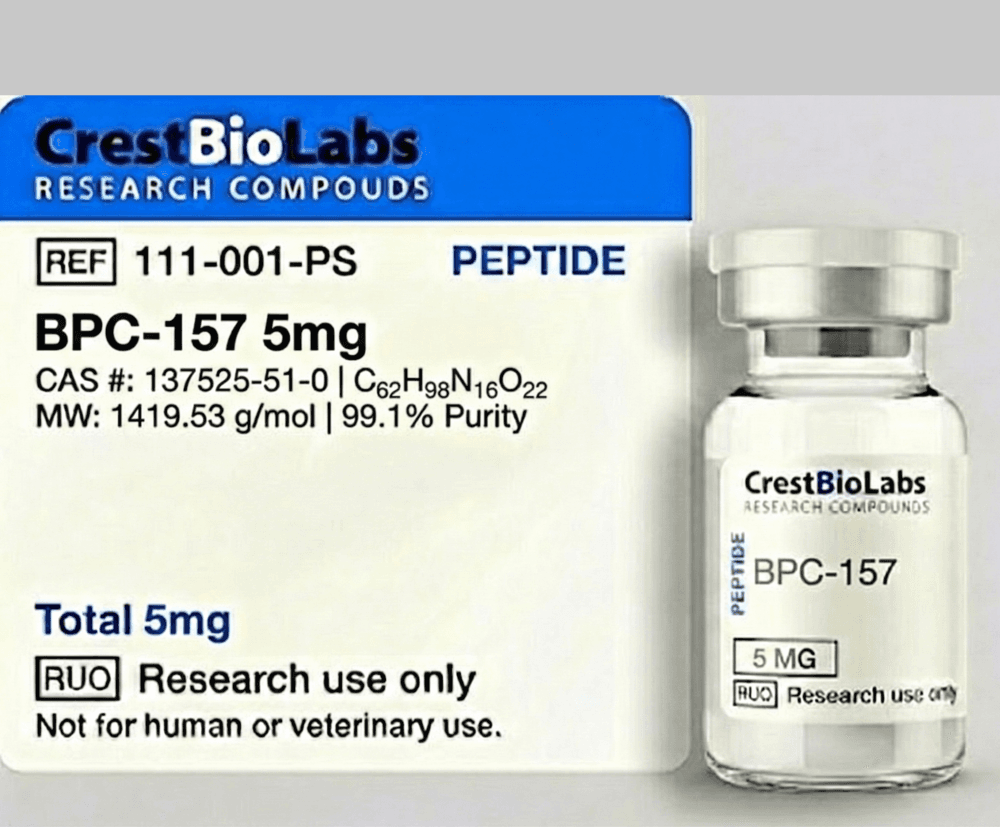
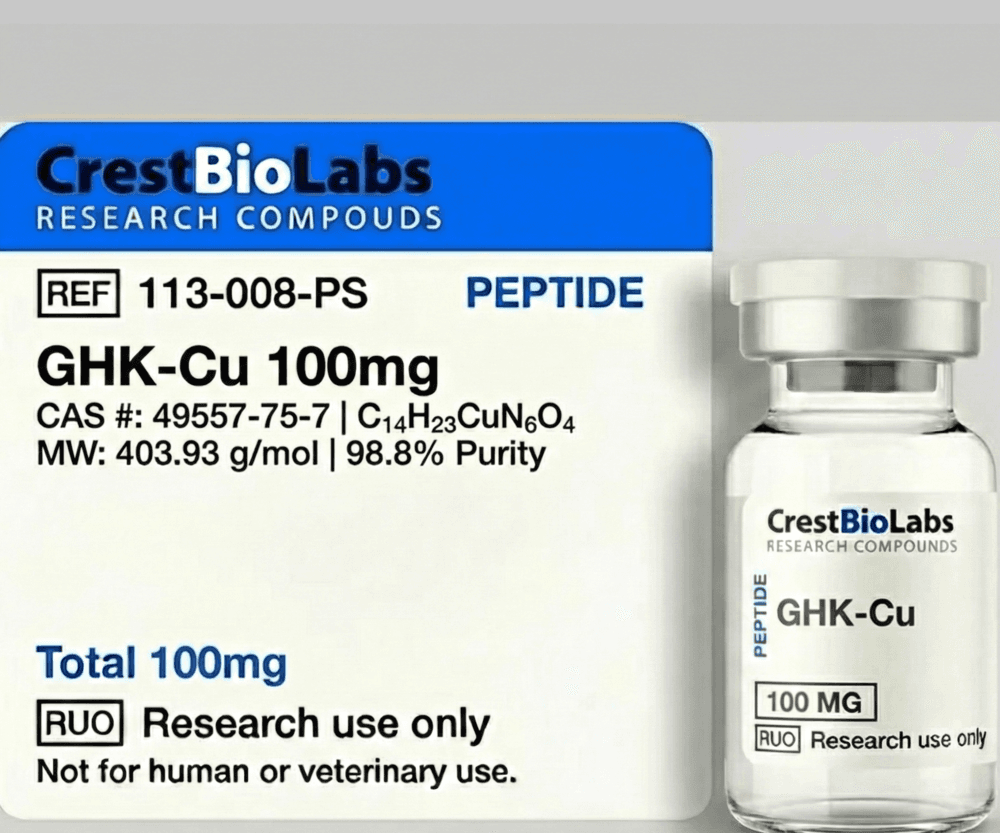
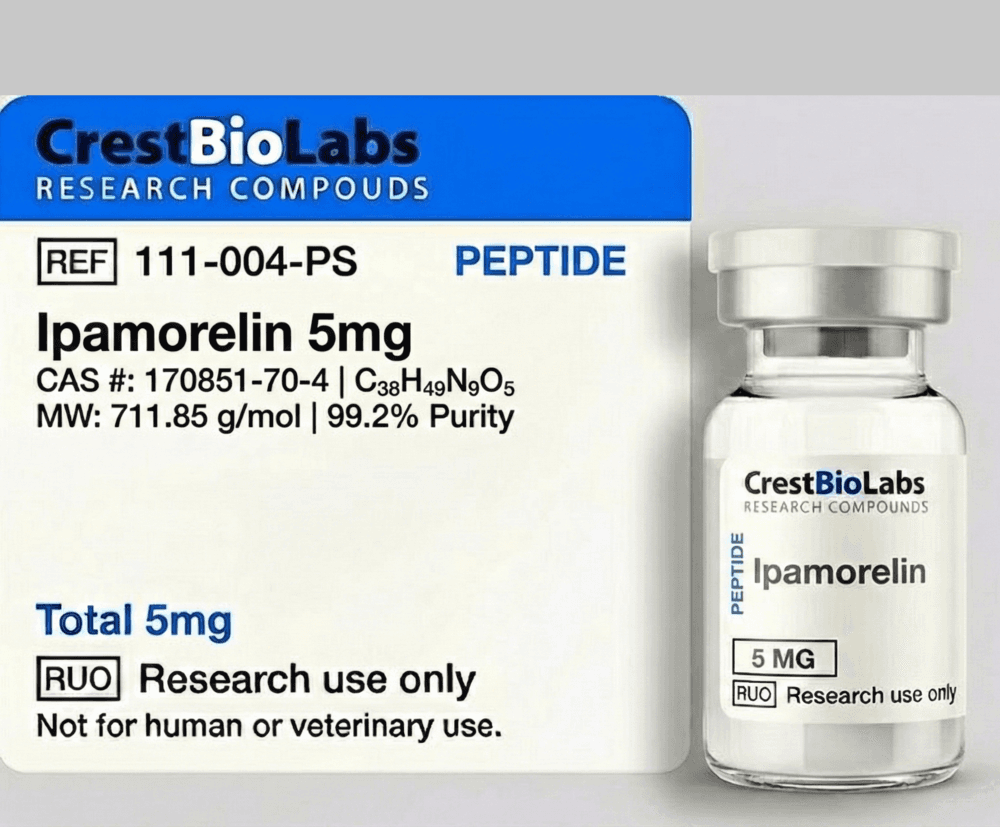
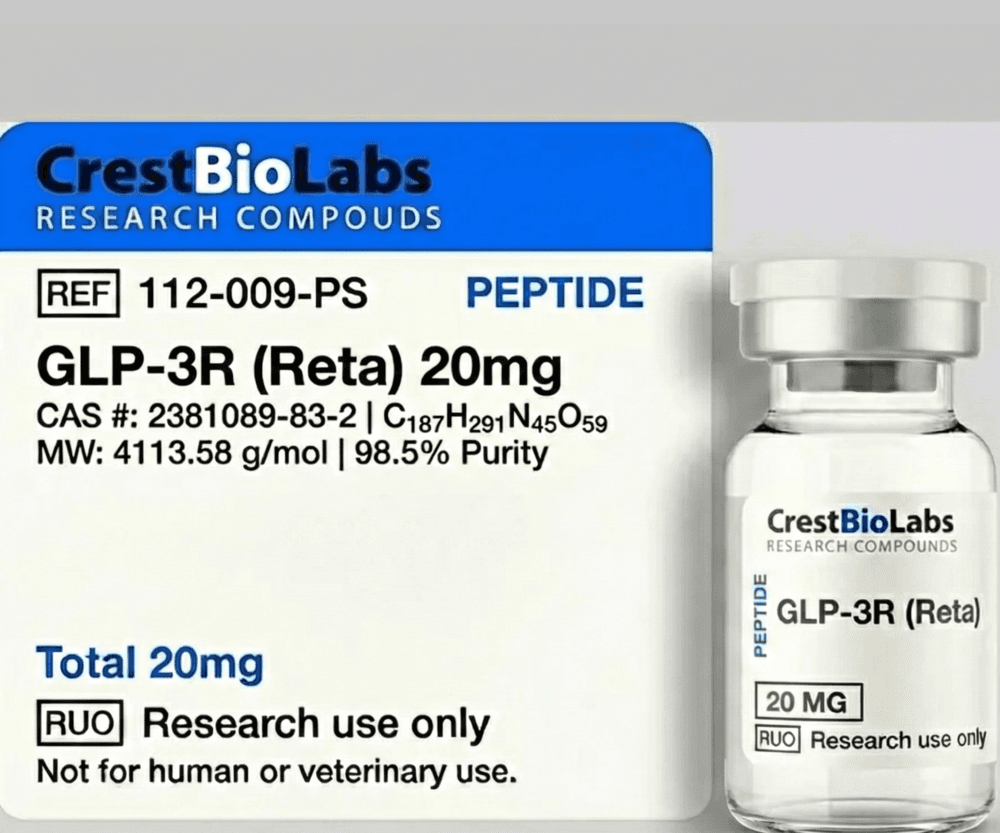
The HPLC purity percentage is the single most referenced value on a research compound Certificate of Analysis. This value is derived from reversed-phase high-performance liquid chromatography (RP-HPLC) using the area normalization method, where the integrated area of the target compound peak is expressed as a percentage of the total integrated area of all detected peaks. Understanding what this number represents, and equally important, what it does not represent, is essential for any researcher evaluating compound quality.
The purity percentage reflects only UV-absorbing species detected at the monitoring wavelength, typically 214 nm for peptide compounds. At this wavelength, the peptide bond (amide chromophore) absorbs UV light, providing a nearly universal detection mechanism for peptide-containing species. The molar absorptivity of the peptide bond at 214 nm is approximately 1,100 to 1,200 M-1cm-1 per residue, as documented by Kuipers and Gruppen (Journal of Agricultural and Food Chemistry, 2007, DOI: 10.1021/jf0718904). This means that a peptide with 10 residues produces approximately 10 times the UV response of a single amino acid, and the UV response is roughly proportional to the mass of peptide material in each chromatographic peak.
Critically, HPLC purity does not account for non-UV-absorbing components. Counter-ions such as trifluoroacetate (TFA) or acetate, residual moisture, inorganic salts, and small molecules lacking a peptide bond chromophore are invisible to the UV detector and do not appear in the area normalization calculation. This is why a peptide can report 99% HPLC purity yet have a net peptide content of only 70% by weight: the remaining 30% consists of these invisible components. Both values convey important but distinct information, and researchers should reference both when preparing stock solutions for quantitative in-vitro studies.
Purity specifications vary by application and supplier. General research-grade peptides are commonly specified at 95% or greater purity by HPLC. For quantitative receptor binding assays, enzyme kinetics, and structure-activity relationship (SAR) studies, purities of 98% or above are recommended to minimize the influence of impurity-related artifacts on experimental data. For a comprehensive overview of HPLC methodology, refer to our guide on HPLC purity testing for research peptides.
Reading HPLC Chromatograms
An HPLC chromatogram is a two-dimensional plot of detector response (UV absorbance, typically in absorbance units or milliabsorbance units on the y-axis) versus time (in minutes on the x-axis). Each peak on the chromatogram corresponds to one or more chemical species eluting from the analytical column at a specific retention time. The target compound should appear as the dominant peak, with any impurities appearing as smaller peaks at different retention times.
Retention time (tR) is the time elapsed from sample injection to peak maximum. In reversed-phase HPLC, retention time reflects the hydrophobicity of the analyte: more hydrophobic compounds interact more strongly with the C18 stationary phase and require higher organic solvent concentrations to elute, resulting in longer retention times. Each peptide has a characteristic retention time under defined chromatographic conditions (column type, mobile phase composition, gradient program, flow rate, and temperature). While retention time provides useful identification information, it is not sufficient for definitive identity confirmation because different compounds can coincidentally share similar retention times under certain conditions.
Peak shape provides diagnostic information about chromatographic quality. Ideal peaks are symmetric and approximately Gaussian in shape. Peak tailing (where the rear edge of the peak extends further than expected) can indicate secondary interactions between the analyte and residual silanol groups on the column, sample overloading, or column degradation. Peak fronting (where the leading edge extends abnormally) may indicate column overloading or void formation. The asymmetry factor (As), defined as the ratio of the rear half-width to the front half-width at 10% peak height, should ideally fall between 0.8 and 1.5 for well-behaved chromatographic peaks, as described by Snyder, Kirkland, and Dolan in Introduction to Modern Liquid Chromatography (Wiley, 3rd edition, 2010).
Common impurities visible on peptide chromatograms include deletion sequences (peaks eluting near the target, typically resulting from incomplete coupling during synthesis), oxidized species (methionine sulfoxide variants generally elute earlier due to increased polarity), deamidation products (asparagine-to-aspartate or aspartate-to-isoaspartate conversion products), and truncated sequences (shorter fragments eluting earlier due to reduced hydrophobic contact area). The pattern of impurity peaks provides information about the quality of the synthesis and purification process.
Resolution (Rs) between adjacent peaks quantifies separation quality. Baseline resolution (Rs greater than 1.5) is necessary for accurate quantification. When peaks overlap, the integration software cannot accurately assign the shared area between the two species, potentially leading to overestimation of target purity if an impurity co-elutes with the main peak. Researchers should examine the chromatogram on a COA for evidence of well-resolved peaks and a stable baseline.
Mass Spectrometry Identity Confirmation
While HPLC quantifies purity, mass spectrometry (MS) confirms identity. The mass spectrometry section of a COA reports the observed molecular weight of the compound and compares it to the theoretical molecular weight calculated from the molecular formula or amino acid sequence. Agreement between these values constitutes molecular identity confirmation. The two primary ionization techniques used for peptide analysis are electrospray ionization (ESI) and matrix-assisted laser desorption/ionization (MALDI), each producing characteristic spectral features.
Electrospray ionization mass spectrometry (ESI-MS) is the most widely used technique for peptide identity confirmation. ESI produces multiply charged ions from peptide molecules in solution, generating a characteristic envelope of peaks at different mass-to-charge (m/z) ratios. The raw ESI spectrum shows peaks corresponding to [M+nH]n+ charge states, where M is the molecular mass and n is the number of proton charges. Deconvolution algorithms transform these multiply charged ion peaks into a single peak at the neutral molecular mass. The deconvoluted mass should match the theoretical value within the instrument's mass accuracy, typically within 0.01% for modern instruments, as reviewed by Dass (Fundamentals of Contemporary Mass Spectrometry, Wiley, 2007, DOI: 10.1002/0470118490).
MALDI-TOF (matrix-assisted laser desorption/ionization time-of-flight) mass spectrometry produces predominantly singly charged [M+H]+ ions, yielding simpler spectra that are directly readable without deconvolution. MALDI-TOF is particularly useful for larger polypeptides and provides rapid analysis with high sensitivity. Mass accuracy for MALDI-TOF in linear mode is typically 0.01-0.1% (100-1000 ppm), while reflectron mode improves accuracy to 10-50 ppm for peptides below approximately 5,000 Da.
Researchers should pay close attention to mass discrepancies on a COA. Specific mass differences between the observed and theoretical molecular weight correspond to known chemical modifications. A mass increase of +16 Da indicates oxidation (addition of one oxygen atom), most commonly at methionine or tryptophan residues. A difference of +1 Da suggests deamidation of asparagine to aspartate. A difference of -18 Da may indicate pyroglutamate formation from an N-terminal glutamine residue. Mass differences corresponding to one or more amino acid residue masses suggest deletion sequences or synthesis errors.
For a detailed treatment of ESI-MS and MALDI-TOF principles and spectral interpretation, see our mass spectrometry for peptide analysis article. Understanding mass spectrometry data on a COA enables researchers to independently verify compound identity rather than relying solely on the supplier's label.
Endotoxin and Sterility Data
For researchers conducting cell-based assays and other in-vitro biological studies, endotoxin contamination is a significant concern that can confound experimental results. Bacterial endotoxins are lipopolysaccharides (LPS) derived from the outer membrane of gram-negative bacteria and are potent activators of innate immune signaling, particularly through toll-like receptor 4 (TLR4). Even trace levels of endotoxin contamination can activate inflammatory signaling cascades in sensitive cell lines, producing confounding cytokine responses, as demonstrated by Schwarz et al. (Innate Immunity, 2014, DOI: 10.1177/1753425913516524).
Endotoxin testing on COAs is most commonly performed using the Limulus Amebocyte Lysate (LAL) assay, which exploits the clotting cascade of horseshoe crab (Limulus polyphemus) blood cells that is specifically triggered by LPS. Results are reported in endotoxin units per milligram (EU/mg) of compound. The LAL assay is available in three formats: gel-clot (qualitative), turbidimetric (quantitative), and chromogenic (quantitative). The chromogenic LAL assay is most commonly used for pharmaceutical-grade testing and provides quantitative results with detection limits as low as 0.005 EU/mL.
When evaluating endotoxin data on a COA, researchers should consider their specific application. For general biochemical assays not involving live cells, endotoxin levels are typically not a primary concern. For cell culture applications, particularly those involving macrophages, dendritic cells, monocytes, or other immune-responsive cell types, endotoxin contamination can activate NF-kB signaling, induce pro-inflammatory cytokine production (IL-6, TNF-alpha, IL-1beta), and fundamentally alter cellular behavior. In these contexts, low-endotoxin products with documented LAL testing on the COA are essential.
Sterility testing, when included on a COA, confirms the absence of viable microorganisms in the product. This is typically assessed by direct inoculation of the sample into microbial growth media (tryptic soy broth for bacteria, Sabouraud dextrose broth for fungi) followed by incubation for 14 days. Not all research-use-only compounds undergo sterility testing, but for applications requiring aseptic conditions, this data provides additional assurance. Proper aseptic handling techniques during reconstitution remain essential regardless of the product's initial sterility status.
Peak Area Normalization and Integration Parameters
The accuracy and reproducibility of HPLC purity values depend critically on the parameters used for chromatographic peak integration. Peak area normalization is the standard method for calculating peptide purity: the data system identifies peaks in the chromatogram, determines baseline start and end points for each peak, calculates the area under each peak curve, and expresses the target peak area as a percentage of total peak area. Each step in this process involves parameters that can influence the final purity value.
Peak detection threshold determines the minimum signal-to-noise ratio required for a peak to be recognized and included in the integration. Setting this threshold too high causes small impurity peaks to be excluded from the calculation, artificially inflating the apparent purity. Setting it too low causes baseline noise to be integrated as peaks, adding spurious area to the denominator. Industry-standard practice, as described in USP General Chapter 621 on Chromatography, typically uses a signal-to-noise ratio of 10:1 as the quantification limit.
Baseline placement is another critical parameter. The integration software must determine where each peak begins and ends relative to the baseline. For well-resolved peaks on a flat baseline, this is straightforward. For peaks with tailing, shoulder peaks, or partially resolved species, the choice of baseline construction method (valley-to-valley, tangent skim, or forced baseline drop) can significantly affect the calculated area. Different software settings applied to the same chromatographic data can yield purity values differing by 1-3%, which is why method descriptions on COAs should specify integration parameters.
Integration time limits also affect purity calculations. Some methods exclude peaks eluting before the void volume (t0) or after the gradient end, while others integrate the entire run. Late-eluting impurities, such as strongly hydrophobic byproducts or aggregated species, may be excluded if the integration window is too narrow. Researchers comparing purity values across different suppliers should consider whether different integration time windows were used.
The area normalization method assumes that all detected species have similar UV response factors at the monitoring wavelength. For peptide-bond-containing species detected at 214 nm, this assumption is approximately valid because the molar absorptivity per residue is relatively constant. However, non-peptide impurities or peptide fragments with significantly different chain lengths may have different response factors, introducing systematic error into the purity calculation. This limitation is inherent to the area-percent method and is one reason why HPLC purity should be considered alongside complementary analytical techniques, as discussed in our guide on understanding Certificates of Analysis.
Practical COA Evaluation Checklist
Evaluating a COA systematically ensures that no critical quality indicator is overlooked. The following framework provides a structured approach to reviewing COA data before introducing a compound into experimental protocols. This checklist is intended for research use and aligns with best practices described in ICH Q6A specifications testing guidelines for new drug substances, adapted here for research-use-only compound evaluation.
Step 1: Verify Product Identity
Confirm that the compound name, amino acid sequence (if applicable), and CAS registry number on the COA match the product ordered. Verify that the lot number on the COA matches the lot number printed on the product vial label. Any discrepancy at this stage warrants immediate contact with the supplier before proceeding.
Step 2: Evaluate Mass Spectrometry Data
Calculate the theoretical molecular weight from the published amino acid sequence and compare it to the observed molecular weight reported on the COA. For ESI-MS, the values should agree within 0.1%. For MALDI-TOF, agreement within 0.05% is typical in reflectron mode. Note any mass discrepancies and evaluate whether they correspond to known modifications (oxidation: +16 Da; deamidation: +1 Da; pyroglutamate: -17 Da). If a mass spectrum image is provided, examine it for clean charge state envelopes (ESI) or a clean singly charged peak (MALDI).
Step 3: Assess HPLC Purity and Chromatogram
Confirm that the reported HPLC purity meets or exceeds the specification for your intended application. Examine the chromatogram for peak symmetry, baseline stability, and adequate resolution between the main peak and any impurity peaks. Verify that the method description includes column type, mobile phase, gradient conditions, and detection wavelength. Compare the chromatogram profile to previous batches of the same compound if available.
Step 4: Review Additional Testing
Check appearance (should match expected physical description), net peptide content (important for accurate stock solution preparation), endotoxin levels (critical for cell-based assays), and any additional compound-specific testing. Archive the COA in your laboratory records alongside the lot number and experimental notebook references.
For detailed guidance on COA components and quality documentation standards, see our comprehensive article on understanding Certificates of Analysis for research peptides. To access batch-specific analytical documentation for products in our catalog, visit the COA hub.
Browse our full product catalog to view research compounds with batch-specific Certificates of Analysis, HPLC purity data, and mass spectrometry confirmation.