Scientific Overview
The progression from GLP-1 receptor mono-agonists to GLP-1/GIP/GCG triple receptor agonists represents one of the most significant developments in peptide pharmacology research. While GLP-1 mono-agonists have been extensively studied as selective incretin receptor tools, triple agonists such as retatrutide incorporate agonism at three related but pharmacologically distinct receptors: GLP-1R, GIPR, and GCGR. This additional complexity introduces the glucagon receptor signaling axis, which engages metabolic pathways fundamentally different from those accessed through incretin receptor activation alone.
The comparison between GLP-1 mono-agonists and triple agonists is particularly informative because it encompasses the full spectrum of receptor engagement available within the glucagon superfamily peptide framework. By comparing the most selective approach (GLP-1R mono-agonism) with the broadest (triple agonism), researchers can characterize the cumulative contributions of GIPR and GCGR signaling to the overall pharmacological profile of these multi-target compounds.
For research purposes only. Not for human or veterinary use. This class comparison synthesizes published preclinical research and receptor pharmacology data to provide a scientific framework for understanding the evolution from mono- to triple-receptor incretin agonist design.
For research purposes only. Not for human or veterinary use. The compounds discussed in this comparison are intended exclusively for in-vitro and preclinical research applications.
Head-to-Head Comparison
| Property | GLP-1 Mono-Agonists | GLP-1/GIP/GCG Triple Agonists |
|---|---|---|
| Peptide Class | GLP-1 Receptor Mono-Agonists | GLP-1/GIP/GCG Triple Receptor Agonists |
| Receptor Targets | GLP-1R | GLP-1R, GIPR, GCGR |
| Molecular Weight | Varies by analog (e.g., ~4,113 Da for semaglutide) | Varies (e.g., ~4,471 Da for retatrutide) |
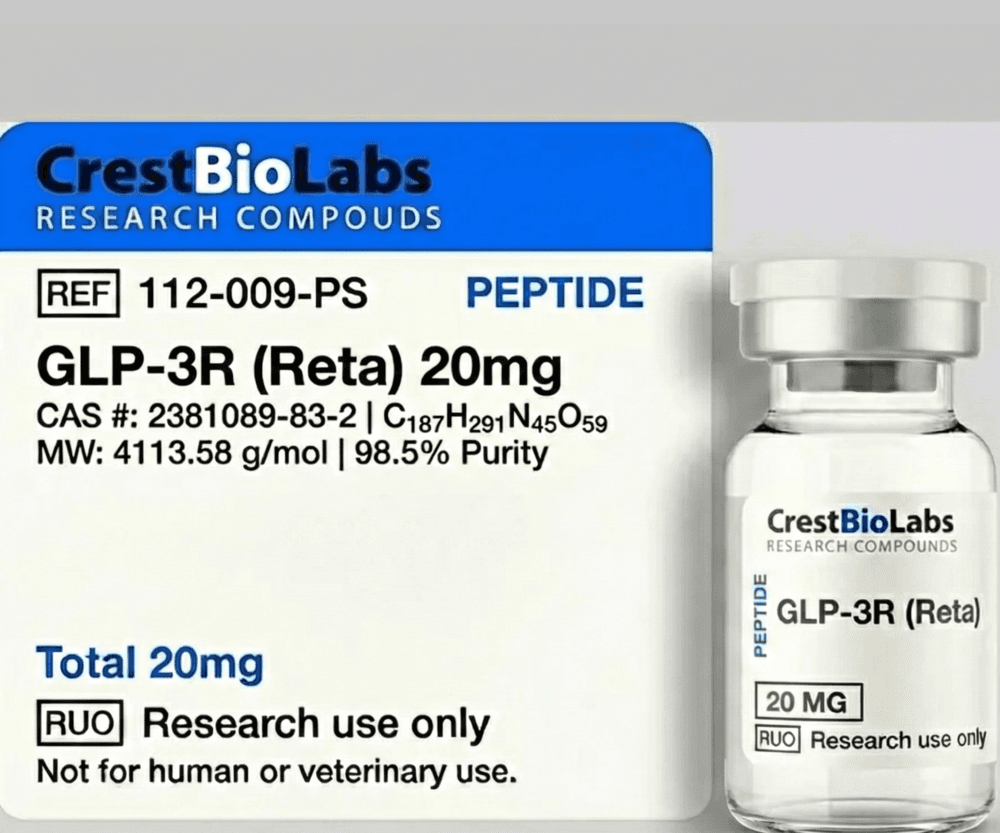
| CAS Number | Class — multiple compounds | Class — e.g., 2381089-83-2 (retatrutide) |
| Mechanism (Research) | GLP-1 receptor mono-agonists selectively activate GLP-1R, a class B G-protein-coupled receptor, triggering Gs-mediated adenylyl cyclase activation and intracellular cAMP accumulation. In preclinical models, this signaling cascade engages protein kinase A and EPAC-dependent pathways in target tissues including pancreatic islets, brain, and gastrointestinal tract. | Triple receptor agonists simultaneously engage GLP-1R, GIPR, and GCGR, activating three parallel cAMP-dependent signaling pathways. In preclinical models, the GCGR component introduces hepatic and thermogenic signaling cascades including fatty acid oxidation, gluconeogenic gene expression, and UCP1-mediated energy expenditure pathways not accessible through incretin receptors alone. |
| Stability | Modern GLP-1 analogs incorporate DPP-IV resistant modifications (such as Aib at position 8) and fatty acid acylation to extend pharmacokinetic half-life through albumin binding. Stability profiles vary by specific analog but generally require refrigerated storage and protection from aggregation. | Triple agonists employ fatty acid acylation and amino acid modifications similar to those used in mono- and dual-agonist design. The complex peptide architecture required to encode three-receptor binding activity may affect aggregation propensity and conformational stability. Controlled refrigerated storage (2-8 degrees C) is recommended for research-grade preparations. |
| Research Applications | GLP-1 mono-agonists serve as foundational reference compounds for incretin pharmacology research, enabling isolated characterization of GLP-1R signaling. They provide the baseline against which multi-receptor agonists are compared to quantify the contributions of additional receptor targets. | Triple agonists represent the broadest receptor engagement within the glucagon superfamily peptide framework. They are studied to investigate the synergistic and antagonistic interactions among three receptor pathways, GCGR-mediated energy expenditure mechanisms, and the pharmacological limits of poly-agonist peptide design. |
| Analytical Methods | Reversed-phase HPLC, LC-MS for molecular weight and sequence confirmation, GLP-1R competitive binding assays, cAMP accumulation assays, and beta-arrestin recruitment assays for biased agonism profiling. | Reversed-phase HPLC, high-resolution mass spectrometry, triple-receptor binding assay panels (GLP-1R, GIPR, GCGR), cAMP accumulation assays in single-, dual-, and triple-receptor cell lines, and indirect calorimetry for energy expenditure assessment in preclinical models. |
Peptide Class
GLP-1 Receptor Mono-Agonists
GLP-1/GIP/GCG Triple Receptor Agonists
Receptor Targets
GLP-1R
GLP-1R, GIPR, GCGR
Molecular Weight
Varies by analog (e.g., ~4,113 Da for semaglutide)
Varies (e.g., ~4,471 Da for retatrutide)
CAS Number
Class — multiple compounds
Class — e.g., 2381089-83-2 (retatrutide)
Mechanism (Research)
GLP-1 receptor mono-agonists selectively activate GLP-1R, a class B G-protein-coupled receptor, triggering Gs-mediated adenylyl cyclase activation and intracellular cAMP accumulation. In preclinical models, this signaling cascade engages protein kinase A and EPAC-dependent pathways in target tissues including pancreatic islets, brain, and gastrointestinal tract.
Triple receptor agonists simultaneously engage GLP-1R, GIPR, and GCGR, activating three parallel cAMP-dependent signaling pathways. In preclinical models, the GCGR component introduces hepatic and thermogenic signaling cascades including fatty acid oxidation, gluconeogenic gene expression, and UCP1-mediated energy expenditure pathways not accessible through incretin receptors alone.
Stability
Modern GLP-1 analogs incorporate DPP-IV resistant modifications (such as Aib at position 8) and fatty acid acylation to extend pharmacokinetic half-life through albumin binding. Stability profiles vary by specific analog but generally require refrigerated storage and protection from aggregation.
Triple agonists employ fatty acid acylation and amino acid modifications similar to those used in mono- and dual-agonist design. The complex peptide architecture required to encode three-receptor binding activity may affect aggregation propensity and conformational stability. Controlled refrigerated storage (2-8 degrees C) is recommended for research-grade preparations.
Research Applications
GLP-1 mono-agonists serve as foundational reference compounds for incretin pharmacology research, enabling isolated characterization of GLP-1R signaling. They provide the baseline against which multi-receptor agonists are compared to quantify the contributions of additional receptor targets.
Triple agonists represent the broadest receptor engagement within the glucagon superfamily peptide framework. They are studied to investigate the synergistic and antagonistic interactions among three receptor pathways, GCGR-mediated energy expenditure mechanisms, and the pharmacological limits of poly-agonist peptide design.
Analytical Methods
Reversed-phase HPLC, LC-MS for molecular weight and sequence confirmation, GLP-1R competitive binding assays, cAMP accumulation assays, and beta-arrestin recruitment assays for biased agonism profiling.
Reversed-phase HPLC, high-resolution mass spectrometry, triple-receptor binding assay panels (GLP-1R, GIPR, GCGR), cAMP accumulation assays in single-, dual-, and triple-receptor cell lines, and indirect calorimetry for energy expenditure assessment in preclinical models.
The Evolution from Mono to Triple Agonism
The development of triple receptor agonists represents the culmination of an iterative research strategy that progressively broadened receptor engagement within the glucagon peptide superfamily. The journey began with GLP-1 mono-agonists, which demonstrated the viability of modified incretin peptides as research tools. The subsequent development of GLP-1/GIP dual agonists showed that combining two incretin activities could produce synergistic effects in preclinical models. Triple agonists then extended this concept to its logical maximum within the family by adding GCGR.
The rationale for each step in this progression was grounded in receptor pharmacology research. GLP-1R mono-agonism provided proof-of-concept that long-acting incretin analogs could be engineered for sustained receptor engagement. Dual agonism demonstrated that multi-target peptides could be designed to retain meaningful potency at each receptor, and that the combined signaling exceeded mono-agonist responses in certain preclinical assays. The addition of GCGR agonism was motivated by research showing that glucagon signaling contributes unique metabolic pathways not accessible through incretins.
Each stage in this evolution required advances in peptide engineering. Moving from mono- to dual-agonism required identifying sequence modifications that could introduce second-receptor binding without abolishing activity at the primary target. The further step to triple agonism demanded optimization of a peptide that could satisfy the pharmacophore requirements of three distinct but related GPCRs simultaneously, a substantially more constrained design problem.
The comparison of mono-agonists with triple agonists thus encompasses the full range of pharmacological complexity available within this peptide family. For researchers, this comparison provides the maximum contrast in receptor engagement and allows the most comprehensive assessment of how poly-agonist design translates to differentiated pharmacological responses in preclinical research models.
GCGR's Unique Contribution to Triple Agonism
Glucagon receptor agonism is the hallmark feature that distinguishes triple agonists from both mono- and dual-agonist compound classes. GCGR is a class B GPCR that, unlike the incretin receptors GLP-1R and GIPR, is not primarily associated with the enteroinsular axis. Instead, GCGR signaling plays central roles in hepatic metabolism, adipose tissue thermogenesis, and amino acid catabolism, making its pharmacological contribution qualitatively different from that of the incretin receptors.
In hepatocyte research models, GCGR activation stimulates adenylyl cyclase and triggers PKA-mediated phosphorylation of key metabolic enzymes and transcription factors. This signaling cascade has been demonstrated to upregulate genes involved in fatty acid beta-oxidation (including CPT1A and ACADM), amino acid catabolism (including enzymes in the urea cycle), and gluconeogenesis. These hepatic effects represent metabolic pathways that are not directly engaged by GLP-1R or GIPR signaling, giving triple agonists a mechanistic dimension absent from simpler agonist designs.
Preclinical research has also established that GCGR activation in brown and beige adipose tissue promotes thermogenic gene expression, particularly UCP1 and PGC-1alpha. In rodent models, this has been associated with increased energy expenditure as measured by indirect calorimetry. The thermogenic effect of GCGR agonism is particularly significant because it represents an energy expenditure pathway, mechanistically distinct from the appetite-suppressive pathways primarily mediated by GLP-1R signaling in the central nervous system.
The inclusion of GCGR agonism does introduce pharmacological considerations absent from mono- and dual-agonist contexts. Glucagon's well-characterized role in stimulating hepatic glucose output means that triple agonists must balance GCGR-mediated glycogenolysis against the glucose-lowering effects of GLP-1R and GIPR activation. Preclinical studies of triple agonists have investigated this balance, with evidence suggesting that at optimized potency ratios, the incretin receptor components can counterbalance the hyperglycemic potential of GCGR activation.
Energy Expenditure Mechanisms
A key area where triple agonists are hypothesized to differ from GLP-1 mono-agonists is in their effect on energy expenditure. GLP-1R activation primarily influences energy balance through central nervous system pathways that modulate appetite and food intake, with limited direct effects on peripheral energy expenditure. In contrast, triple agonists access GCGR-mediated thermogenic pathways that can directly influence energy expenditure in peripheral tissues.
The GCGR-dependent thermogenic pathway has been characterized primarily in brown adipose tissue (BAT) research. In rodent BAT preparations, glucagon receptor activation stimulates lipolysis and activates the UCP1-mediated proton leak pathway in mitochondria, dissipating the proton motive force as heat rather than ATP. Transcriptomic studies have shown that GCGR signaling upregulates the thermogenic gene program including UCP1, PGC-1alpha, CIDEA, and DIO2, consistent with BAT activation and browning of white adipose tissue.
Indirect calorimetry studies in rodent models have provided functional evidence for GCGR-mediated energy expenditure effects. Preclinical comparisons of triple agonists versus GLP-1 mono-agonists at matched doses have reported differential effects on oxygen consumption and respiratory exchange ratio, with triple agonist treatment associated with increased energy expenditure in some experimental paradigms. These findings are consistent with the hypothesis that GCGR agonism adds an energy expenditure component to the energy balance equation.
Fibroblast growth factor 21 (FGF21) represents another potential mechanism through which GCGR agonism may influence energy metabolism. Preclinical studies have demonstrated that glucagon receptor activation in hepatocytes stimulates FGF21 secretion, and circulating FGF21 has been associated with BAT activation and improved metabolic parameters in rodent models. This hepatokine-mediated pathway may represent an indirect mechanism through which the GCGR component of triple agonists influences whole-body energy expenditure, though the translational relevance of this pathway remains under active investigation.
Comparative Preclinical Outcomes
Preclinical studies comparing GLP-1 mono-agonists with triple agonists have revealed both shared and divergent pharmacological effects that illuminate the contributions of GIPR and GCGR engagement. In glucose homeostasis models, both compound classes demonstrate glucose-dependent insulinotropic activity, reflecting their shared GLP-1R agonism. However, the magnitude and kinetics of glycemic responses can differ, influenced by the counterregulatory effects of GCGR-mediated hepatic glucose output and the potentiating effects of GIPR co-activation on insulin secretion.
Body composition studies in preclinical models have provided some of the most informative comparative data. While both GLP-1 mono-agonists and triple agonists have been associated with reduced adiposity in diet-induced obesity models, the magnitude and distribution of adipose tissue changes can differ between compound classes. Some preclinical studies have reported preferential effects of triple agonists on hepatic lipid content, consistent with the direct actions of GCGR signaling on hepatic fatty acid oxidation pathways.
Metabolic cage studies using indirect calorimetry have been employed to compare the energy expenditure profiles of mono- versus triple agonists. These studies measure oxygen consumption, carbon dioxide production, and respiratory exchange ratio to quantify total energy expenditure and substrate utilization. Preclinical evidence suggests that triple agonists may influence energy expenditure through mechanisms not shared by GLP-1 mono-agonists, though the magnitude of this effect and its consistency across model systems continues to be investigated.
Transcriptomic profiling of target tissues from animals treated with mono- versus triple agonists has revealed distinct gene expression signatures. In liver, triple agonist treatment produces GCGR-dependent gene expression changes related to fatty acid oxidation and amino acid metabolism that are absent from the mono-agonist transcriptomic response. In adipose tissue, triple agonists show evidence of both GIPR and GCGR-associated gene programs overlaid on the GLP-1R response observed with mono-agonists. These molecular-level data provide mechanistic context for interpreting the phenotypic differences observed in whole-animal preclinical studies.
Scientific References
[1] Finan B, Yang B, Ottaway N, et al.. “A rationally designed monomeric peptide triagonist corrects obesity and diabetes in rodents.” Nature Medicine (2015). doi:10.1038/nm.3761
[2] Coskun T, Urva S, Roell WC, et al.. “LY3437943, a novel triple GIP/GLP-1/glucagon receptor agonist for glycemic control and weight management: from discovery to clinical proof of concept.” Cell Metabolism (2022). doi:10.1016/j.cmet.2022.07.013
[3] Muller TD, Finan B, Bloom SR, et al.. “Glucagon-like peptide 1 (GLP-1).” Molecular Metabolism (2019). doi:10.1016/j.molmet.2019.09.010
[4] Day JW, Ottaway N, Patterson JT, et al.. “A new glucagon and GLP-1 co-agonist eliminates obesity in rodents.” Nature Chemical Biology (2009). doi:10.1038/nchembio.209
[5] Habegger KM, Heppner KM, Geary N, et al.. “The metabolic actions of glucagon revisited.” Nature Reviews Endocrinology (2010). doi:10.1038/nrendo.2010.187
[6] Jastreboff AM, Kaplan LM, Frias JP, et al.. “Triple-hormone-receptor agonist retatrutide for obesity - a phase 2 trial.” New England Journal of Medicine (2023). doi:10.1056/NEJMoa2301972
[7] Nauck MA, Meier JJ.. “Incretin hormones: their role in health and disease.” Diabetes, Obesity and Metabolism (2018). doi:10.1111/dom.13129