GLP-1 Receptor Biology and Signal Transduction
The glucagon-like peptide-1 receptor (GLP-1R) is a member of the class B (secretin family) G-protein coupled receptor superfamily. It consists of an extracellular N-terminal domain (ECD) responsible for initial peptide ligand recognition and a seven-transmembrane domain (TMD) that facilitates signal transduction across the cell membrane. The ECD adopts an alpha-beta-beta-alpha fold that forms a hydrophobic groove for binding the helical C-terminal region of GLP-1, while the N-terminus of the peptide inserts into the TMD core to initiate receptor activation.
Upon ligand binding, GLP-1R primarily couples to the stimulatory G-protein (Gs), activating adenylate cyclase and elevating intracellular cyclic AMP (cAMP) concentrations. This cAMP increase activates protein kinase A (PKA) and exchange protein directly activated by cAMP (Epac2), which together mediate downstream effects including closure of ATP-sensitive potassium channels, membrane depolarization, and calcium influx through voltage-gated calcium channels. In pancreatic beta cell models, this signaling cascade potentiates glucose-dependent insulin exocytosis, a mechanism that has been extensively characterized in isolated islet preparations and beta cell lines.
Beyond Gs coupling, GLP-1R also engages beta-arrestin-1 and beta-arrestin-2, which serve dual roles as mediators of receptor desensitization and internalization, and as scaffolds for alternative signaling pathways including extracellular signal-regulated kinase (ERK1/2) activation. The relative contribution of G-protein versus beta-arrestin signaling pathways is a subject of active investigation in in-vitro systems, as different ligands may preferentially activate one pathway over another, a phenomenon known as biased agonism.
Structural studies using cryo-electron microscopy have resolved the three-dimensional architecture of the GLP-1R in complex with various peptide agonists and G-proteins, revealing the molecular basis for ligand recognition, receptor activation, and allosteric modulation. These structural insights inform the rational design of novel receptor agonists with defined pharmacological profiles in preclinical research settings.
The Incretin System: GLP-1 and GIP
The incretin effect describes the observation that oral glucose administration elicits a substantially greater insulin secretory response than an isoglycemic intravenous glucose infusion, accounting for approximately 50-70% of postprandial insulin secretion in healthy subjects. This augmented response is mediated primarily by two gut-derived peptide hormones: glucagon-like peptide-1 (GLP-1), secreted by enteroendocrine L-cells predominantly in the distal ileum and colon, and glucose-dependent insulinotropic polypeptide (GIP), released by K-cells concentrated in the duodenum and proximal jejunum.
GLP-1 is produced through post-translational processing of proglucagon by proprotein convertase 1/3 (PC1/3) in intestinal L-cells. The biologically active forms are GLP-1(7-37) and GLP-1(7-36)amide, with the amidated form predominating in circulation. Native GLP-1 is rapidly inactivated by dipeptidyl peptidase-4 (DPP-4), a serine protease that cleaves the N-terminal His-Ala dipeptide to yield the inactive metabolite GLP-1(9-36)amide. This enzymatic degradation results in a circulating half-life of only 1.5-2 minutes, which presents a significant challenge for in-vitro studies requiring sustained receptor activation.
GIP, a 42-amino acid peptide, signals through the GIP receptor (GIPR), another class B GPCR that shares structural homology with GLP-1R. In preclinical models, GIP has been investigated for its roles in insulin secretion, adipocyte biology, bone metabolism, and central nervous system function. The relative contributions of GLP-1 and GIP to the incretin effect, and their potential for synergistic receptor co-activation, remain active areas of in-vitro and preclinical investigation.
Understanding the molecular pharmacology of both incretin receptors is essential for interpreting the biological activity of dual-agonist (GLP-1R/GIPR) and tri-agonist (GLP-1R/GIPR/GCGR) peptides that are currently being characterized in preclinical research programs worldwide.
GLP-1 Receptor Agonists in Preclinical Research
The development of DPP-4-resistant GLP-1 receptor agonists has been driven by the need to overcome the extremely short half-life of native GLP-1. Multiple structural strategies have been employed in preclinical research compounds, each conferring distinct pharmacokinetic properties that influence experimental design and data interpretation.
Exendin-Based Agonists
Exendin-4, a 39-amino acid peptide originally identified in the saliva of the Gila monster (Heloderma suspectum), shares approximately 53% sequence homology with human GLP-1 but contains a glycine at position 2 instead of alanine, conferring resistance to DPP-4 cleavage. The nine-residue C-terminal extension (the "Trp-cage" motif) provides additional structural stability and contributes to the peptide's extended biological activity compared to native GLP-1. Exendin-4 and its analogs are widely used as reference agonists in in-vitro GLP-1R binding and functional assays.
Acylated GLP-1 Analogs
Fatty acid acylation represents a distinct approach to extending the biological activity of GLP-1 analogs. In this strategy, a C14-C20 fatty acid moiety is conjugated to a specific lysine residue via a glutamic acid or mini-PEG spacer. The lipophilic acyl chain promotes reversible, non-covalent binding to serum albumin, creating a circulating depot that releases active peptide gradually. This approach has been validated in preclinical models and represents the structural basis for several well-characterized research compounds, including those with extended-interval activity profiles that enable once-weekly or less frequent administration protocols in animal studies.
Fc-Fusion and PEGylated Constructs
Additional strategies investigated in preclinical settings include fusion of GLP-1 sequences to the Fc fragment of immunoglobulin G (IgG), which extends biological activity through FcRn-mediated recycling and increased hydrodynamic radius. PEGylation, the covalent attachment of polyethylene glycol chains, similarly increases molecular size to reduce renal clearance. Each approach presents trade-offs in terms of receptor binding potency, tissue distribution, and immunogenicity that are systematically evaluated in in-vitro and animal model systems during preclinical characterization.
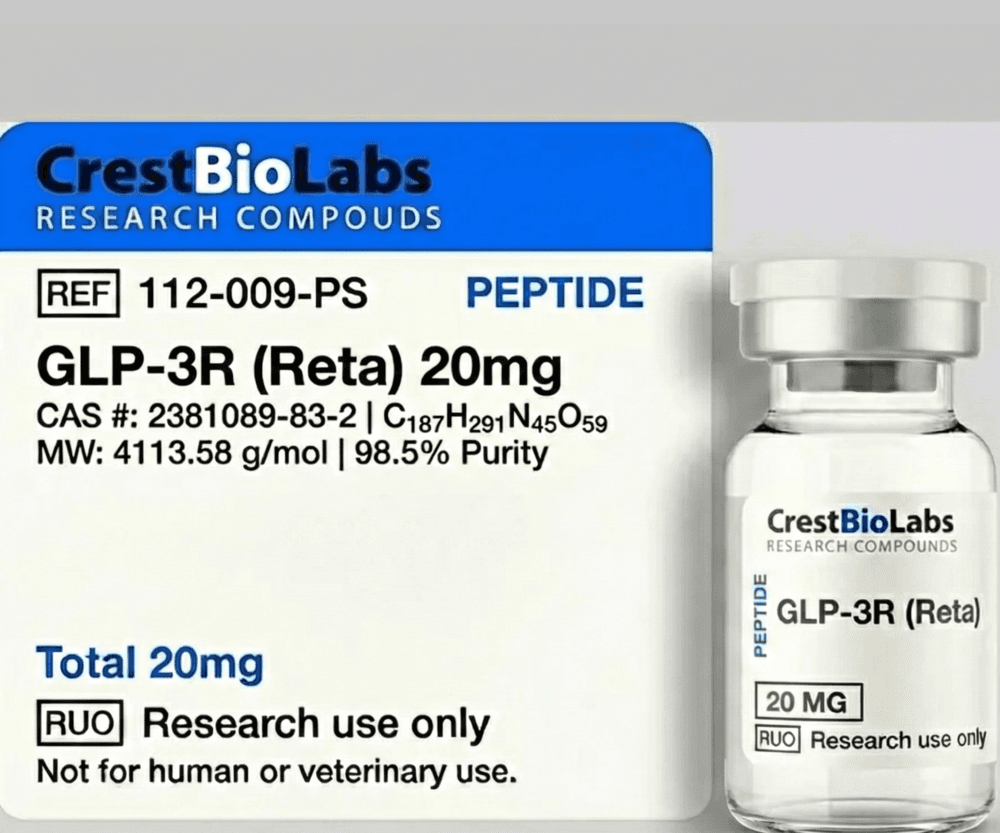
GLP-3 Receptor Tri-Agonism: Emerging Research
The concept of multi-receptor agonism in incretin biology has evolved from mono-agonist (GLP-1R only) to dual-agonist (GLP-1R/GIPR) and most recently to tri-agonist (GLP-1R/GIPR/GCGR) approaches. The rationale for tri-agonism is grounded in the complementary metabolic roles of each receptor system: GLP-1R activation promotes insulin secretion and satiety signaling, GIPR activation enhances insulin sensitivity and energy balance, and GCGR activation stimulates hepatic energy expenditure, lipid oxidation, and amino acid catabolism.
Preclinical studies in rodent and non-human primate models have demonstrated that tri-agonist peptides produce effects on body weight, glycemic parameters, and lipid profiles that exceed those observed with mono- or dual-agonist compounds. The glucagon receptor component, which was initially considered counterproductive due to glucagon's hyperglycemic effects, has been shown in preclinical models to contribute to increased energy expenditure through hepatic mitochondrial uncoupling and thermogenesis, without producing sustained hyperglycemia when combined with GLP-1R and GIPR activation.
The design of effective tri-agonist peptides presents substantial pharmacological challenges, as the peptide must maintain balanced activity across all three receptors. Structure-activity relationship studies have identified key residue positions that determine receptor selectivity: modifications at positions 2, 3, and 16-20 of the GLP-1 backbone can tune the relative agonist activity at GIPR and GCGR without compromising GLP-1R potency. Fatty acid acylation with C20 diacid linkers further extends the pharmacokinetic profile for sustained multi-receptor engagement in preclinical protocols.
Published phase 1 and phase 2 studies have characterized the pharmacokinetic and pharmacodynamic profiles of tri-agonist peptides, establishing proof-of-concept for this multi-receptor approach. These clinical data, combined with extensive preclinical pharmacology datasets, position GLP-3R tri-agonism as one of the most actively investigated areas in metabolic peptide research.
Structure-Activity Relationships in GLP Receptor Peptides
Structure-activity relationship (SAR) studies are fundamental to understanding how specific structural features of incretin peptides determine their receptor binding affinity, functional potency, selectivity, and pharmacokinetic properties. The GLP-1 peptide sequence has been subjected to extensive SAR analysis using systematic approaches including alanine scanning, D-amino acid substitution, truncation, and chimeric peptide construction.
Alanine scanning mutagenesis of GLP-1(7-36)amide has identified several residues critical for GLP-1R binding and activation. Histidine-7 at the N-terminus is essential for receptor activation but not for binding affinity, suggesting it plays a key role in the conformational change that triggers G-protein coupling. Glutamate-9, glycine-10, and phenylalanine-12 contribute to the amphipathic alpha-helical structure of the mid-region that interacts with the receptor extracellular domain. Valine-16, tyrosine-19, and leucine-20 form hydrophobic contacts with the ECD groove that are critical for high-affinity binding.
Comparative SAR analysis across the glucagon receptor family reveals that GLP-1, GIP, and glucagon share a conserved N-terminal region responsible for receptor activation, while the mid-region and C-terminal sequences determine receptor selectivity. This knowledge has been exploited to design chimeric peptides with defined multi-receptor activity profiles. For example, substituting specific residues in the GLP-1 backbone with corresponding residues from glucagon or GIP can introduce agonist activity at GCGR or GIPR while maintaining GLP-1R potency.
Molecular dynamics simulations and cryo-EM structural data have further refined the understanding of peptide-receptor interactions at the atomic level. These computational and experimental approaches reveal that GLP-1R activation involves a two-step binding mechanism: the C-terminal helix of the peptide first engages the receptor ECD, followed by insertion of the N-terminal residues into the TMD core, triggering the outward movement of transmembrane helix 6 that is characteristic of GPCR activation. This mechanistic framework guides the rational design of next-generation GLP-1R agonists with optimized pharmacological profiles for preclinical research.
Receptor Binding Assays and In-Vitro Models
Characterization of GLP-1 receptor agonists requires a panel of in-vitro assays that assess different aspects of receptor pharmacology. Radioligand binding assays using [125I]-labeled GLP-1 or the antagonist exendin(9-39) provide equilibrium binding parameters (Kd, Ki, Bmax) that quantify receptor affinity. Competition binding curves generated from these assays yield IC50 values from which inhibition constants (Ki) can be calculated using the Cheng-Prusoff equation.
Functional assays measure downstream signaling responses to receptor activation. The most widely used functional readout is intracellular cAMP accumulation, measured using homogeneous time-resolved fluorescence (HTRF), AlphaScreen, or luciferase-based reporter systems in cell lines stably expressing human GLP-1R. These assays generate concentration-response curves from which EC50 values and maximal efficacy (Emax) are determined. Beta-arrestin recruitment assays, using technologies such as PathHunter or BRET-based biosensors, provide complementary data on receptor internalization and biased signaling properties.
Cell-based models for GLP-1R research include HEK293T cells stably transfected with human or rodent GLP-1R, CHO-K1 cells expressing the receptor, and the insulinoma cell lines INS-1 and MIN6 that endogenously express GLP-1R. For studies requiring pancreatic beta cell context, isolated rodent islets and human islet preparations provide physiologically relevant models for assessing glucose-dependent insulin secretion in response to GLP-1R agonists.
Advanced in-vitro platforms include microfluidic organ-on-chip systems that combine intestinal L-cells with pancreatic beta cells to model the entero-insular axis, and high-content imaging systems that simultaneously quantify receptor trafficking, signaling kinetics, and cellular responses at single-cell resolution. These sophisticated model systems enable comprehensive pharmacological characterization of novel GLP-1R agonists under controlled laboratory conditions.
Comparative Pharmacology of Incretin Peptides
The glucagon receptor family presents a unique opportunity for comparative pharmacology studies, as the three receptors (GLP-1R, GIPR, GCGR) are structurally related yet mediate distinct physiological responses. Comparative in-vitro profiling of peptide agonists across all three receptors is essential for characterizing selectivity and predicting the integrated biological effects of multi-receptor agonists.
Native GLP-1(7-36)amide exhibits high selectivity for GLP-1R with negligible activity at GIPR or GCGR at physiological concentrations. Native GIP(1-42) is similarly selective for GIPR, while glucagon(1-29) preferentially activates GCGR but retains modest cross-reactivity at GLP-1R at supraphysiological concentrations. This cross-reactivity pattern reflects the evolutionary relationships among the receptor family members and provides the structural foundation for engineering multi-receptor agonists.
Published in-vitro data have characterized the receptor activity profiles of various GLP-1R agonists across the receptor family. Exendin-4 displays high GLP-1R selectivity with minimal GIPR or GCGR activity. Dual-agonist peptides such as those targeting GLP-1R and GIPR show balanced nanomolar potency at both receptors while maintaining selectivity against GCGR. Tri-agonist peptides demonstrate activity at all three receptors, with the relative potency ratios deliberately tuned through SAR optimization to achieve desired pharmacological profiles.
The metabolic consequences of different receptor selectivity profiles are being investigated in preclinical models. GLP-1R activation is associated with reduced food intake and delayed gastric emptying in animal studies. GIPR co-activation has been linked to enhanced insulin sensitivity and modified adipose tissue biology in rodent models. GCGR co-activation contributes to increased hepatic energy expenditure and lipid catabolism in preclinical settings. Understanding these receptor-specific contributions is critical for interpreting the complex pharmacology of multi-receptor agonists in research applications.
Biased Agonism and Receptor Signaling Complexity
Biased agonism, also termed functional selectivity or ligand-directed signaling, is an increasingly recognized phenomenon in GLP-1R pharmacology. Different agonist ligands can stabilize distinct active conformations of GLP-1R, leading to preferential coupling to specific intracellular effectors. A G-protein-biased agonist may potently stimulate cAMP production through Gs while weakly recruiting beta-arrestin, whereas a beta-arrestin-biased ligand may exhibit the inverse signaling profile.
Quantification of signaling bias requires measurement of multiple signaling endpoints for each agonist under identical experimental conditions. The operational model of agonism, adapted for biased signaling analysis, provides a mathematical framework for calculating transduction coefficients (log tau/KA) for each pathway, which are then compared to those of a reference agonist (typically native GLP-1) to derive bias factors (delta-delta-log tau/KA values). This analytical approach, applied to in-vitro datasets, enables quantitative comparison of signaling bias across structurally diverse GLP-1R agonists.
Research in preclinical models has explored the biological consequences of signaling bias at GLP-1R. Some studies in rodent models suggest that G-protein-biased agonists may produce sustained receptor signaling with reduced tachyphylaxis compared to balanced agonists, potentially due to decreased beta-arrestin-mediated receptor internalization and desensitization. However, beta-arrestin signaling may also contribute to distinct biological outcomes including anti-apoptotic effects in beta cells, highlighting the complexity of the signaling network.
The investigation of biased agonism at GLP-1R represents a frontier in incretin receptor pharmacology, with implications for the design of next-generation research compounds. High-throughput screening platforms that simultaneously measure multiple signaling endpoints, combined with computational pharmacology tools for bias quantification, are enabling systematic exploration of the biased agonism landscape for GLP-1R and related receptors in in-vitro research settings.