Overview
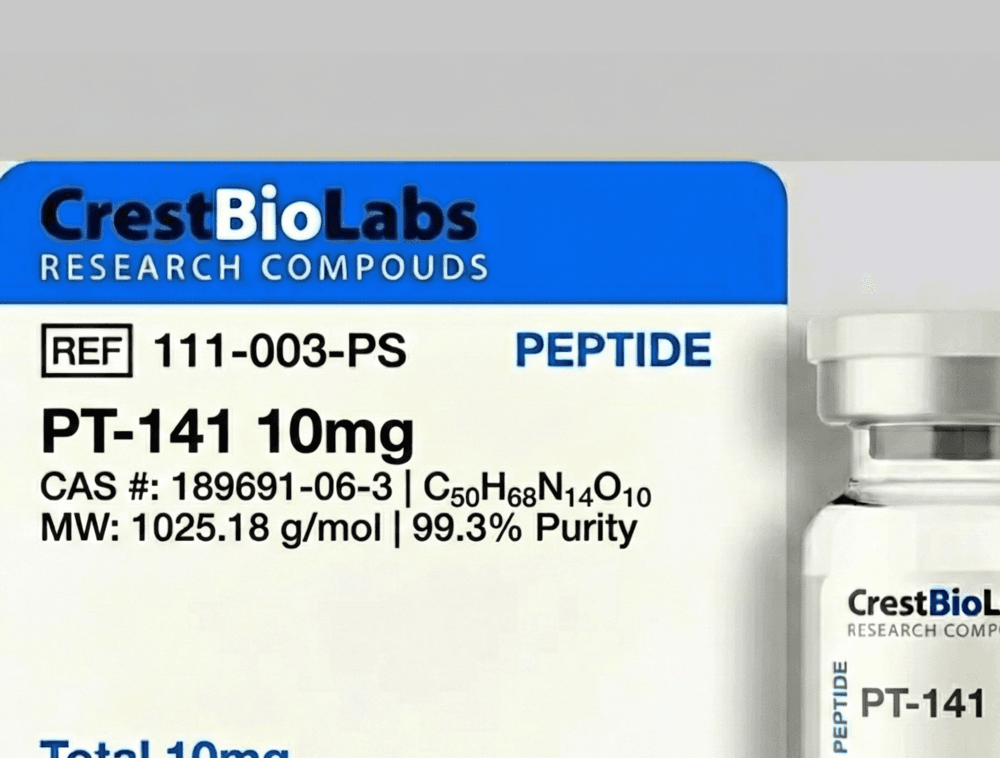
PT-141, also known by its International Nonproprietary Name (INN) bremelanotide, is a synthetic cyclic heptapeptide that acts as a non-selective agonist of melanocortin receptors, with particular affinity for the melanocortin-4 receptor (MC4R). The compound was developed through structure-activity relationship studies on alpha-melanocyte stimulating hormone (α-MSH) and its synthetic analog Melanotan II, from which PT-141 was derived as a metabolite and subsequently optimized as a distinct research compound.
The research history of PT-141 traces back to the broader investigation of melanocortin peptides initiated in the 1980s and 1990s. The melanocortin system, comprising five receptor subtypes (MC1R through MC5R) and their endogenous ligands (α-MSH, β-MSH, γ-MSH, and ACTH), plays diverse roles in pigmentation, energy homeostasis, inflammation, and neuroendocrine function. PT-141 emerged from systematic modifications of the melanocortin pharmacophore, the minimal structural element required for receptor activation.
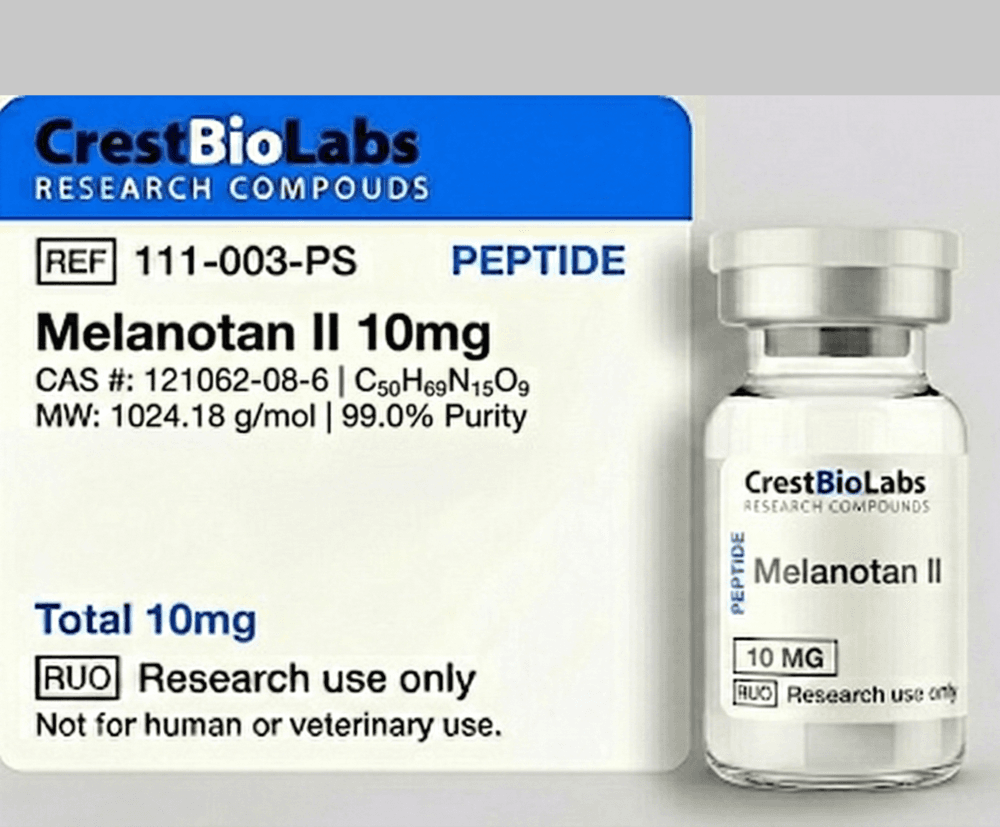
Structurally, PT-141 is distinguished from its parent compound Melanotan II by the absence of the N-terminal acetyl and C-terminal amide groups. This structural modification alters the peptide's pharmacokinetic and pharmacodynamic profile while retaining melanocortin receptor activity. The cyclic structure of PT-141, maintained by a lactam bridge between the aspartic acid and lysine side chains, confers conformational rigidity that enhances receptor selectivity and metabolic stability compared to linear melanocortin analogs.
PT-141 has been the subject of extensive preclinical and clinical research. In preclinical models, the compound has been studied for its activation of central melanocortin pathways, particularly those involving MC4R in hypothalamic and limbic structures. The peptide's interaction with the MC4R has been of particular interest due to this receptor's documented role in central nervous system signaling pathways.
The pharmacological characterization of PT-141 has contributed significantly to the understanding of melanocortin receptor signaling. Studies using PT-141 as a tool compound have helped elucidate the distinct functional roles of individual melanocortin receptor subtypes, the downstream signaling cascades they activate, and the complex interplay between melanocortin pathways and other neuroendocrine systems.
As a research compound, PT-141 represents an important tool for investigating melanocortin receptor pharmacology. Its defined structure, well-characterized receptor binding profile, and commercial availability in research-grade purity make it a standard reference compound in laboratories studying melanocortin signaling. The peptide continues to be the subject of active research, with ongoing studies exploring its interactions with specific melanocortin receptor subtypes, its effects on intracellular signaling cascades, and its pharmacological relationship to other melanocortin analogs.
The significance of PT-141 in peptide research extends beyond its individual properties to its role in validating structure-activity relationships within the melanocortin peptide family. The systematic structural modifications that led from α-MSH to Melanotan II to PT-141 illustrate fundamental principles of medicinal chemistry, including the effects of cyclization, terminal group modification, and non-natural amino acid substitution on peptide receptor pharmacology.
Chemical Classification
PT-141 (bremelanotide) is classified as a synthetic cyclic melanocortin peptide and a non-selective melanocortin receptor agonist. It belongs to the broader class of melanocortin analogs, synthetic peptides designed to mimic or modulate the activity of the endogenous melanocortin hormones (α-MSH, β-MSH, γ-MSH, and ACTH).
Chemically, PT-141 is a cyclic heptapeptide containing one non-natural amino acid (D-phenylalanine) and one non-standard residue (norleucine, abbreviated Nle). The cyclic structure is formed by a lactam bridge between the side chains of aspartic acid and lysine residues, creating a conformationally constrained macrocyclic ring. This cyclization is a defining structural feature that distinguishes PT-141 and Melanotan II from linear melanocortin peptides.
Within melanocortin pharmacology, PT-141 is classified as a non-selective agonist with activity at MC1R, MC3R, MC4R, and MC5R, with the highest reported affinity for MC4R and MC1R. It is further classified as a centrally acting melanocortin agonist based on its ability to cross the blood-brain barrier and interact with central nervous system melanocortin receptors in preclinical models.
Structural Information
PT-141 is a cyclic heptapeptide with a molecular weight of 1025.18 Da. The peptide contains seven amino acid residues arranged in a specific sequence: Nle-Asp-His-D-Phe-Arg-Trp-Lys, with a lactam bridge connecting the side chains of Asp (position 2) and Lys (position 7) to form the macrocyclic ring.
The most critical structural feature of PT-141 is the cyclic lactam bridge. This covalent bond between the carboxyl group of the aspartic acid side chain and the amino group of the lysine side chain constrains the peptide into a ring structure that presents the pharmacophoric residues (His, D-Phe, Arg, Trp) in a defined spatial arrangement. This constraint reduces the conformational entropy penalty upon receptor binding, enhancing binding affinity compared to linear melanocortin analogs.
The incorporation of D-phenylalanine (D-Phe) at position 4 is another key structural modification. The D-configuration (mirror image of the natural L-configuration) of this residue alters the local backbone geometry, orienting the phenyl side chain in a direction that is optimal for interaction with the melanocortin receptor binding pocket. D-amino acid substitution also confers resistance to proteolytic enzymes that specifically cleave L-amino acid peptide bonds.
Norleucine (Nle) at position 1 replaces the methionine residue found in the native α-MSH sequence. This substitution eliminates the sulfur-containing side chain of methionine, removing its susceptibility to oxidation while maintaining comparable hydrophobic character. The norleucine side chain is a straight four-carbon alkyl group that provides similar steric and hydrophobic contributions to the peptide's conformation and receptor interactions.
PT-141 differs from its parent compound Melanotan II in its terminal modifications. While Melanotan II carries an N-terminal acetyl group and a C-terminal amide, PT-141 has a free carboxyl group at the C-terminus. This seemingly minor modification alters the charge distribution and hydrogen bonding capacity of the peptide, contributing to differences in receptor selectivity and pharmacokinetic behavior between the two compounds.
Mechanism of Action
PT-141 exerts its biological effects primarily through agonism of melanocortin receptors (MCRs), a family of five G protein-coupled receptors (GPCRs) designated MC1R through MC5R. Each MCR couples primarily to the stimulatory G protein (Gs), and receptor activation by PT-141 leads to stimulation of adenylyl cyclase, elevation of intracellular cyclic adenosine monophosphate (cAMP), and activation of protein kinase A (PKA).
The affinity of PT-141 for individual melanocortin receptor subtypes has been characterized through radioligand binding and functional assays. The compound demonstrates agonist activity at MC1R, MC3R, MC4R, and MC5R, with binding affinities in the nanomolar range. MC2R, the ACTH receptor, is not appreciably activated by PT-141, consistent with the known selectivity profile of melanocortin analogs lacking the ACTH-specific sequence elements.
MC4R activation by PT-141 has been the focus of substantial research attention. MC4R is expressed in several brain regions, including the hypothalamus, amygdala, hippocampus, and brainstem nuclei. Activation of MC4R triggers the Gs-adenylyl cyclase-cAMP-PKA signaling cascade, leading to downstream effects on neuronal excitability, neuropeptide release, and transcription factor activation. Studies using MC4R knockout models and selective antagonists have demonstrated that many of the central nervous system effects attributed to PT-141 are dependent on MC4R activation.
MC1R activation by PT-141 mediates effects on melanocyte biology. In melanocytes, MC1R stimulation elevates cAMP, activating the cAMP response element-binding protein (CREB) transcription factor, which in turn upregulates the expression of microphthalmia-associated transcription factor (MITF). MITF drives the transcription of melanogenic enzymes, including tyrosinase, tyrosinase-related protein 1 (TRP-1), and dopachrome tautomerase (DCT), which catalyze the synthesis of melanin pigments.
Beyond the canonical Gs-cAMP pathway, melanocortin receptors activated by PT-141 have been shown to engage additional signaling mechanisms, including ERK1/2 MAP kinase activation, calcium mobilization, and β-arrestin recruitment. The relative contribution of these alternative signaling pathways to the overall biological effects of PT-141 is an area of active investigation. The concept of biased agonism, in which different ligands preferentially activate distinct signaling pathways through the same receptor, has been explored in the context of PT-141 and other melanocortin analogs.
Stability and Storage
PT-141 in its lyophilized form demonstrates good stability under standard storage conditions. The cyclic structure of the peptide confers enhanced metabolic stability compared to linear melanocortin analogs, as the lactam bridge protects the internal residues from exopeptidase cleavage and reduces conformational flexibility that can facilitate endopeptidase access.
Lyophilized PT-141 should be stored at -20°C in a sealed container with desiccant, protected from light and moisture. Under these conditions, the peptide maintains chemical integrity for extended periods. Short-term storage at 2-8°C is acceptable for periods of days to weeks.
Reconstituted PT-141 solutions should be stored at 4°C for short-term use (up to 7-10 days) or frozen at -20°C in aliquots for longer periods. The peptide is soluble in water and can be reconstituted in sterile water, bacteriostatic water, or dilute acetic acid. The tryptophan residue in PT-141 is susceptible to photooxidation, so reconstituted solutions should be protected from direct light exposure, particularly UV radiation.
The primary degradation pathways for PT-141 in solution include deamidation (particularly at the asparagine-adjacent residues), tryptophan oxidation, and aspartimide formation at the aspartic acid residue. The histidine and arginine residues are also susceptible to specific degradation reactions under non-optimal pH conditions. Maintaining the solution at pH 4-6 generally provides the best balance of stability for all residues.
Quality control assessment of stored PT-141 should include reversed-phase HPLC analysis to detect degradation products and mass spectrometry to confirm molecular integrity. A shift in retention time on HPLC or the appearance of additional peaks may indicate degradation that warrants replacement of the stock solution.
For comprehensive storage protocols, see our Peptide Stability & Storage Guide.
Laboratory Handling
PT-141 is supplied as a white to off-white lyophilized powder. Reconstitution is performed by adding sterile water or bacteriostatic water to the vial, directing the solvent along the inner wall. The peptide should dissolve within 2-5 minutes with gentle swirling. The resulting solution should be clear and free of visible particulates.
Working concentrations for in-vitro melanocortin receptor binding and functional assays are typically in the nanomolar to low micromolar range. Stock solutions are commonly prepared at 1-10 mM in sterile water and stored in aliquots. Serial dilution protocols should be used to achieve desired working concentrations with appropriate vehicle controls.
Due to the tryptophan residue's photosensitivity, PT-141 solutions should be prepared and stored in amber vials or tubes wrapped in foil to minimize light exposure. All handling should be performed under aseptic conditions using standard laboratory equipment. Low-binding tubes are recommended for dilute solutions to minimize surface adsorption losses.
For detailed reconstitution procedures, consult our Laboratory Handling Protocols.
Safety Considerations
Standard laboratory PPE should be worn when handling PT-141, including nitrile gloves, safety glasses, and a laboratory coat. The lyophilized powder should be handled in a ventilated area to avoid inhalation of fine particles. Skin and eye contact should be avoided; wash affected areas thoroughly with water in case of exposure.
PT-141 is a pharmacologically active melanocortin receptor agonist, and researchers should handle it with awareness of its biological activity. This compound is intended exclusively for in-vitro research and laboratory investigation. Follow all institutional guidelines for the handling and disposal of bioactive research compounds.
Published Research & Literature
The following peer-reviewed publications represent key research on PT-141 (Bremelanotide). All citations reference studies available through major scientific databases.
Discovery of a novel selective agonist of the melanocortin-4 receptor for the treatment of hypoactive sexual desire disorder
Molinoff PB, Shadiack AM, Earle D, et al.
Journal of Pharmacology and Experimental Therapeutics (2003) · DOI: 10.1124/jpet.102.038711
Melanocortin receptors: perspectives for novel therapeutic applications
Catania A, Gatti S, Colombo G, Lipton JM.
Pharmacological Research (2004) · DOI: 10.1016/j.phrs.2003.10.011
Bremelanotide: new drug. For hypoactive sexual desire: too many unknowns
Prescrire Editorial Staff
Prescrire International (2020) · DOI: 10.1016/j.jsxm.2019.01.001
The melanocortin system: a promising target for the development of new antidepressant drugs
Chaki S, Ogawa S, Toda Y, et al.
Current Pharmaceutical Design (2005) · DOI: 10.2174/1381612053382782
Structure-activity relationships of cyclic lactam analogues of alpha-melanocyte-stimulating hormone
Al-Obeidi F, Castrucci AM, Hadley ME, Hruby VJ.
Journal of Medicinal Chemistry (1989) · DOI: 10.1021/jm00124a032
Melanocortin-4 receptor signaling: importance for weight regulation and obesity treatment
Tao YX.
Frontiers in Bioscience (2010) · DOI: 10.2741/3583
Related Research Resources
Research Use Only: All information on this page is provided for educational and research reference purposes.PT-141 (Bremelanotide) is sold strictly for in-vitro laboratory and research use only. It is not intended for human or animal consumption. Not a drug, dietary supplement, or food additive. Not evaluated by the FDA.